
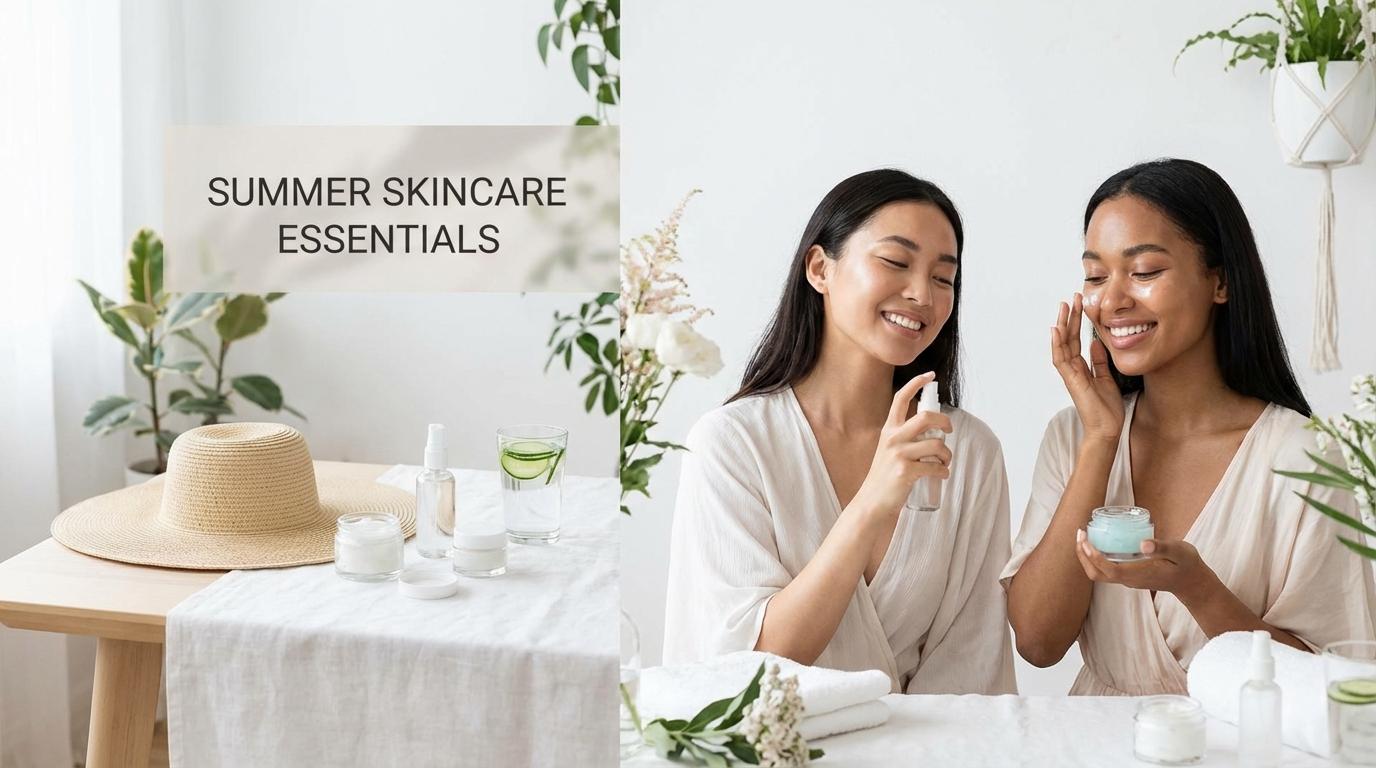
When temperatures spike past 35 degrees Celsius (95 Fahrenheit) and stay there for days, your skin enters survival mode. Heat waves push your body thermoregulation to its limits, and your skin bears the brunt of it. I learned this the hard way during a brutal summer in Chennai, where my usual routine left me feeling like I was melting.
Here is what actually happens to your skin during extreme heat, and how to adjust your routine so you are not fighting your own biology.
What Heat Does to Your Skin
Your skin is your body primary cooling system. When core temperature rises, blood vessels in the dermis dilate to release heat, which is why you look flushed in the heat. Sweat glands kick into overdrive, producing up to 2-4 liters of sweat per day during extreme conditions.
This increased sweating creates several skin issues. First, the constant moisture on your skin surface disrupts the acid mantle, that protective layer with a pH around 4.5-5.5 that keeps bacteria in check. When this barrier is compromised, you become more susceptible to irritation and infection.
Second, sweat contains salt, urea, and ammonia. These compounds can irritate skin, especially if you are prone to sensitivity. The salt crystals left behind as sweat evaporates can also clog pores when combined with sebum and dead skin cells.
Research published in the International Journal of Dermatology shows that high ambient temperatures increase sebum production by approximately 10% for every degree Celsius rise above 25. So if it is 38 degrees outside, your skin is producing significantly more oil than on a typical day.
Lightweight Product Swaps That Make Sense
The goal during a heat wave is not to abandon your routine but to strip it down to essentials that will not suffocate your skin.
Cleanser: Switch from cream or oil-based cleansers to a gentle gel or foam formula. You might need to cleanse more than twice daily if you are sweating heavily. A micellar water for midday refresh works well because it does not require rinsing and will not disrupt your sunscreen layer if you are staying indoors.
Moisturizer: Heavy creams trap heat against your skin. Opt for lightweight gel moisturizers or hydrating serums with hyaluronic acid. These provide hydration without the occlusive layer that makes you feel like you are suffocating. If your skin feels dry despite the humidity, it might be dehydrated from sweating out water faster than you can replenish it internally.
Serums: Keep them minimal. This is not the time to layer five different actives. A simple hydrating serum with hyaluronic acid or a calming serum with centella asiatica is enough. Skip vitamin C in the morning if it tends to oxidize and turn sticky on your skin in humidity.
Sunscreen: Non-negotiable, but formula matters. Thick, creamy sunscreens will slide off sweaty skin and clog pores. Look for lightweight, fluid formulas or those labeled as dry touch or matte finish. Mineral sunscreens with zinc oxide can feel heavy in heat, so a hybrid or chemical formula might work better for these conditions. If you notice breakouts despite switching formulas, your sunscreen ingredients might be the culprit rather than the heat itself. The American Academy of Dermatology recommends reapplying every two hours, but during heavy sweating, you may need to reapply more frequently.
Preventing Heat Breakouts
Heat rash (miliaria) occurs when sweat ducts become blocked, trapping perspiration under the skin. It shows up as small red bumps or blisters, often in areas where skin folds or where clothing creates friction. This is different from acne, though the two can occur simultaneously when pores become clogged with the excess oil and sweat.
To prevent heat-related breakouts:
- Wear loose, breathable fabrics. Cotton and linen allow air circulation. Synthetic athletic fabrics that wick moisture can also help, but avoid anything that sits tight against your skin for extended periods.
- Shower promptly after sweating. Leaving sweat to dry on your skin gives bacteria time to multiply and mix with sebum. A quick rinse with just water is better than staying sweaty.
- Do not over-cleanse. This sounds contradictory, but stripping your skin with harsh cleansers triggers more oil production. Stick to gentle, pH-balanced formulas.
- Keep your pillowcase fresh. During heat waves, consider changing it every two or three nights. Night sweats transfer bacteria and oil to fabric, which then transfers back to your face.
- Use non-comedogenic everything. Check that your moisturizer, sunscreen, and any makeup are labeled non-comedogenic. This becomes more important when your pores are already dealing with increased oil production.
If you do break out, resist the urge to pile on drying spot treatments. Your skin is already stressed. A gentle approach with salicylic acid (2% or less) applied to spots only works better than aggressive drying agents.
Staying Comfortable While Protected
Comfort during extreme heat requires thinking beyond products.
Keep products in the fridge. Your toner, aloe vera gel, and sheet masks all feel amazing when chilled. The cold also helps reduce the flushing that comes with heat-dilated blood vessels. According to the Cleveland Clinic, cooling constricts blood vessels and can reduce visible redness.
Use thermal water sprays. A quick mist throughout the day helps with evaporative cooling and can soothe irritated skin. Brands like Avene and La Roche-Posay offer mineral-rich options, but even distilled water in a spray bottle provides relief.
Hydrate internally. This sounds obvious, but dehydrated skin comes from the inside out. When you are sweating heavily, you are losing electrolytes along with water. Plain water is good, but adding electrolytes through food (fruits, vegetables) or drinks helps your body retain that hydration better.
Skip makeup or go minimal. Foundation and concealer can slide, oxidize, and clog pores in extreme heat. If you need coverage, a tinted sunscreen or BB cream provides a lighter alternative. Setting spray can help, but heavy powder over sweaty skin creates a cakey mess.
Air conditioning helps but creates its own issues. Moving between extreme heat outside and cold, dry air conditioning inside stresses skin. The dry air indoors can dehydrate your skin while the humidity outside makes it oily. Consider keeping a hydrating mist at your desk for when AC air feels too drying.
Your Heat Wave Routine in Practice
Here is what a simplified heat wave routine looks like:
Morning:
- Gentle gel cleanser or just a water rinse if your skin feels balanced
- Lightweight hydrating serum (optional)
- Gel moisturizer or skip if using a hydrating sunscreen
- Lightweight, sweat-resistant sunscreen (SPF 30 or higher)
Midday (if needed):
- Blot excess oil with blotting papers
- Reapply sunscreen if you have been sweating or outside
- Mist with thermal water for cooling
Evening:
- Gentle gel cleanser (double cleanse only if wearing heavy sunscreen)
- Calming toner or essence (optional)
- Light moisturizer or hydrating serum
- Skip heavy treatments and actives during the worst of the heat wave
When to Add Products Back
Once temperatures normalize, gradually reintroduce your regular routine. Your skin might have become sensitized during the heat stress, so jumping back into potent actives like retinol or high-concentration vitamin C could cause irritation.
Give yourself about a week of transition. Start by adding back one treatment product every few days and monitor how your skin responds.
Know When Heat Becomes Dangerous
While adjusting your skincare routine helps with comfort, extreme heat poses serious health risks. According to the World Health Organization, heat waves are among the deadliest natural disasters. If you experience symptoms like dizziness, nausea, rapid heartbeat, or confusion, seek medical attention immediately. Skin care becomes irrelevant if you are experiencing heat stroke.
Heat-related illness often starts with excessive sweating, then progresses to hot, dry skin when your body cooling mechanism fails. If someone skin becomes hot and dry during extreme heat, that is a medical emergency.
The Bigger Picture
Heat waves are becoming more frequent and intense due to climate change. What used to be rare events are now annual occurrences in many regions. Building a heat wave skincare strategy is not just about one summer but about having a playbook ready for conditions that will keep returning.
The core principle stays simple: lighten up, hydrate, and protect. Your skin is remarkably adaptable when you work with its biology instead of against it. During extreme heat, that means stepping back from elaborate routines and focusing on basics that keep your skin comfortable and functional.
Stay cool, stay hydrated, and save the complicated routine for when the temperature drops back to something your skin can handle.