
Everyone says sunscreen is non-negotiable for healthy skin. That’s true, but nobody mentions that the wrong formula can absolutely wreck your face. I spent two years blaming my chin acne on hormones, stress, and dairy before realizing my “skin-protecting” SPF was the actual culprit. If you’re doing everything right and still breaking out, your sunscreen deserves a hard look. If you’re interested, check out our piece on choosing the right sunscreen. If you’re interested, check out our piece on choosing the right sunscreen.
Chemical vs Mineral: Not All Filters Are Equal
Sunscreens fall into two camps: chemical filters that absorb UV rays and mineral filters that physically block them. Your skin might tolerate one and hate the other.
Chemical filters include oxybenzone, avobenzone, octinoxate, and homosalate. They sink into your skin and convert UV radiation into heat. For some people, this process triggers inflammation, especially if skin is already compromised or acne-prone. Chemical sunscreens also tend to have thinner, more cosmetically elegant textures, which often means added emulsifiers and penetration enhancers that can irritate.
Mineral filters are zinc oxide and titanium dioxide. They sit on top of skin and reflect UV rays. These are generally gentler and less likely to cause reactions. The tradeoff? That white cast everyone complains about, though newer micronized formulas have improved this significantly.
If you’ve been using chemical sunscreen and experiencing persistent breakouts, try switching to a mineral formula for 6 weeks. It’s the simplest diagnostic you can run.
The Ingredients Actually Clogging Your Pores
Beyond UV filters, sunscreens contain a cocktail of other ingredients. Some of them are known pore-cloggers.
Isopropyl myristate: A synthetic oil that helps products absorb quickly. Extremely comedogenic. Check your label.
Coconut oil derivatives: Anything with “coco” in the name deserves scrutiny. Coconut oil itself has a comedogenic rating of 4 out of 5.
Myristyl myristate: Another fast-absorbing emollient that sits high on the comedogenic scale.
Ethylhexyl acrylate: Creates a film on skin that can trap bacteria and sweat underneath, leading to blocked pores.
Silicones (sometimes): Dimethicone and cyclopentasiloxane are generally fine, but heavier silicones in occlusive formulas can cause issues for some people.
Fragrances and preservatives add another layer of risk. Parabens and phthalates have been linked to skin irritation, and synthetic fragrances are a common trigger for sensitivity reactions that can look like acne.
The “Non-Comedogenic” Label Means Nothing
Here’s the uncomfortable truth: “non-comedogenic” is an unregulated marketing term. Brands can slap it on anything. There’s no third-party verification, no standardized testing, no enforcement.
A product labeled non-comedogenic can still contain multiple comedogenic ingredients. The term doesn’t guarantee anything about how your specific skin will react.
Instead of trusting labels, learn to read ingredient lists. The ingredients are regulated. The marketing claims are not.
Oily Skin Needs a Different Approach
If your skin produces excess oil, standard sunscreen formulas will make things worse. Heavy creams mix with sebum and create a pore-clogging paste. Here’s what to look for instead.
Gel and fluid textures: Skip cream formulas entirely. Lightweight gels and watery fluids layer better over oily skin without adding greasiness.
Mattifying ingredients: Niacinamide helps regulate oil production. Silica absorbs excess shine. Look for these in the formula.
Oil-free claims (with verification): Actually check the ingredients. “Oil-free” on the front means nothing if the formula contains comedogenic esters that act like oils.
Alcohol content (careful here): Denatured alcohol creates a matte finish but can trigger rebound oil production if overused. It’s fine in moderation, problematic as a primary ingredient.
Formulas That Work for Acne-Prone Skin
Based on ingredient analysis, dermatologist recommendations, and real-world testing, certain formulas consistently work better for breakout-prone skin.
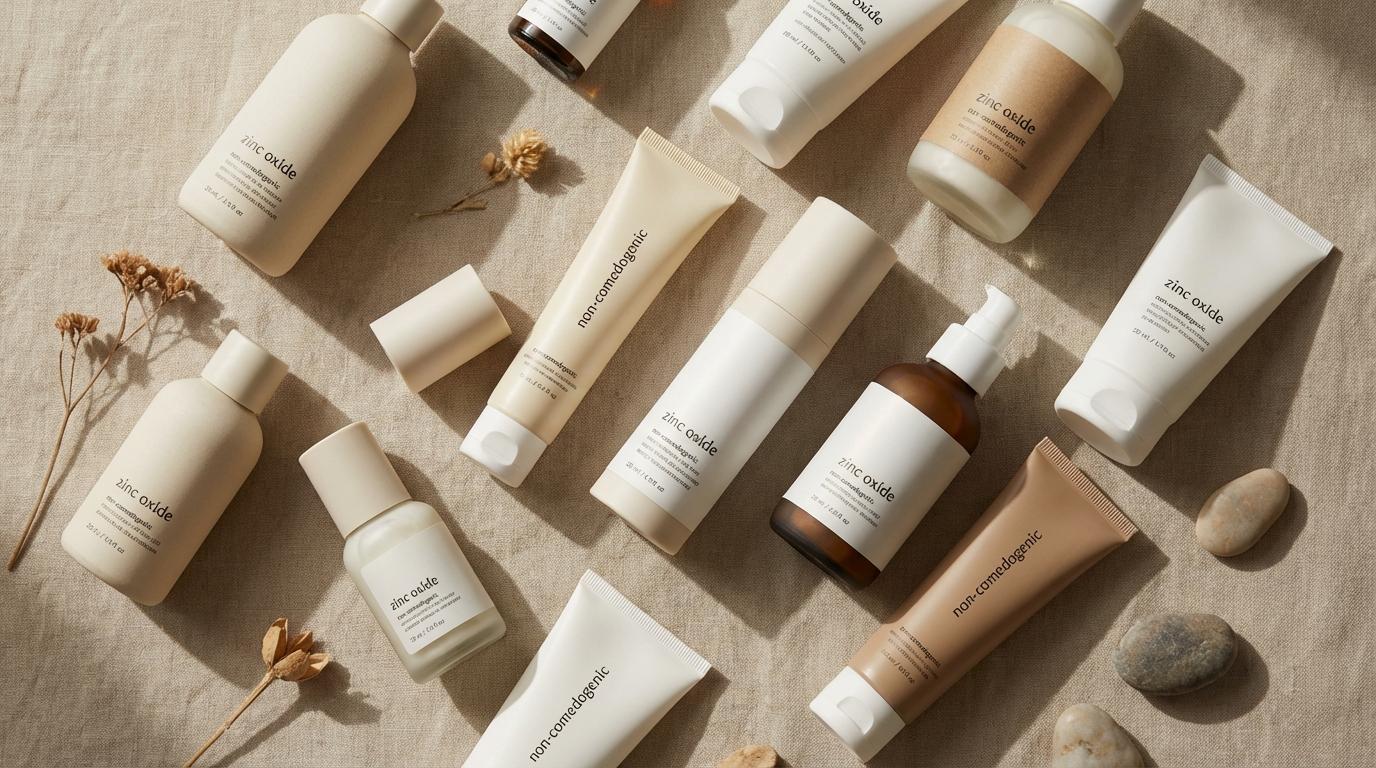
Zinc oxide between 15% and 20% provides broad-spectrum protection without pore issues. Titanium dioxide works well as a secondary filter. According to dermatologists, these mineral filters are the safest bet for reactive skin.
Added benefits to look for: niacinamide (oil control and anti-inflammatory), hyaluronic acid (hydration without heaviness), allantoin (soothing), and green tea extract (antioxidant protection).
Avoid: heavy oils, lanolin derivatives, fragrance, and anything with isopropyl or myristyl in the name.
Double Cleansing Is Not Optional
Sunscreen is designed to stay on your skin. That’s the point. But when you don’t remove it properly, the residue mixes with dead skin cells, sebum, and bacteria. This mixture sits in your pores overnight. Breakouts follow.
A regular face wash isn’t enough. Sunscreen, especially water-resistant formulas, needs an oil-based first cleanser to break it down.
Step one: Oil cleanser, micellar water, or cleansing balm. Massage it over dry skin for at least 60 seconds. This dissolves the sunscreen film.
Step two: Water-based cleanser. This removes the oil cleanser residue and any remaining dirt or makeup.
Skip this process and you’re essentially asking for clogged pores. I don’t care how tired you are. Double cleanse or deal with the consequences.
Application Mistakes That Cause Breakouts
Sometimes the formula is fine. The problem is how you’re using it.
Dirty hands: If you’re applying sunscreen with hands that just touched your phone, keys, or steering wheel, you’re transferring bacteria directly to your face.
Expired product: Sunscreen degrades. Those UV filters break down over time, and the preservatives become less effective at preventing bacterial growth. Check the expiration date. If there isn’t one, the PAO symbol (little jar icon) tells you how many months it’s good for after opening.
Reapplication over makeup: Layering sunscreen over foundation traps everything underneath. If you need to reapply during the day, use a powder SPF or a spray formula designed to layer over makeup.
Too much product: More isn’t always better. If sunscreen is pilling or sitting on top of skin, it’s not absorbing properly and can contribute to congestion.
How to Find Your Formula
There’s no universal “best” sunscreen. Your skin is different from everyone else’s. Finding what works requires some trial and error.
Start with a simple mineral formula. Zinc oxide based, minimal ingredients, no fragrance. Use it for 4 to 6 weeks while keeping the rest of your routine stable. If breakouts improve, you’ve found your type.
If mineral formulas leave too much white cast, try a tinted mineral sunscreen. The iron oxides that add color also help blend the formula into skin.
If you genuinely can’t tolerate mineral textures, look for newer-generation chemical filters like tinosorb and uvinul. These are less irritating than older chemical options, though availability varies by country.
Stop Skipping SPF Because of Breakouts
The solution to sunscreen breakouts is never skipping sun protection entirely. UV damage causes inflammation, hyperpigmentation, and premature aging. Post-inflammatory hyperpigmentation from acne gets worse without SPF. You need sunscreen. You just need the right one.
Treat finding your sunscreen like finding your foundation shade. It might take a few tries. That’s normal. Keep the ones that don’t work for your body instead of tossing them.
Your face deserves a formula that protects without causing new problems. They exist. You just have to look past the marketing and actually read the ingredients.