
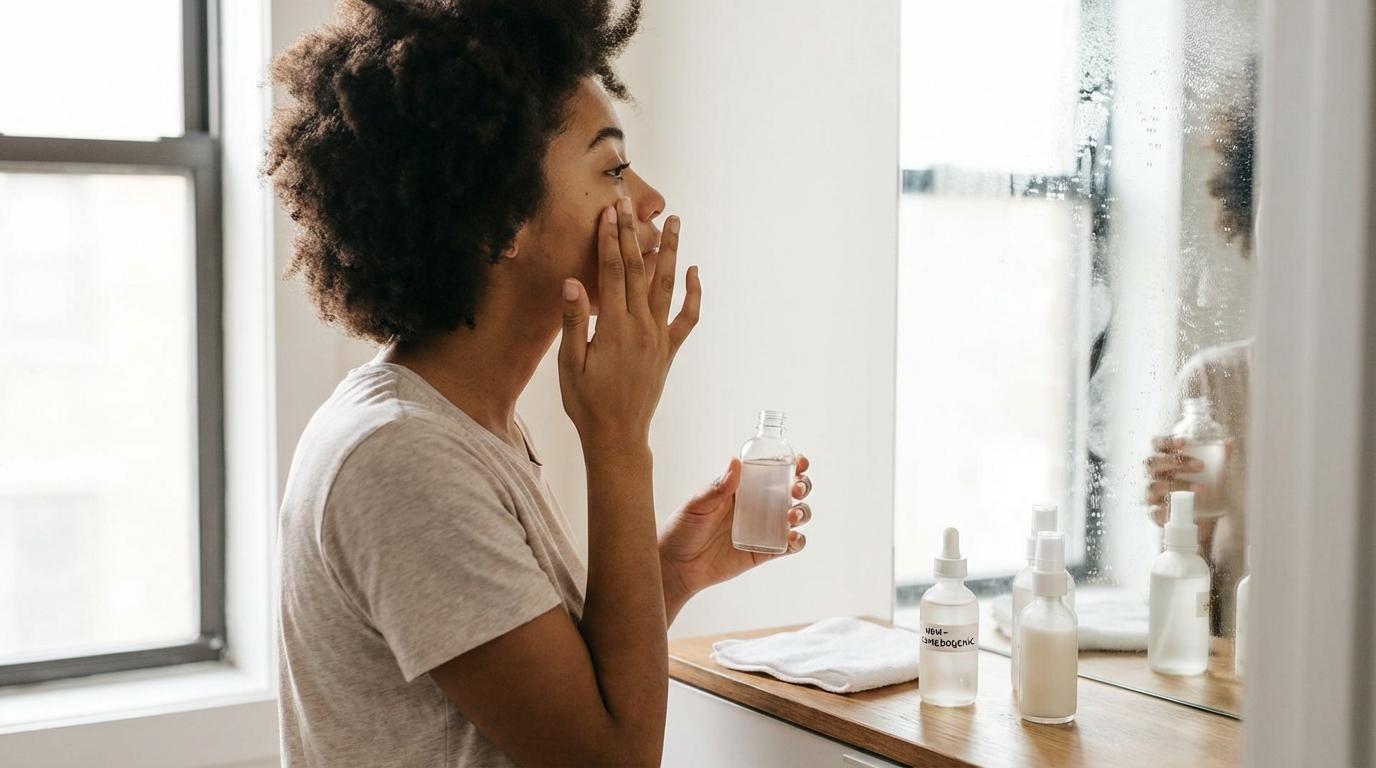
There’s a particular kind of frustration that comes with trying everything and still waking up to new breakouts. You’ve switched cleansers, tried the trending serums, followed the advice of that one influencer with perfect skin. And yet, here you are, staring at another pimple and wondering if your skin just hates you. It doesn’t. But it might be overwhelmed, and the path forward isn’t adding more products. It’s stripping everything back.
Why More Products Often Mean More Problems
When your skin seems reactive to everything, the instinct is to search for the right product, the one that will finally work. But this hunt often leads to overcrowded bathroom shelves and an even more confused complexion. The truth is, layering multiple active ingredients at once can irritate your skin and make breakouts worse, not better. Your skin barrier, that protective outer layer that keeps moisture in and irritants out, can only handle so much.
If you’ve been using a cleanser with salicylic acid, followed by a retinoid, topped with benzoyl peroxide, and maybe throwing in some AHA for good measure, you’re not treating your acne. You’re waging war on your face. And your face is losing. This is where the elimination approach comes in, not as giving up, but as a strategic reset.
The Skincare Elimination Method
Think of this like figuring out a food sensitivity. When doctors want to identify what’s causing digestive issues, they don’t ask you to eat everything and hope for the best. They strip your diet down to basics and reintroduce foods one at a time. Your skincare routine deserves the same thoughtful approach.
Start by removing everything except the absolute essentials: a gentle cleanser, a basic moisturizer, and sunscreen. That’s it. No actives, no treatments, no serums with seventeen ingredients you can’t pronounce. Give your skin two to four weeks with just these basics. This isn’t about permanently abandoning all the products you’ve collected. It’s about giving your skin a baseline of calm so you can actually tell what’s helping and what’s hurting.
According to the American Academy of Dermatology, simplifying your routine and using gentle products is one of the most effective steps for acne-prone skin. It sounds almost too simple, but that’s exactly why it works.
Choosing Your Elimination Routine Products
When picking your three core products, the label “non-comedogenic” matters, but it’s not foolproof. No government agency actually regulates that term, so companies can slap it on products that still contain pore-clogging ingredients. You’ll need to be a bit of a detective here.
For your cleanser, look for something fragrance-free and soap-free. Avoid cleansers with long lists of active ingredients during this phase. Your goal is clean skin, not treatment. Something milky or gel-based that rinses clean without leaving your face feeling tight or squeaky is ideal.
Your moisturizer should be lightweight but actually moisturizing. Yes, even oily, breakout-prone skin needs hydration. Skipping moisturizer can actually trigger more oil production as your skin tries to compensate for the dryness. Look for ingredients like hyaluronic acid or glycerin, which hydrate without clogging pores. Avoid heavy occlusives like coconut oil, cocoa butter, or lanolin during this phase.
For sunscreen, mineral formulas with zinc oxide tend to be gentler on reactive skin than chemical sunscreens. The Healthline guide on non-comedogenic products can help you understand which ingredients to look for and which to avoid.
Tracking and Identifying Your Triggers
Here’s where the work actually happens. During your elimination phase, pay attention to your skin. Take photos every few days, noting what you ate, your stress levels, where you are in your menstrual cycle if that applies to you. Context matters because breakouts aren’t always about products.
After two to four weeks of your basic routine, your skin should have calmed down somewhat. Maybe not perfectly clear, but less reactive, less inflamed. This is your baseline. Now you can start reintroducing products, one at a time, waiting at least two weeks between each new addition.
Start with the product you miss most or think was actually helping. Use it for two weeks and watch carefully. New breakouts in the areas where you applied it? That product might be a problem. Skin stays stable or improves? It’s probably safe to keep. Move on to the next product.
This process takes patience. Months, potentially. But it’s the difference between randomly throwing products at your face and actually understanding what your skin needs.
Common Culprits Worth Investigating
While everyone’s triggers are different, some ingredients show up more often than others as breakout causes. Isopropyl myristate, found in many creams and lotions, is one of the most common offenders according to dermatological research. Certain silicones like dimethicone can trap bacteria and sebum against your skin. Fragrances, both synthetic and natural, can irritate sensitive skin and trigger reactions.
Don’t forget about hair products and makeup. That foundation you’ve used for years? The hair oil that makes your strands shiny? Both could be migrating to your skin and causing problems. During your elimination phase, consider switching to minimal makeup and keeping hair products away from your face and hairline.
Tools like the SkinSort ingredient checker let you paste a product’s ingredient list and flag potential pore-cloggers. It’s not perfect, because ingredient interactions and concentrations matter too, but it’s a useful starting point.
Building Back Your Routine Safely
Once you’ve identified what works and what doesn’t, you can start building a routine that actually serves your skin. The key is to go slowly and resist the urge to add everything back at once. Your post-elimination routine might look simpler than what you had before, and that’s okay. Simple routines are easier to maintain and easier to troubleshoot when something goes wrong.
If you want to add an active treatment for acne, pick one and give it time. Benzoyl peroxide works well for inflammatory acne, the red, angry kind. Start with a lower concentration, 2.5% or 5%, since higher percentages aren’t necessarily more effective and are often more irritating. Salicylic acid is better for blackheads and whiteheads. Niacinamide can help with inflammation and oil production without the irritation of stronger actives.
Dr. Margarita Lolis told Cosmopolitan that using too many active ingredients simultaneously can be too harsh, making breakouts worse. Pick your battles. You don’t need five different actives to have clear skin.
When Skincare Isn’t the Problem
Sometimes, no matter how perfectly you’ve dialed in your routine, breakouts persist. This might mean the problem isn’t topical at all. Hormonal fluctuations, dietary triggers, stress, and underlying health conditions can all manifest as acne.
Consider whether your breakouts follow a pattern. Same time every month? Probably hormonal. Worse after eating certain foods? Might be worth trying a dietary elimination approach, temporarily cutting out common triggers like dairy or high-glycemic foods and seeing if your skin responds. The Curology blog has a helpful breakdown of how to approach a food elimination diet for skin concerns.
And there’s absolutely no shame in seeing a dermatologist. If you’ve been diligent with a good routine for four to six weeks and you’re still breaking out, a professional can prescribe treatments that over-the-counter products simply can’t match. This isn’t failure. It’s getting the right help for your specific situation.
A Gentler Way Forward
The elimination approach isn’t glamorous. There’s no exciting new product to buy, no dramatic before-and-after transformation overnight. It’s slow, methodical, and requires actually paying attention to your skin instead of just covering it with products and hoping for the best.
But there’s something freeing about it too. Instead of constantly chasing the next miracle product, you’re working with your skin to understand what it actually needs. Maybe that’s a surprisingly short ingredient list. Maybe it’s fewer steps than you thought. Maybe your skin just needed you to stop throwing everything at it and give it space to breathe.
Your routine when everything seems to cause breakouts might end up being the simplest routine you’ve ever had. And honestly? That might be exactly what your skin has been asking for all along.