
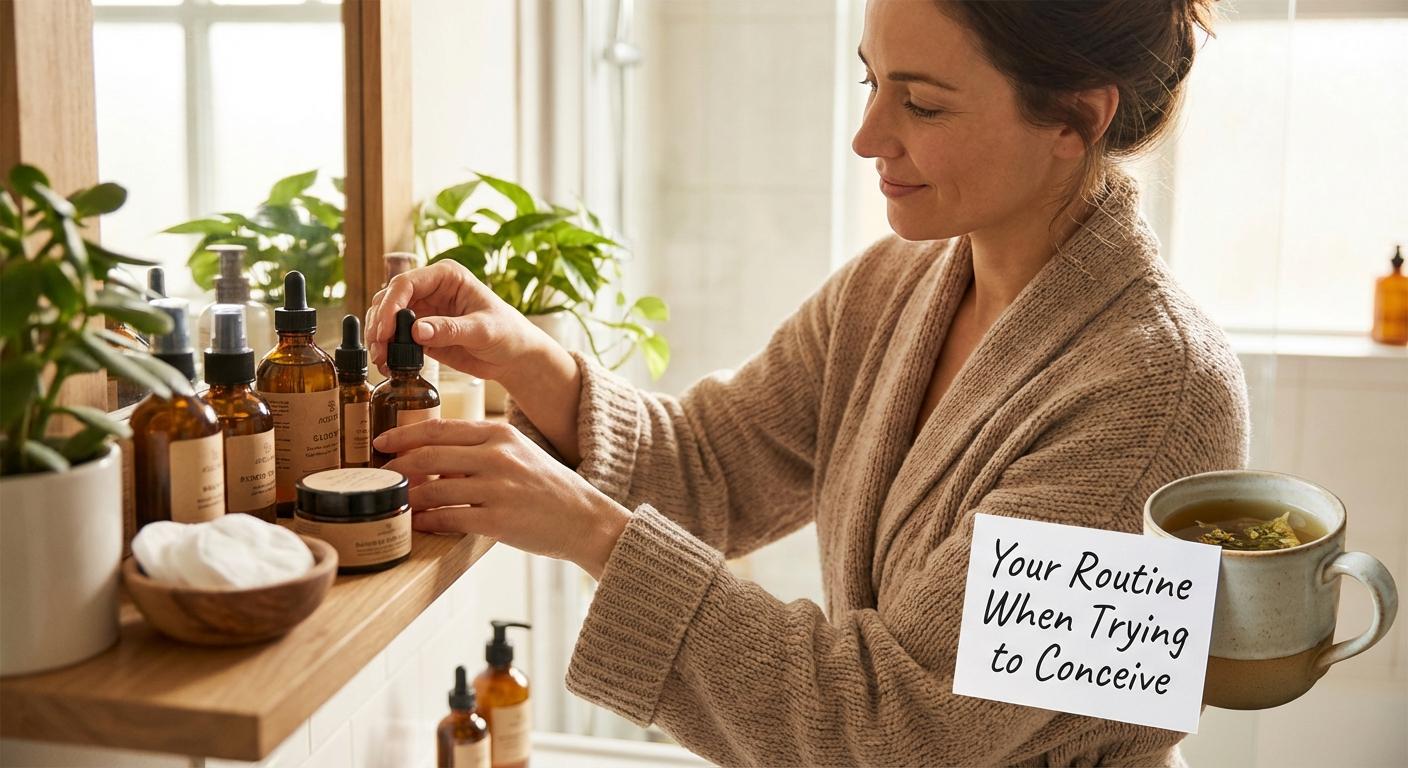
Before those two pink lines appear, there is a quiet season of preparation many people never talk about. When you start trying to conceive, your skincare routine deserves a gentle review. Not because everything you own is suddenly dangerous, but because making thoughtful swaps now means one less thing to worry about later.
This transition does not have to be dramatic or expensive. Think of it as simplifying rather than starting over. Most of the products you love are probably fine to keep using, and the ones that need to go have easy, effective replacements waiting.
Ingredients Worth Phasing Out
A few categories of skincare ingredients raise enough questions during pregnancy that dermatologists generally recommend avoiding them while trying to conceive. The logic is simple: by the time you know you are pregnant, you are usually several weeks along. If you have already switched to pregnancy-safe products, there is nothing to worry about during that crucial early window.
Retinoids are the big one. This includes prescription tretinoin, adapalene, and over-the-counter retinol in all its forms. Oral retinoids like isotretinoin are known to cause birth defects, and while topical retinoids have not been definitively linked to the same risks, the recommendation is to avoid them. According to the American College of Obstetricians and Gynecologists, erring on the side of caution makes sense here.
High-dose salicylic acid is another one to reconsider. Low concentrations in a face wash you rinse off are generally considered acceptable, but leave-on treatments with 2% salicylic acid or professional peels should be paused. The concern is systemic absorption, which increases with higher concentrations and longer contact time.
Hydroquinone, used for treating dark spots and melasma, has a high absorption rate and limited safety data for pregnancy. If you are using it, now is a good time to transition to other brightening options.
Chemical sunscreen filters like oxybenzone and avobenzone are under ongoing scrutiny for potential hormone disruption. Switching to mineral sunscreen with zinc oxide or titanium dioxide eliminates this concern entirely and often works better for sensitive skin anyway.
Certain essential oils also warrant caution. While many are fine, some like clary sage, rosemary, and juniper are traditionally avoided during pregnancy. The National Association for Holistic Aromatherapy has detailed guidance on which oils to avoid and why.
Safe Alternatives That Actually Work
Giving up retinol does not mean giving up on your skin. Bakuchiol is a plant-derived ingredient that provides similar benefits without the pregnancy concerns. Studies show it improves fine lines, texture, and tone, and it works well for sensitive skin too.
For acne and uneven skin tone, azelaic acid is your new best friend. It is explicitly considered safe during pregnancy and works on breakouts, redness, and hyperpigmentation. Most dermatologists will happily recommend it for preconception and beyond.
Vitamin C remains entirely safe and continues to provide antioxidant protection and brightening benefits. If you were already using it, keep going. If you were not, now is a lovely time to start.
Niacinamide is another excellent option. It helps with oil control, redness, and overall skin health without any safety concerns. Many people find it becomes a permanent part of their routine after discovering it during this transition period.
For gentle exfoliation, lactic acid and other mild AHAs are generally considered acceptable in moderate concentrations. They provide enough cell turnover to keep skin smooth without the intensity of stronger actives.
Building Your Preconception Routine
The simplest approach is to audit what you currently use and make one swap at a time. There is no rush, and gradual transitions let you see how your skin responds to each new product.
A basic preconception-friendly routine might look like this: gentle cleanser, vitamin C or niacinamide serum, moisturizer with ceramides, and mineral sunscreen. At night, swap the sunscreen for a richer moisturizer, and add bakuchiol or azelaic acid if you want an active treatment.
This is genuinely all you need. The minimalist approach often serves skin better than elaborate multi-step routines, especially during a time when your hormones may start shifting in unexpected ways.
Reading Labels With Fresh Eyes
Once you start checking ingredient lists, you might notice retinol or salicylic acid in products you did not realize contained them. Some moisturizers, eye creams, and even body lotions include these ingredients at low levels.
The EWG Skin Deep database can help you research products and identify potential ingredients of concern. It is not perfect, but it provides a starting point for understanding what is in the products you use.
Do not panic if you have been using something on the avoid list. The risks are generally small, and the reason for switching is peace of mind rather than responding to immediate danger. Make the swap when you can and move forward.
Treatments and Procedures to Postpone
If you have regular appointments for chemical peels, laser treatments, or other professional procedures, talk to your provider about pausing or modifying these while trying to conceive. Many treatments use ingredients or techniques that dermatologists prefer to avoid during pregnancy.
This does not mean your skin will suffer. A consistent home routine with gentle, effective products can maintain everything you have worked to achieve. Think of it as a maintenance phase rather than a step backward.
Talking to Your Doctor
Your OB-GYN or midwife can review your current skincare routine and give personalized guidance. Dermatologists who specialize in pregnancy skincare, like Dr. Shereene Idriss, often share helpful information about what is safe and what to avoid.
If you take prescription skincare medications, do not stop them without talking to your doctor first. They may have specific recommendations for how to taper off or what to replace them with.
Starting Before You Need To
The beauty of making these changes while trying to conceive is that you give yourself time. Time to find products you love. Time to let your skin adjust. Time to establish a routine that feels natural rather than restrictive.
By the time pregnancy actually begins, your skincare will be one small thing that is already sorted. And in a season that brings so many changes, having a simple, reliable routine ready and waiting is a quiet comfort worth having.