
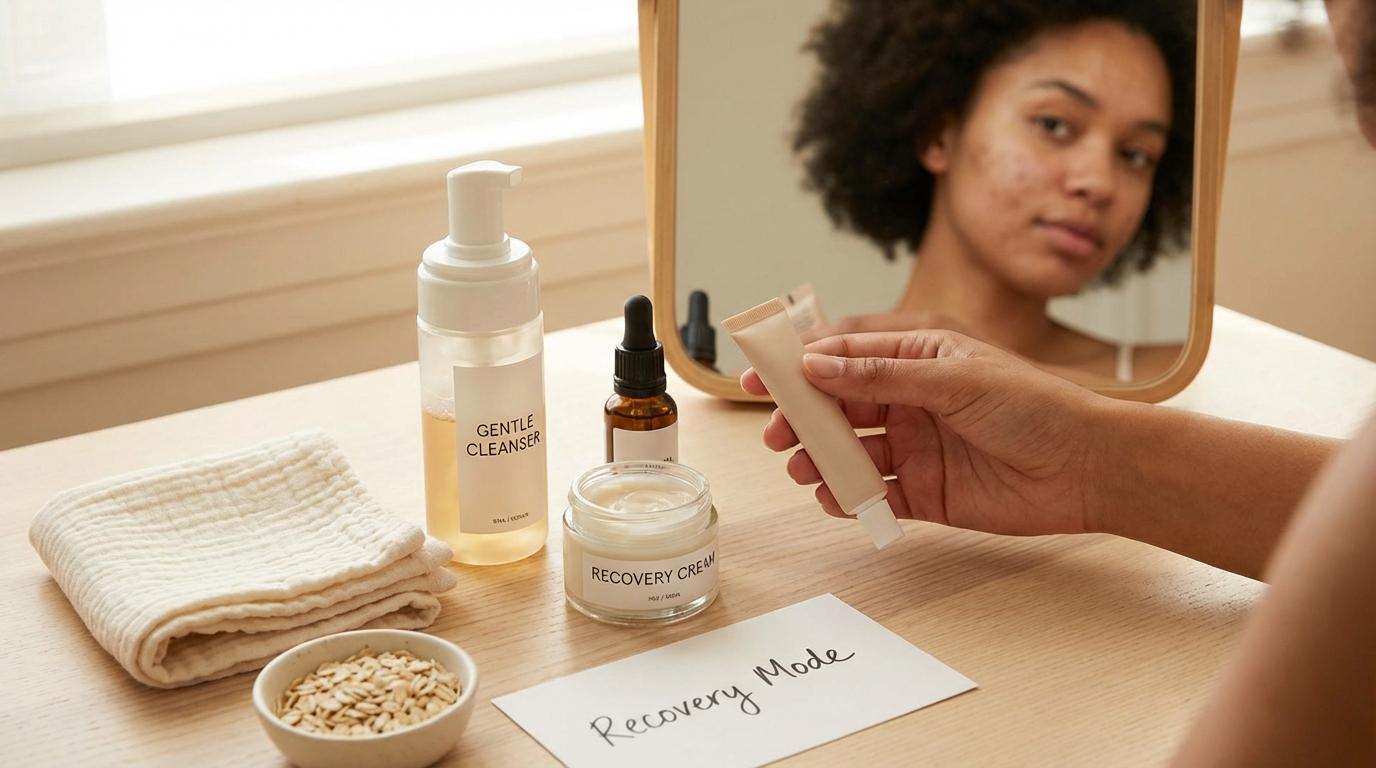
So you tried a new serum, cleanser, or moisturizer and now your face looks like it’s staging a rebellion. Red patches, bumps, flakiness, or a breakout that seems to have come out of nowhere. I’ve been there. Actually, I’ve been there more times than I’d like to admit because curiosity and skincare sales are a dangerous combo on a college budget.
The good news? Your skin isn’t permanently ruined. The less good news? You need to figure out what happened and how to fix it. Let’s get into it.
First Things First: Is It Purging or a Bad Reaction?
This is the question that haunts every skincare enthusiast. Your skin breaks out after trying something new, and suddenly you’re googling “purging vs breaking out” at 2 AM. Here’s the deal.
Purging only happens with certain active ingredients that speed up skin cell turnover. We’re talking about retinoids (retinol, tretinoin, adapalene), AHAs like glycolic and lactic acid, BHAs like salicylic acid, vitamin C in certain formulations, and benzoyl peroxide. These ingredients push existing clogs to the surface faster than they would have appeared on their own.
If you’re purging, breakouts show up in places where you normally get them. The bumps tend to heal faster than your usual pimples. And things should start improving within 4 to 6 weeks.
A bad reaction is different. If you’re seeing irritation, redness, or breakouts in places you’ve never had problems before, that’s a red flag. Same goes for cystic or painful acne that’s new for you, itching or burning sensations, excessive dryness or peeling, or hives or rashes. A reaction can happen with any product, not just actives. Your skin is basically saying “nope” and you need to listen.
According to the American Academy of Dermatology, contact dermatitis from skincare products is more common than most people realize, and it can develop even to products you’ve used before.
Stop Everything (Well, Almost Everything)
When your skin freaks out, your first instinct might be to throw more products at the problem. Fight that urge. Seriously.
Strip your routine down to the bare minimum. I’m talking cleanser, moisturizer, and sunscreen. That’s it. No serums, no toners, no exfoliants, no masks. Your skin needs a break to calm down and heal.
For your stripped back routine, use a gentle, fragrance free cleanser. Something boring is what you want here. CeraVe Hydrating Cleanser, Vanicream Gentle Facial Cleanser, or La Roche-Posay Toleriane Hydrating Gentle Cleanser are all solid budget friendly options.
Your moisturizer should also be simple and fragrance free. Look for ingredients like ceramides, hyaluronic acid, or squalane. Avoid anything with added actives or exfoliants right now.
And yes, you still need sunscreen, especially if your skin barrier is compromised. A damaged barrier is more susceptible to sun damage and hyperpigmentation.
Identify the Culprit
Think back to what you introduced recently. If you added multiple products at once (we’ve all done it), this gets trickier. This is why the “one new product every two weeks” rule exists, even though it requires patience most of us don’t have.
Check the ingredient list of the product you suspect. Common irritants include fragrance (listed as “parfum” or “fragrance”), essential oils like tea tree, lavender, and citrus, alcohol denat or SD alcohol high on the ingredient list, certain preservatives like methylisothiazolinone, and sodium lauryl sulfate.
The website INCIDecoder is incredibly helpful for breaking down ingredient lists and flagging potential irritants. I use it constantly before buying anything new.
If you’re seeing a reaction to a product with active ingredients, you might have just introduced it too fast. Retinoids especially need a slow introduction. Starting with daily use is a recipe for irritation. Every third night, then every other night, then building up is the way to go.
Help Your Skin Heal
Once you’ve stripped back and stopped the offending product, your skin needs some TLC. Here’s what actually helps:
Keep it hydrated. A damaged skin barrier loses moisture faster, so focus on hydrating and moisturizing. Products with hyaluronic acid, glycerin, and ceramides are your friends. Layering a hydrating toner or essence under your moisturizer can help if your skin is really parched.
Consider slugging. Applying a thin layer of petroleum jelly or Aquaphor over your moisturizer at night can help seal everything in and support barrier repair. It feels weird at first, but it works. Just do this at night so you’re not walking around looking like a glazed donut.
Skip the actives. I know it’s tempting to try to treat the breakout with salicylic acid or slap on some retinol, but your skin needs a break from actives while it’s healing. Be patient.
Don’t pick. Easier said than done, I know. But messing with irritated skin can lead to scarring and prolonged healing time.
The Recovery Timeline (Be Realistic)
Your skin won’t bounce back overnight. Here’s what to expect:
Days 1 to 3: Inflammation and redness should start calming down after you stop the product. If things are getting worse, not better, consider seeing a doctor.
Week 1: Irritation should be noticeably improved. Any breakouts that appeared might still be working their way through.
Weeks 2 to 4: Your skin barrier should be on its way to recovery. Breakouts from the reaction should be healing. You might still have some post inflammatory redness or hyperpigmentation, which is normal and will fade.
Week 4 and beyond: If you want to reintroduce actives, do it slowly. One product at a time, starting with the lowest frequency.
According to research published in the Journal of Clinical and Aesthetic Dermatology, skin barrier recovery can take anywhere from two weeks to over a month depending on the severity of damage.
When to See a Professional
Sometimes a reaction is beyond what you can handle at home. See a dermatologist or doctor if:
The reaction is severe, with lots of swelling, blistering, or widespread rash. You have symptoms beyond skin irritation like difficulty breathing, which could indicate an allergic reaction requiring emergency care. The irritation isn’t improving after a week of stopping the product and using a simple routine. You’re getting painful cystic acne that’s new for you. You’re just not sure what’s going on and need professional guidance.
I know seeing a dermatologist can be expensive, especially without good insurance. If cost is a barrier, look into telehealth dermatology services, which can be more affordable. Some options include Curology or Apostrophe, where you can get professional advice without the full office visit cost.
Preventing Future Freak Outs
Once your skin is back to normal, here’s how to avoid going through this again:
Patch test new products. Apply a small amount behind your ear or on your inner arm for a few days before putting it on your face. Yes, it requires patience. Yes, it’s worth it.
Introduce one product at a time. Wait at least two weeks before adding something new. This way, if you react, you know exactly what caused it.
Start slow with actives. Whether it’s retinol, acids, or vitamin C, begin with lower concentrations and less frequent application. Build up gradually.
Read ingredient lists. If you know you react to certain ingredients, check before you buy. Keep a note on your phone of your known irritants.
Don’t be swayed by hype. Just because everyone on TikTok loves a product doesn’t mean it will work for your skin. We’re all different.
The Bottom Line
Having your skin freak out after a new product is frustrating, but it’s also incredibly common. The key is to stop the product, simplify your routine, and give your skin time to recover. Don’t panic and don’t throw a bunch of new products at the problem.
Your skin has an amazing ability to heal itself when you give it the right conditions. Keep things simple, stay hydrated, and be patient. You’ll get through this, and your skin will be back to normal before you know it.
And hey, at least now you know what doesn’t work for you. That’s valuable information, even if you learned it the hard way.