
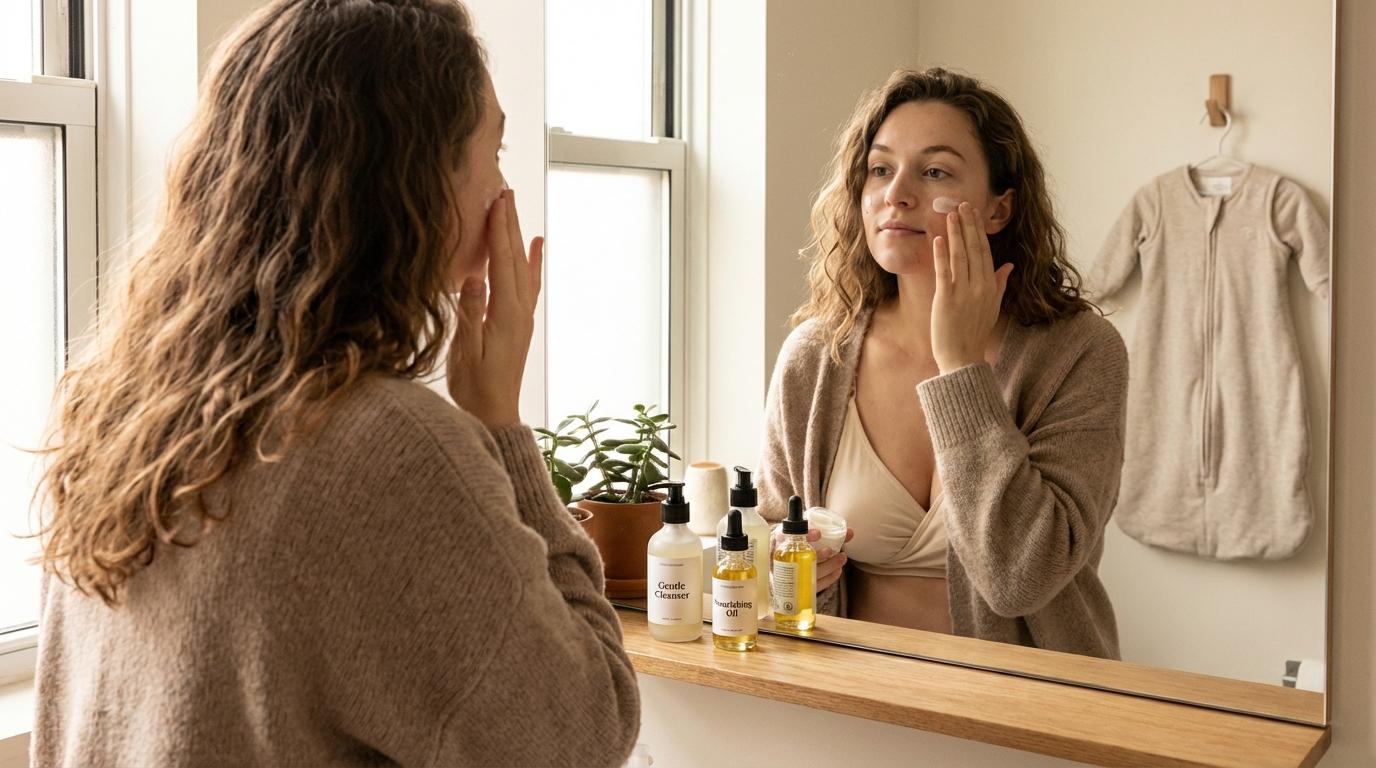
You made it through pregnancy, navigated the newborn fog, and now you’re breastfeeding. Your body has been through so much, and honestly? Your skin probably looks and feels different than it did a year ago. Maybe you’re dealing with postpartum acne, melasma that won’t quit, or skin that’s suddenly dry and irritated. You want to take care of yourself, but there’s this nagging question: what skincare is actually safe while nursing?
Here’s the thing. The rules aren’t exactly the same as pregnancy, but some restrictions do carry over. Let me break down what we know (and don’t know) about skincare absorption and breastfeeding, so you can make informed choices without stressing over every ingredient label.
Why Some Ingredients Are Still Off-Limits
During breastfeeding, certain compounds can absorb through your skin, enter your bloodstream, and potentially transfer to breast milk. The concern isn’t usually about topical products causing immediate harm, but rather about cumulative exposure and the lack of safety data for nursing infants.
The big one everyone asks about? Retinoids. Oral vitamin A derivatives (like isotretinoin) are absolutely contraindicated during breastfeeding because they can cause birth defects and developmental issues. But what about that little tube of over-the-counter retinol sitting in your bathroom?
The research here is frustratingly limited. According to the InfantRisk Center, topical retinoids are absorbed in small amounts, and the actual levels reaching breast milk are likely minimal. However, because we don’t have solid studies confirming safety, most dermatologists recommend erring on the side of caution. The consensus from organizations like Nebraska Medicine is that if you can avoid it, you probably should.
The Ingredients to Skip (For Now)
Let’s get specific about what belongs in the “not worth the risk” category:
- Retinoids and retinol: This includes prescription tretinoin, adapalene, and over-the-counter retinol serums. The precautionary principle applies here.
- Hydroquinone: This skin-lightening ingredient is highly absorbable and should be avoided during breastfeeding. If you’re dealing with melasma, there are safer alternatives.
- High-concentration salicylic acid: Low doses (2% or less) in face washes that rinse off quickly are generally considered acceptable. But leave-on products with higher concentrations? Skip them. And absolutely avoid applying any salicylic acid near your chest area where baby might come into contact with it.
- Chemical sunscreen filters: Some chemical UV filters like oxybenzone have raised concerns about hormone disruption. Mineral sunscreens are the safer bet.
One thing to note: if you accidentally used one of these ingredients before realizing you should avoid them, don’t panic. The small amounts in occasional topical use are unlikely to cause harm. Just discontinue and move forward with safer options.
What Actually Works and Is Safe
Now for the good news. Your skincare routine doesn’t have to be boring or ineffective while breastfeeding. There are plenty of evidence-backed ingredients that are perfectly safe.
Azelaic acid is probably the most underrated option for nursing moms. Studies published in dermatology research confirm it’s effective for both acne and rosacea, and it helps with hyperpigmentation too. It’s anti-inflammatory, antimicrobial, and safe during breastfeeding. If postpartum breakouts are your concern, this should be your first stop.
Niacinamide (vitamin B3) is another excellent choice. It strengthens your skin barrier, reduces redness, helps with uneven skin tone, and plays well with basically every other ingredient. It’s gentle enough for sensitive postpartum skin and has no safety concerns for nursing mothers.
Vitamin C serums remain safe and effective. L-ascorbic acid helps brighten skin, fade dark spots, and boost collagen production. If pregnancy left you with stubborn melasma, this is a great ingredient to incorporate.
Hyaluronic acid is simply a hydration booster. It’s already naturally present in your body and poses zero concerns for breastfeeding. If your skin feels drier than usual (thanks, hormones and sleep deprivation), layer this under your moisturizer.
Glycolic and lactic acids are alpha hydroxy acids that help with exfoliation, texture, and brightness. Both are considered safe during breastfeeding when used in typical skincare concentrations. Start slowly if your skin has become more reactive postpartum.
The Retinol Alternative You Should Know About
If you were really looking forward to anti-aging benefits and are disappointed about skipping retinol, let me introduce you to bakuchiol. This plant-derived ingredient comes from the seeds of the Psoralea corylifolia plant and has been used in traditional Indian and Chinese medicine for centuries.
Here’s what makes bakuchiol interesting: it binds to the same cellular receptors as retinol and produces similar effects, but it’s an entirely different chemical compound with no structural resemblance to vitamin A. A study in the British Journal of Dermatology compared bakuchiol 0.5% to retinol 0.5% over 12 weeks and found that both performed equally well for reducing wrinkles and hyperpigmentation. The bakuchiol users, however, reported fewer side effects like stinging and dryness.
Because bakuchiol isn’t a retinoid, it doesn’t carry the same safety concerns. According to dermatologist recommendations, it’s considered safe for use during pregnancy and breastfeeding. It’s also gentler on skin that might be more sensitive right now.
Building Your Breastfeeding-Safe Routine
Let’s put this all together into a practical routine. Remember, postpartum life is chaotic, so a simpler routine is actually better. You don’t need 10 steps.
Morning:
- Gentle cleanser (fragrance-free if your skin is reactive)
- Vitamin C serum OR niacinamide serum (pick one, don’t layer these)
- Lightweight moisturizer with hyaluronic acid
- Mineral sunscreen with zinc oxide or titanium dioxide
Evening:
- Cleanser (double cleanse if you wore sunscreen)
- Treatment: azelaic acid for acne/redness OR bakuchiol for anti-aging OR glycolic acid for texture
- Moisturizer (can be richer than morning)
That’s it. Three to four products per routine. If you have the energy for masking or exfoliating once a week, great. If you’re just keeping it simple because the baby finally went down and you want to sleep? Also great.
About Your Chest and Nipple Area
One thing that often gets overlooked: whatever you apply to your chest area, your baby may come into direct contact with during nursing. Even ingredients that are safe when absorbed through your skin into breast milk might not be safe for direct oral exposure.
Keep your skincare products away from your breasts entirely. If you’re using nipple creams for cracked or sore nipples, stick to products specifically formulated for breastfeeding mothers, like lanolin or coconut oil-based options. These are designed to be safe even if baby ingests small amounts.
When to Talk to a Dermatologist
If you’re dealing with severe postpartum acne, significant melasma, or other skin concerns that aren’t responding to over-the-counter options, it’s worth scheduling an appointment with a dermatologist. Let them know upfront that you’re breastfeeding so they can tailor their recommendations.
Some prescription options, like topical metronidazole for rosacea or certain antibiotic gels for acne, may be appropriate depending on your specific situation. A dermatologist can weigh the risks and benefits with you and help you find treatments that work without compromising your nursing goals.
The good news is that breastfeeding doesn’t last forever, even though some nights it might feel that way. The ingredients you’re avoiding now will still be there when you’re ready. In the meantime, the safe options available to you are genuinely effective. You’re not stuck with just basic moisturizer. You have real tools for addressing real skin concerns while keeping your baby’s safety front and center.
Take care of yourself out there. Your skin matters, and so does your peace of mind about the products you’re using.