
If you have ever stood in the skincare aisle feeling like everything is designed to make your face angry, I get it. I spent most of college with skin that would flare up from basically anything. That $40 moisturizer my roommate swore by? My face turned into a red, itchy mess. The “gentle” cleanser from the drugstore? Burning sensation for days. Building a routine when your skin protests everything takes patience, but it is absolutely possible without spending a fortune.
Fragrance-Free Is Your Starting Point
Let me be real with you: if you have sensitive skin, fragrance in skincare products is not your friend. And I am not just talking about products that smell like a perfume counter. “Fragrance” on an ingredient list can mean hundreds of different chemicals, and companies do not have to disclose which ones they use.
According to the American Academy of Dermatology, fragrance is one of the most common causes of contact dermatitis. Even products labeled “unscented” can contain masking fragrances designed to cover up the natural smell of ingredients. What you want to look for is “fragrance-free” specifically.
Here is the frustrating part: fragrance-free products often get overlooked because they are less exciting on the shelf. No pretty scent, no fancy marketing about aromatherapy benefits. But for those of us with reactive skin, boring is beautiful. Some affordable fragrance-free options include:
- Vanicream Gentle Facial Cleanser
- CeraVe Moisturizing Cream
- La Roche-Posay Toleriane line
- Simple Micellar Cleansing Water
These are all drugstore staples that will not wreck your budget or your face.
The Patch Testing Protocol Nobody Wants to Do
I know patch testing sounds tedious. You just want to try that new serum immediately. But after enough bad reactions, I learned this the hard way: a few extra days of patience beats a week of dealing with irritated skin.
Here is how to actually do it properly:
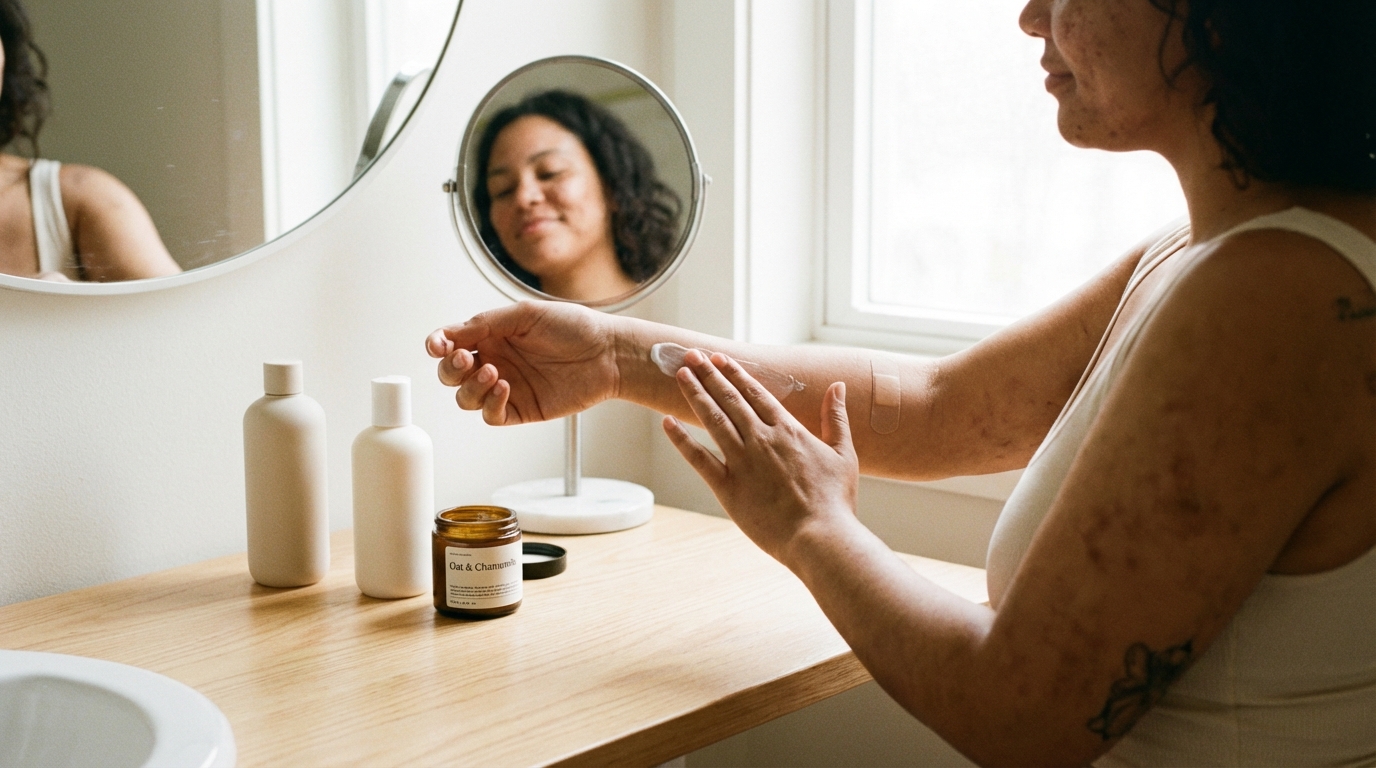
- Choose your test spot. The inner arm or behind your ear works well. These areas are more sensitive than, say, your leg, so they will give you a better indication of how your face might react.
- Apply a small amount of the product to your test spot. About the size of a dime.
- Wait 24 to 48 hours. Do not wash it off unless you have to. Check for redness, itching, bumps, or any discomfort.
- If nothing happens, try the product on a small area of your face, like along your jawline. Wait another 24 hours.
- No reaction? You are probably good to go.
Is this process annoying? Yes. But it is way less annoying than having to skip class or work because your entire face is swollen. Trust me on this one.
One Product at a Time: The Slow Introduction Method
Here is where I see a lot of people mess up, including past me. You get excited about building a routine, buy five new products, and start using them all at once. Then your skin freaks out and you have no idea which product caused the problem.
The solution is painfully simple but requires self-control: introduce one new product every two to three weeks. Yes, weeks. I know that feels like forever when you are eager to fix your skin, but this timeline gives you enough information to identify what works and what does not.
Start with the basics:
- Week 1-3: Cleanser only. Wash your face with water in the morning, cleanser at night.
- Week 4-6: Add a moisturizer.
- Week 7-9: Add sunscreen for daytime.
That is it. That is a complete basic routine. Everything else is extra and should be added slowly after you have established this foundation. Our basic routine guide breaks this down even further if you want more detail.
Calming Ingredients to Look For
Once you have your basics down, you might want to add products that actively help calm reactive skin. Not all “soothing” claims on product labels are backed by anything real, so here are ingredients that actually have research behind them:
Centella Asiatica (Cica): This plant extract has been used in traditional medicine for wound healing. Studies show it can help reduce inflammation and support skin barrier repair. You will find it in a lot of Korean skincare products, often at reasonable prices.
Aloe Vera: Not just for sunburns. Pure aloe vera has genuine anti-inflammatory properties. Just make sure you are getting products with actual aloe content, not just “aloe-scented” formulas full of other stuff.
Oat Extract (Colloidal Oatmeal): The FDA actually recognizes colloidal oatmeal as a skin protectant. It forms a protective layer on skin and can help with itching and irritation. Aveeno built their whole brand around this ingredient for a reason.
Niacinamide: This B vitamin strengthens your skin barrier over time, which makes it more resilient against irritants. Start with a low concentration (around 2-5%) if your skin is very reactive.
Ceramides: These are lipids naturally found in your skin barrier. Products with ceramides help restore what sensitive skin often lacks. Research supports their role in maintaining healthy skin function.
What to Avoid Beyond Fragrance
Fragrance is the big one, but it is not the only potential irritant. Some other ingredients that commonly cause problems for sensitive skin:
- Alcohol (specifically denatured alcohol or alcohol denat): Drying and potentially irritating. Note that fatty alcohols like cetyl alcohol or cetearyl alcohol are actually moisturizing and usually fine.
- Essential oils: They may be “natural,” but they are still concentrated plant compounds that can irritate. Lavender and tea tree are common culprits.
- Strong acids at high concentrations: Glycolic acid, salicylic acid, and other exfoliating acids can be too much for very sensitive skin, at least at first. If you want to try them, look for low percentages and use them sparingly.
- Retinoids at high strengths: Retinol and tretinoin have amazing benefits but can cause serious irritation. If you want to try retinol, start with the lowest concentration available and use it once or twice a week.
Building Your Budget-Friendly Sensitive Skin Kit
You do not need to spend a lot of money to take care of reactive skin. Here is a basic setup that covers everything without breaking the bank:
Cleanser ($8-15): Look for fragrance-free, non-foaming formulas. Cream and gel cleansers tend to be gentler than foaming ones.
Moisturizer ($10-18): Something with ceramides or hyaluronic acid. The CeraVe tub is like $16 and lasts forever.
Sunscreen ($12-20): Mineral sunscreens with zinc oxide tend to be less irritating than chemical formulas for sensitive skin. They might leave a slight white cast, but newer formulas have gotten much better about this.
Total cost: around $30-50 for a complete routine that should last you at least two months. That is less than one fancy serum would cost.
When to See a Dermatologist
Sometimes sensitive skin is more than just being reactive to products. If you experience any of these, it is worth getting professional advice:
- Persistent redness that does not go away
- Visible broken blood vessels
- Skin that burns or stings even with the gentlest products
- Flaking or peeling that moisturizer does not help
- Rashes that come and go without clear triggers
These could be signs of rosacea, eczema, or other conditions that need specific treatment. A dermatologist can help you figure out what is actually going on and recommend appropriate products or medications.
Having sensitive skin is frustrating, no question about it. But once you figure out what works for you, maintaining a routine becomes way easier. Start simple, go slow, and pay attention to how your skin responds. You will get there.