
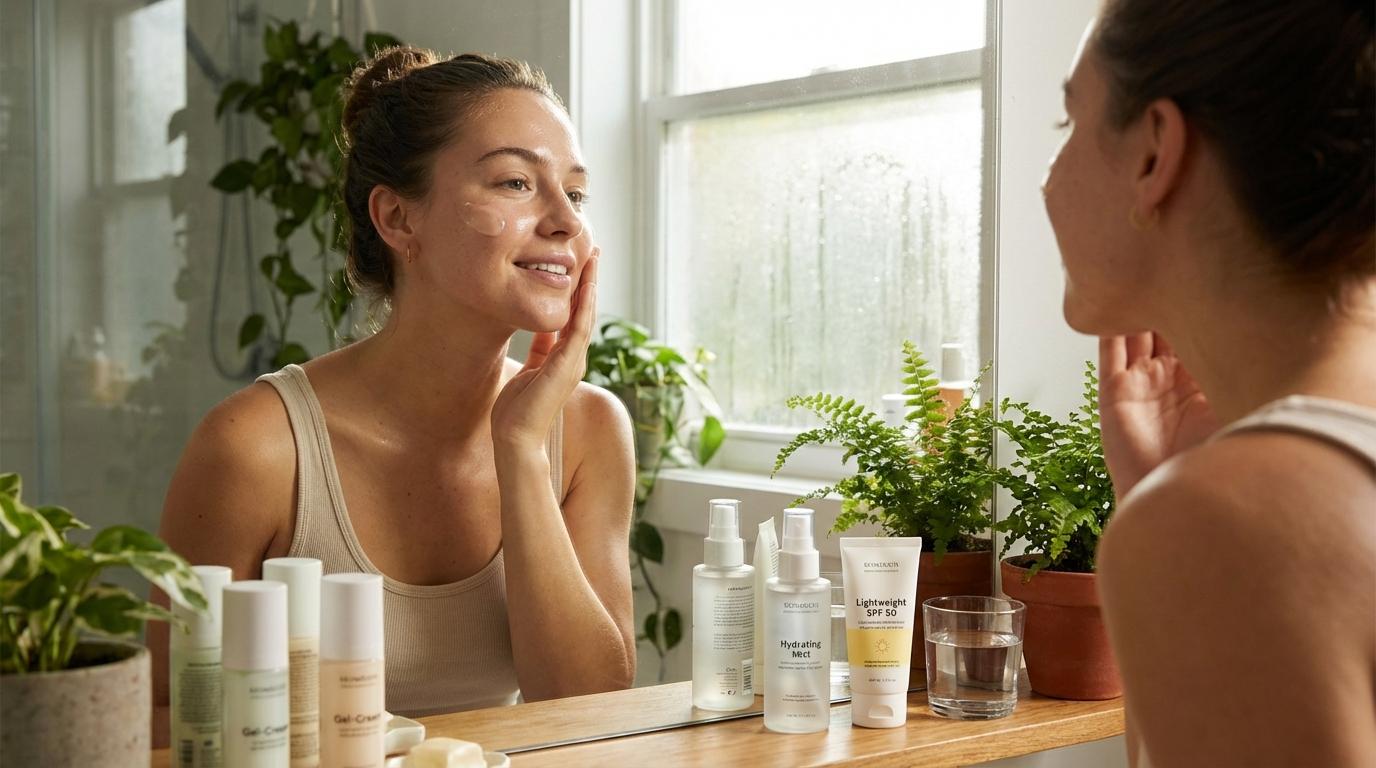
Humidity changes everything about skincare. That thick moisturizer you loved all winter? It’s now sitting on your face like a sweaty mask. The matte sunscreen that used to work? Now it’s sliding off by noon. If you’ve recently moved to a tropical climate or you’re just dealing with summer humidity, your entire routine probably needs a reset. Here’s how to adjust without making your skin freak out.
Why Humid Air Messes With Your Skin
In humid climates, the air is already saturated with moisture. Your skin doesn’t need to work as hard to stay hydrated, which sounds great until you realize it also means your pores are working overtime. The combination of heat and moisture ramps up sebum production, and all that extra oil mixes with sweat and environmental grime to create the perfect recipe for clogged pores and breakouts.
According to NYC dermatologist Dr. Debra Jaliman, humidity and acne are closely linked because the damp, warm air makes your body produce more sweat and sebum. This sticky mixture clogs pores and encourages bacterial growth. So if you’re noticing more breakouts since the humidity kicked in, that’s why.
The good news? Once you understand what’s happening, the fixes are pretty straightforward. You don’t need to buy a whole new routine. You just need to swap out some textures and adjust your approach.
Strip Back Your Cleanser (But Don’t Go Harsh)
You might be tempted to reach for something super strong to blast away all that oil and sweat. Don’t. Stripping your skin triggers more oil production as your face tries to compensate. That’s the opposite of what you want.
Instead, look for a gentle foaming cleanser that can handle the extra grime without disrupting your skin barrier. Something with salicylic acid is a solid choice since it cuts through oil and helps prevent clogged pores. Cleanse twice a day, morning and evening, and consider a quick rinse with just water if you’ve been sweating heavily midday.
If you normally use an oil cleanser for your first cleanse, keep it. Oil cleansing still works in humid climates because it dissolves sunscreen and makeup better than water-based cleansers alone. Just make sure your second cleanse is lightweight enough to remove any residue.
Moisturizer: Go Lightweight or Go Home
This is where people mess up the most. That rich cream you brought from a drier climate? Leave it in the jar. Thick, occlusive moisturizers trap heat and sweat against your skin, leading to irritation and breakouts.
Gel moisturizers are your best friend in humidity. They hydrate without leaving any greasy residue, and they absorb almost instantly. Look for formulas with hyaluronic acid or glycerin, which are humectants that pull moisture from the air (and in humid climates, there’s plenty of moisture to pull). Your skin gets hydrated without the heavy feeling.
Water-based formulas also work well. The key is to avoid anything that feels like it’s sitting on top of your skin rather than sinking in. Your moisturizer should disappear within a minute or two of application. If it’s still tacky after that, it’s too heavy for your current climate.
Some people with very oily skin find they can skip moisturizer entirely in humid conditions and just use a hydrating serum instead. This is fine as long as your skin isn’t feeling tight or dehydrated. Listen to your face.
The Sunscreen Struggle Is Real
Sunscreen in humid weather is genuinely annoying. It can feel suffocating, it slides around, and if you’re sweating a lot, you’re basically re-applying constantly. But skipping it isn’t an option. Humidity doesn’t block UV rays. Even on overcast tropical days, you’re getting significant sun exposure.
The American Academy of Dermatology recommends broad-spectrum SPF 30 or higher, and in intense tropical sun, SPF 50 is a smarter choice. It filters out about 98% of UVB rays, giving you more protection when you’re spending hours outdoors.
The texture matters as much as the SPF. Gel sunscreens and fluid formulas work better in humidity than thick creams. They’re lighter on the skin and less likely to pill or slide off. Matte-finish sunscreens help control shine, which is a bonus when you’re already dealing with excess oil.
Water-resistant formulas are worth it even if you’re not swimming. Sweat counts as water, and a non-water-resistant sunscreen will break down faster as you perspire. Look for “80-minute water resistant” on the label if you’ll be outdoors and active.
Reapplication Without Ruining Everything
Here’s the part nobody wants to talk about: you need to reapply sunscreen every two hours when you’re outside, and more often if you’re sweating heavily. Cleveland Clinic dermatologists note that sweating while exercising or working outdoors can dilute your sunscreen, potentially requiring reapplication within an hour.
If you wear makeup, this is complicated. A few options actually work:
- SPF setting sprays for touch-ups throughout the day (not as thorough as cream, but better than nothing)
- Powder sunscreens that go over makeup without disturbing it
- Accepting that you’ll need to touch up your makeup after reapplying actual sunscreen (sorry, no way around this for maximum protection)
Carrying a compact, travel-size sunscreen makes reapplication way easier. If it’s not in your bag, you won’t do it.
Managing Oil Without Drying Out
Oil control in humidity is a balancing act. Too aggressive and you damage your skin barrier. Too gentle and you’re blotting your face every hour. The goal is to manage excess oil while keeping your skin healthy.
Niacinamide is fantastic for this. It helps regulate sebum production without the irritation that comes from harsh astringents. A niacinamide serum in the morning can keep shine under control for hours. Start with a 5% concentration and work up from there if needed.
Blotting papers are underrated. They remove surface oil without disturbing your sunscreen or makeup underneath. Keep a pack in your bag and use them before reapplying sunscreen for best results.
Avoid mattifying primers that rely on silicones to fill in pores. In humid heat, these can trap sweat and lead to congestion. If you want a primer, look for water-based formulas that absorb oil without creating a seal over your skin.
Exfoliation Keeps Things Clear
When you’re sweating more and producing more oil, dead skin cells can build up faster and contribute to clogged pores. Regular exfoliation helps, but you need to be smart about it.
Chemical exfoliants beat physical scrubs in humid climates. Salicylic acid (BHA) is oil-soluble, so it can penetrate into pores to clear out buildup. Glycolic acid (AHA) works on the surface to remove dead skin cells and brighten your complexion. Using one of these 2-3 times per week should be enough. More isn’t better.
If you’re using a salicylic acid cleanser daily, you might not need additional exfoliation. Pay attention to how your skin responds. Flaky patches or increased sensitivity mean you’re overdoing it.
What About Body Skincare?
Your face isn’t the only thing dealing with humidity. Body acne (especially on your back and chest) is common in hot, humid climates. A few adjustments help:
- Shower immediately after sweating heavily, or at least change out of sweaty clothes
- Use a body wash with salicylic acid or benzoyl peroxide on acne-prone areas
- Wear loose, breathable fabrics like cotton that let your skin breathe
- Change your pillowcase every few days since it absorbs sweat and bacteria
Lightweight body lotions work the same as face moisturizers in humidity. Skip the heavy body butters and opt for fast-absorbing formulas, or skip body moisturizer entirely on humid days if your skin doesn’t feel dry.
Sample Morning Routine for Humid Climates
Here’s a straightforward routine that works without feeling suffocating:
- Gentle foaming cleanser (or salicylic acid cleanser if acne-prone)
- Niacinamide serum for oil control
- Lightweight gel or water-based moisturizer
- Water-resistant, matte-finish sunscreen SPF 30-50
That’s it. Four products. You don’t need ten steps when it’s 90% humidity outside. More products mean more layers trapping heat against your skin.
Sample Evening Routine
- Oil cleanser or micellar water to remove sunscreen
- Foaming cleanser for a thorough second cleanse
- Chemical exfoliant (2-3 times per week only)
- Hydrating serum or lightweight moisturizer
Skip the exfoliant on non-exfoliating nights and go straight to your serum or moisturizer. Your skin recovers overnight, and in humid conditions, it doesn’t need much help staying hydrated.
Adjusting Takes Time
If you’ve just arrived in a humid climate, give your skin a few weeks to adjust before panicking about breakouts. It’s normal for your face to freak out a bit during the transition. Keep your routine simple, avoid introducing new active ingredients while your skin is adjusting, and stay consistent.
The biggest mistake is overcorrecting. One breakout doesn’t mean you need to overhaul everything. Stick with lightweight textures, stay on top of cleansing, and reapply that sunscreen. Your skin will figure out the humidity eventually, and you’ll find your rhythm.