About 85% of niacinamide serums on the market contain between 2% and 10% of the active ingredient, and that range matters more than most people realize. As someone who spent years studying how molecules interact with skin cells, I find niacinamide fascinating because it works through multiple pathways at once. It regulates sebum production by influencing lipid synthesis in sebocytes, strengthens the skin barrier by boosting ceramide production, and reduces hyperpigmentation by inhibiting melanosome transfer. The question isn’t whether niacinamide works; it’s finding formulas that deliver results without draining your wallet.
If you’ve been wondering whether you need to splurge on high-end niacinamide products, the short answer is no. Some of the most effective formulas cost less than a fancy coffee. Let me break down the science behind three budget-friendly options that actually deliver, and explain why the percentage on the label tells only part of the story.
Understanding Niacinamide Percentages
Before we get into specific products, let’s talk about what those percentages actually mean for your skin. Clinical studies have shown that niacinamide becomes effective at concentrations as low as 2%, with most dermatological research focusing on the 2% to 5% range for treating inflammatory conditions and improving barrier function.
At higher concentrations like 10%, you’re getting more potent sebum regulation and potentially faster results for oily skin concerns. However, there’s a trade-off: some people experience flushing, tingling, or irritation at higher percentages. This doesn’t mean the product is damaging your skin, but it does mean that more isn’t always better. Your skin cells can only process so much niacinamide at once, and anything beyond that threshold either sits on the surface or gets washed away.
The formulation matters too. A well-formulated 4% niacinamide serum with proper pH levels and supportive ingredients can outperform a poorly made 10% formula. Keep this in mind as we look at specific products.
The Ordinary Niacinamide 10% + Zinc 1%
This is probably the most famous budget niacinamide product, and for good reason. At roughly $6 to $7 for a 30ml bottle, The Ordinary’s formula delivers a concentrated 10% niacinamide alongside 1% zinc PCA. The zinc addition specifically targets sebum regulation, making this formula particularly effective for oily and acne-prone skin types.
The science behind this combination is solid. Niacinamide inhibits sebocyte lipogenesis (the process that creates excess oil), while zinc has antibacterial properties and helps regulate inflammatory responses. Together, they create a formula that addresses multiple aspects of oily, congested skin. If you’re interested in how niacinamide specifically helps with breakouts, I’ve written about niacinamide for acne in more detail.
A few things to note about this formula: the texture is slightly sticky and can pill under certain moisturizers or sunscreens. Some people also find 10% too strong, especially if they’re new to niacinamide or have sensitive skin. If you experience persistent redness or irritation, it’s not a sign that you need to push through. Your skin is telling you to dial back the concentration.
Application tip: use 2 to 3 drops on damp skin after cleansing and before heavier products. The water helps the product spread evenly and absorb more quickly, reducing that tacky feeling.
CeraVe PM Facial Moisturizing Lotion
If you want niacinamide but don’t need the maximum concentration, CeraVe PM is a smart choice. This moisturizer contains 4% niacinamide integrated into a formula with three essential ceramides and hyaluronic acid. At around $14 to $16 for 89ml, you’re getting a complete nighttime moisturizer that happens to include barrier-supporting niacinamide.
The ceramide-niacinamide combination here is intentional. Research shows that niacinamide increases the skin’s natural ceramide production, and the formula provides additional ceramides topically. This creates a synergistic effect where you’re both boosting internal ceramide synthesis and supplementing from outside. For anyone dealing with compromised barrier function, dryness, or sensitivity, this approach makes a lot of sense.
The 4% concentration is well-tolerated by most skin types, including those who couldn’t handle higher percentages. You won’t see the dramatic sebum reduction that a 10% formula might provide, but you’ll still get the barrier-strengthening and anti-inflammatory benefits. For many people, especially those with dry or combination skin, this represents a better balance.
CeraVe PM absorbs quickly despite being a moisturizer, which is why many people use it during the day too despite the name. It layers well under sunscreen and doesn’t leave a greasy residue.
Good Molecules Niacinamide Brightening Toner
Good Molecules offers a different approach: niacinamide in toner form at a 3% concentration. At about $14 for 120ml, this is an affordable option that works well for those who prefer lighter textures or want to layer multiple active ingredients without overloading their skin.
The lower percentage means you can use this alongside other actives without worrying as much about irritation or interaction issues. If you’re already using retinol, acids, or vitamin C in your routine, a 3% niacinamide toner is much easier to integrate than a concentrated 10% serum. Some dermatologists actually prefer recommending lower-concentration niacinamide for this reason: it plays nicely with complex routines.
The toner format also means you’re getting hydration alongside the niacinamide. Good Molecules includes sodium hyaluronate (a form of hyaluronic acid) and glycerin, so this works as a hydrating step rather than just a treatment step. For anyone trying to simplify their routine, that dual functionality is valuable.
Use this after cleansing by applying to a cotton pad or patting directly into skin with your hands. Follow with your serums and moisturizers as usual.
How to Choose Between These Options
Your skin type and concerns should guide your choice, not just price or brand recognition. Let me break down who benefits most from each option:
- The Ordinary 10%: Best for oily skin, visible pores, and excess sebum production. If controlling shine is your primary goal, this concentration delivers. Start with every other day if you’re new to niacinamide.
- CeraVe PM: Ideal for dry, sensitive, or compromised skin barriers. Also great for minimalists who want fewer products. The gentle percentage works for daily use morning and night.
- Good Molecules Toner: Perfect for layering with other actives or for people who found higher concentrations irritating. Works for all skin types as a supporting player rather than the main event.
If you’ve explored The Ordinary’s other products, you know they formulate potent, no-frills options. Their niacinamide follows that philosophy. CeraVe takes the opposite approach with gentle, multitasking products. Good Molecules lands somewhere in the middle.
What the Research Actually Says
I always want to ground product recommendations in science, so here’s what clinical studies tell us about niacinamide efficacy. A 2006 study published in the Journal of Cosmetic and Laser Therapy found that 4% niacinamide significantly reduced sebum excretion in Japanese participants over 8 weeks. Another study showed that 5% niacinamide improved fine lines, hyperpigmentation, and skin elasticity after 12 weeks of use.
The interesting thing about niacinamide research is that many studies focus on concentrations below 10%. This suggests you don’t necessarily need maximum strength to see benefits. The studies looking at higher concentrations often focus specifically on sebum reduction in very oily skin types.
One more point worth mentioning: niacinamide is remarkably stable compared to other active ingredients. It doesn’t degrade in light like vitamin C or require specific pH ranges like AHA/BHA acids. This stability means even budget products maintain their potency over time, assuming proper storage away from excessive heat.
Building Niacinamide Into Your Routine
Niacinamide is one of the most forgiving active ingredients to work with. Unlike retinoids or acids, it doesn’t require lengthy introduction periods or careful timing. You can use it morning and evening, and it pairs well with most other ingredients including hyaluronic acid, peptides, and even retinol.
The one combination to approach cautiously is niacinamide with vitamin C, specifically L-ascorbic acid. Older research suggested they could react and cause flushing, though newer formulation science has largely resolved this issue. If you want to use both, either choose a combined formula designed for compatibility or apply them at different times of day.
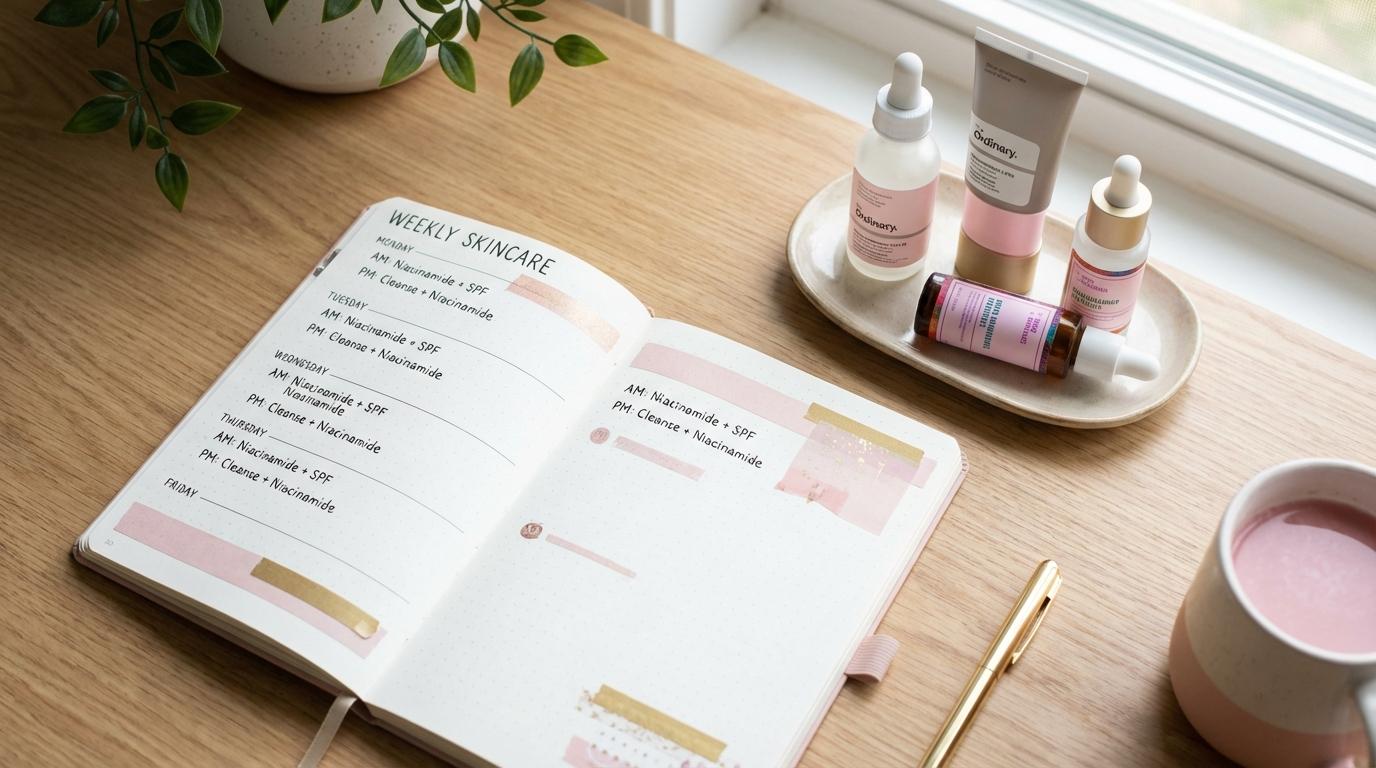
A simple routine incorporating niacinamide might look like this:
- Morning: Cleanser, niacinamide product, moisturizer, sunscreen
- Evening: Cleanser, niacinamide product (or use a niacinamide moisturizer), any treatment products
You don’t need multiple niacinamide products. Pick one based on your skin type and use it consistently. Results typically become visible around the 4 to 8 week mark, though some people notice reduced oiliness within the first two weeks.
Your Budget, Your Choice
All three products I’ve discussed cost under $20 and deliver legitimate niacinamide benefits backed by research. The price differences between budget options like these and luxury niacinamide products (which can run $60 or more) don’t reflect proportional differences in efficacy. The molecule is the same whether it comes in cheap packaging or expensive glass bottles.
What matters is finding the concentration and format that your skin responds to positively. If 10% irritates you, that doesn’t mean niacinamide isn’t for you. It means you need a lower percentage. If toners feel too light, a cream-based formula might be more satisfying. The best skincare product is always the one you’ll actually use consistently.
Give whichever product you choose at least 6 to 8 weeks before judging results. Niacinamide works by influencing cellular processes that don’t change overnight. Be patient, be consistent, and let the science do its work.