
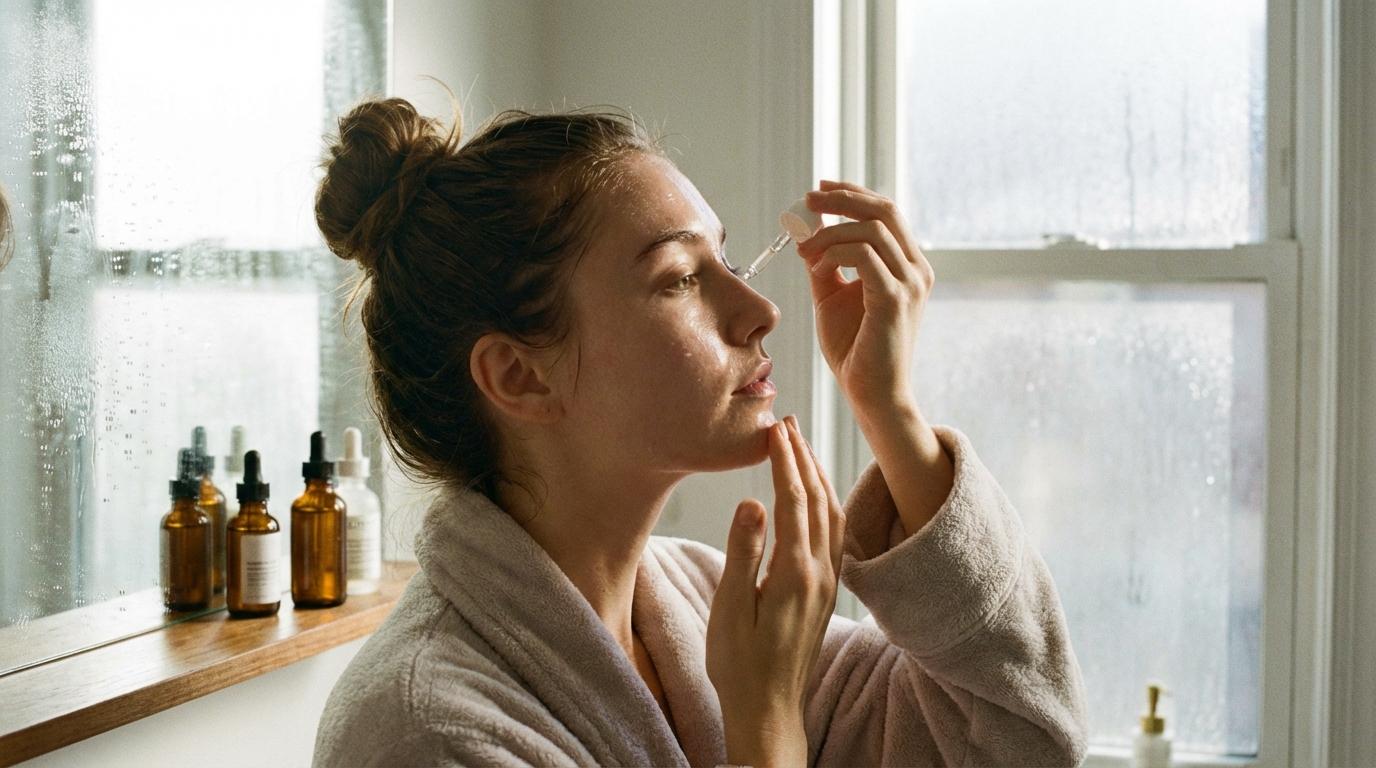
You have probably heard this advice before: apply your skincare while your face is still damp. But is this just one of those things people say, or is there actual science behind it? Turns out, the timing of your product application can genuinely affect how well your skin absorbs it.
The Science of Damp Skin Absorption
Your skin is not a sponge that just soaks up whatever you put on it. The outermost layer, called the stratum corneum, acts as a barrier. When this layer is dry, it forms a tighter structure that is harder for products to penetrate. When it is hydrated, the barrier loosens up a bit.
According to dermatological research, hydrated skin can be up to 10 times more permeable than dry skin. That is a significant difference in how much of your serum or moisturizer actually gets absorbed versus just sitting on the surface.
Water acts as a penetration enhancer. It swells the corneocytes (the flat cells in your outer skin layer) and creates more space between them for ingredients to pass through. This is why so many skincare professionals recommend the damp skin application method.
The Golden Minute Rule
You have about 60 seconds after cleansing before your skin starts drying out. This is your optimal window for applying water-based products like toners and serums. After that minute passes, you start losing the hydration advantage.
This does not mean you need to rush through your routine in a panic. Just pay attention to how your skin feels. If it is still slightly damp to the touch, you are in the right zone.
Which Products Benefit Most
Not every product needs damp skin application. Here is the breakdown:
Best on damp skin:
- Hyaluronic acid serums: HA is a humectant that pulls in water. Apply to dry skin and it might pull moisture out instead. On damp skin, it has water to work with.
- Water-based serums: Any lightweight, watery formula will spread better and absorb more effectively on damp skin.
- Toners and essences: These are designed to be applied to freshly cleansed, damp skin.
- Moisturizers: Applying over slightly damp skin helps lock in that extra hydration.
Better on dry skin:
- Retinoids: Already potent and potentially irritating. When layering retinol, applying to wet skin can increase absorption too much, leading to irritation.
- Strong acids (high-percentage AHAs/BHAs): Same logic as retinoids. You want controlled penetration.
- Vitamin C (L-ascorbic acid): This ingredient is already unstable. Water can affect its pH and effectiveness.
- Benzoyl peroxide: Better on dry skin to avoid over-irritation.
The Permeability Problem
Here is something important to consider: increased absorption is not always better. If a product contains irritating ingredients, damp skin will help those penetrate more too. This is why strong actives often work better on fully dry skin.
As dermatologists point out, the goal is controlled delivery. You want your beneficial ingredients to penetrate appropriately without overwhelming your skin barrier.
If you are using a new product and want to test it cautiously, applying to dry skin can be a way to reduce initial penetration while you see how your skin reacts.
How to Actually Do It
Here is a practical routine:
- Cleanse your face
- Pat gently with a towel to remove excess water, but leave skin slightly damp (not dripping)
- Apply toner or essence while still damp
- Follow immediately with serum
- Wait for serum to absorb (about 30 seconds)
- Apply moisturizer
- Let everything set before sunscreen or makeup
The key is not soaking wet skin. You want that slightly tacky, freshly cleansed feel where the surface moisture is present but not pooling.
Body Care Works the Same Way
This principle applies beyond your face. Body lotions and oils work significantly better when applied right after showering, while your skin is still slightly damp. The American Academy of Dermatology specifically recommends this for people with dry skin.
Ever notice how your legs absorb lotion way faster right after a shower? That is the damp skin effect in action. Your whole body benefits from this timing.
When It Does Not Matter
Some products are formulated to work regardless of skin hydration status. Sunscreens, for example, need to form an even film on your skin and should be applied as the last step of skincare, on dry skin, so they do not get diluted or disrupted.
Makeup primers and anything designed to create a base layer also work better on completely dry skin for proper adhesion.
The damp skin rule is most relevant for treatment products where you want active ingredients to penetrate effectively. For barrier and protective products, dry application is usually fine or even preferred.
Pay attention to what your skin responds to. Some people find their skin handles all products fine on damp skin, while others need to be more selective. The basics, though, hold true: hydrated skin is more receptive skin, so use that to your advantage with the right products.