
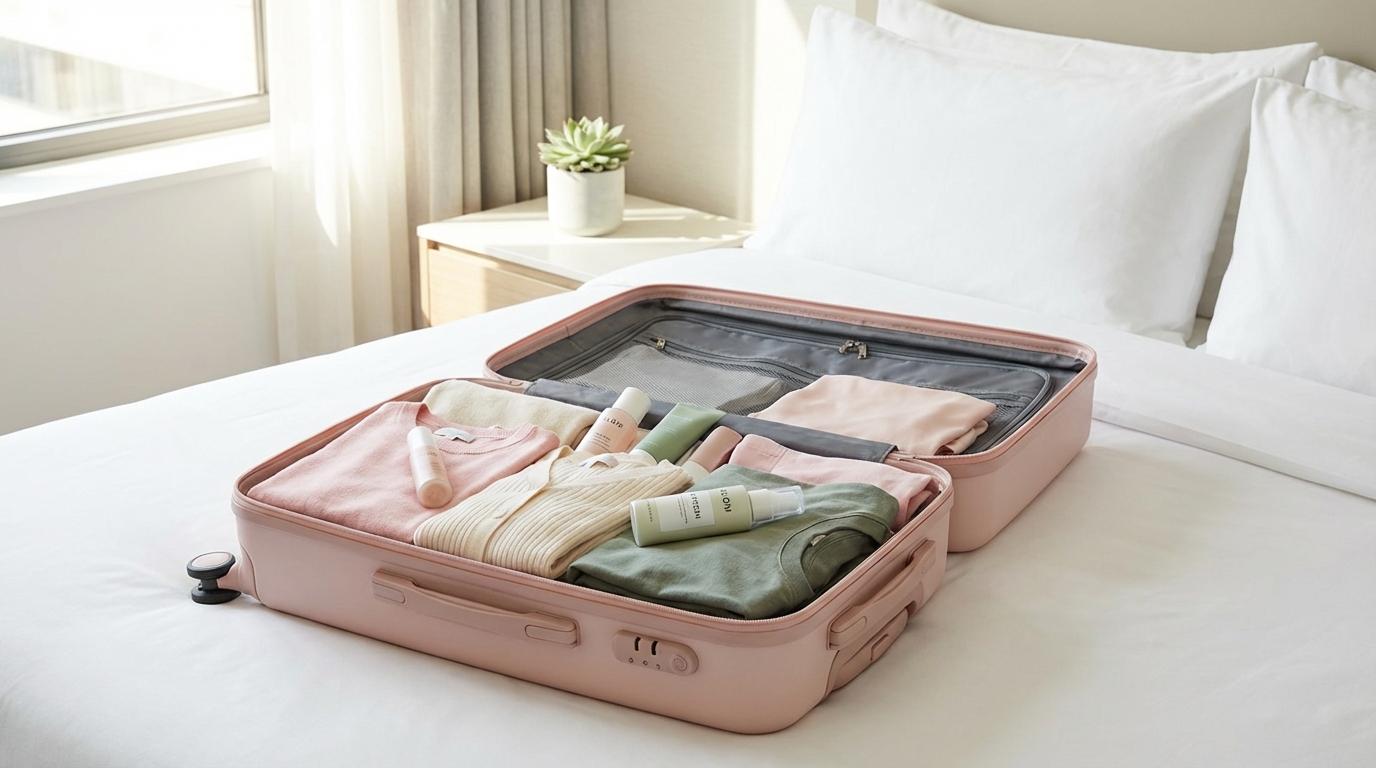
About 67% of travelers admit to abandoning their skincare routine entirely when they hit the road, and honestly, I get it. Between TSA restrictions, limited luggage space, and the chaos of being somewhere new, skincare often becomes the first thing we sacrifice. But here’s the thing: travel is actually when your skin needs consistent care the most. Changing climates, recycled airplane air, and disrupted sleep all take a toll. The good news? You don’t need to lug your entire bathroom cabinet along to keep your skin happy.
The Real Cost of Travel-Size Products
Let’s talk math for a second, because this is where things get interesting. A 1-ounce travel-size moisturizer typically costs around $8-12 at airport shops or drugstores. That same product in its full 2-ounce size might cost $15. Per ounce, you’re paying nearly double for the convenience of a smaller bottle. Over a year of frequent travel, those markups add up to hundreds of dollars.
Decanting into reusable containers costs a fraction of that. A set of TSA-approved silicone bottles runs about $10-15 and lasts for years. The initial investment pays for itself after just one or two trips. Plus, you get to keep using the products you already know work for your skin, rather than gambling on whatever the airport Hudson News has in stock.
There’s a technique to decanting that matters, though. Squeeze bottles work better than jars for creams and gels because you’re not sticking your fingers in repeatedly (bacteria introduction is real, especially when traveling). For serums, look for containers with droppers or pump mechanisms. Label everything clearly, and I mean everything. That mystery liquid you thought was toner might turn out to be micellar water at 6 AM.
TSA-Friendly Picks That Actually Work
The 3.4-ounce (100ml) liquid rule isn’t going anywhere, so we might as well work with it. Some product formats naturally comply without any decanting needed. Solid cleansing bars, for instance, have seen a major resurgence in quality over the past few years. Brands like CeraVe make hydrating cleansing bars that won’t strip your skin the way old-school bar soaps did.
Cleansing balms in solid form work beautifully too. They melt on contact with warm skin and remove sunscreen and makeup without liquid restrictions. Many come in tins that slide right into your toiletry bag without any leak anxiety.
For moisturizer, look for concentrated formulas that deliver more hydration in smaller amounts. Products with ceramides and hyaluronic acid tend to pack more punch per drop than basic lotions. A 1.7-ounce tube of a well-formulated moisturizer can easily last a two-week trip if you’re not over-applying.
Sunscreen sticks have become genuinely excellent. They’re not the chalky, draggy formulas of ten years ago. Modern mineral stick sunscreens blend smoothly and make reapplication during the day totally painless. No liquid, no mess, no TSA concerns.
Multi-Use Products Worth the Hype
This is where strategic product selection really shines. Some products can legitimately replace two or three others without compromising on results. A good facial oil, for example, can serve as your nighttime moisturizer, cuticle treatment, and hair serum for dry ends. Jojoba and squalane work particularly well for this because they’re lightweight enough for multiple uses.
Tinted moisturizers with SPF combine three steps into one: hydration, sun protection, and light coverage. For travel, this means one product instead of three separate ones taking up quart bag real estate. Look for formulas with at least SPF 30 and broad-spectrum protection.
If you struggle with blemishes, a niacinamide serum pulls double duty. It helps with oil control, pore appearance, and general skin texture all at once. A single 1-ounce bottle covers your treatment step for both morning and evening routines.
Micellar water deserves special mention here. It cleanses, removes makeup, and works as a light toner. For shorter trips where you’re trying to pack absolutely minimally, micellar water plus moisturizer plus sunscreen covers your basics. I’ve written about multi-use products before, and they really do make travel so much simpler.
Building Your Minimal Travel Routine
The question isn’t really “what should I bring?” but “what can I realistically skip for a week or two?” Most treatment products, like retinoids or strong exfoliating acids, can take a break during travel. Your skin won’t forget all the progress you’ve made, and honestly, travel stress plus strong actives sometimes equals irritation anyway.
The non-negotiables are cleansing, moisturizing, and sun protection. Everything else is optional depending on your trip length and destination. A five-day beach vacation requires different considerations than a two-week European tour through varying climates.
For most trips under two weeks, here’s what actually matters:
- One gentle cleanser (solid or decanted liquid)
- One moisturizer appropriate for your destination’s climate
- Sunscreen (preferably a stick or mini tube)
- One treatment product if you have specific concerns (spot treatment, hydrating serum, etc.)
That’s it. Four products maximum. Everything else is bonus content that adds weight without proportional benefit.
Climate Considerations That Actually Matter
Your skin doesn’t care about your itinerary, but it definitely notices humidity changes. Flying from a humid climate to a dry one, like Miami to Denver, will have your skin screaming for richer moisturizer within 48 hours. The opposite switch might leave you feeling oilier than usual.
Rather than packing for every scenario, bring your usual moisturizer and supplement as needed. A tiny container of facial oil can boost hydration in dry climates. If you end up somewhere humid and your skin feels congested, skip the oil and use moisturizer alone. Adaptability beats over-packing every time.
Airplane cabins are notoriously dry, with humidity levels around 10-20% compared to the 40-60% most of us experience at home. A hydrating mist can make long flights more comfortable, but it’s not mandatory. Drinking water and applying moisturizer before your flight accomplishes most of the same goal.
Where to Actually Save and Spend
Travel is not the time to bring expensive products you’d be devastated to lose. That $90 serum? Leave it home. Luggage gets lost, toiletry bags get forgotten in hotel bathrooms, and things spill. Bring products you’d be okay replacing from a drugstore if needed.
Budget-friendly options that travel well include CeraVe moisturizing cream, Neutrogena Hydro Boost for lighter hydration needs, and basically any drugstore SPF that you’ll actually use. The best sunscreen is the one you’ll reapply, not the one collecting dust because you’re afraid to use it up. If you want help finding affordable acne-fighting options, I’ve covered some solid picks in this post.
Save your high-end products for home, where you can store them properly and use them consistently. Travel is about maintenance, not transformation. Your skin can wait two weeks for that fancy treatment.
Practical Packing Tips
Silicone leak-proof containers outperform cheap plastic ones by a significant margin. The soft squeeze makes dispensing easier, and the secure lids actually stay closed under cabin pressure changes. Worth the slightly higher upfront cost.
Pack toiletries in your carry-on even if you’re checking luggage. Lost bags are annoying, but arriving somewhere without any skincare options is worse. The one-quart bag fits more than you think if you choose products strategically.
Contact lens cases make excellent containers for single trip portions of thicker products like night cream or moisturizer. Each side holds enough for about three applications. They’re cheap, leak-proof, and take up almost no space.
If you’re staying somewhere longer than a week, consider shipping products to your destination ahead of time. This sounds extra, but for extended stays, it means you can bring full-size products without TSA restrictions. Many hotels will hold packages for incoming guests.
When to Skip the Routine Entirely
Sometimes the best travel skincare approach is radical simplicity. Camping trip with no running water? Micellar water and moisturizer. Festival weekend where you’re barely sleeping anyway? Sunscreen during the day, basic cleanser at night, done.
Your skin is more resilient than skincare marketing wants you to believe. A few days of minimal care won’t undo months of good habits. What matters is returning to your normal routine when you get home, not forcing a complicated regimen into situations where it doesn’t fit.
The goal of travel skincare isn’t perfection. It’s maintaining enough consistency that your skin stays comfortable and healthy while you focus on actually enjoying your trip. Pack light, keep it simple, and save the elaborate routine for when you’re back in your own bathroom.