
So you’ve got an oily T-zone that could fry an egg by noon, but your cheeks are somehow doing their best impression of the Sahara Desert. Welcome to the combination skin club. (We don’t have matching t-shirts, but we do have a lot of half-used products.)
Here’s the thing about combination skin: it’s basically your face playing two different games at once. And for years, I thought I had to pick a side. Treat the oily parts and watch my dry patches flake off? Or slather on moisture and turn into an oil slick by lunch? Neither option is cute.
But after way too much trial and error (and one memorable incident involving a clay mask that left my cheeks screaming), I finally figured out the approach that actually works. Spoiler: it involves treating different parts of your face like the unique little zones they are.
Understanding Your Face’s Split Personality
Before we get into the how, let’s talk about the why. Combination skin happens because your face has more oil glands in certain areas (the forehead, nose, and chin, aka the T-zone) than others (cheeks, jawline, under-eye area). This is completely normal. Like, your face is literally built this way.
The tricky part is that most skincare products assume your entire face is one consistent skin type. They’re either formulated for oily skin or dry skin, which leaves those of us in the middle feeling a bit abandoned. But here’s what finally clicked for me: you don’t have to use the same products everywhere.
According to the American Academy of Dermatology, combination skin is actually one of the most common skin types. So if you’re dealing with this, you’re definitely not alone in the struggle.
The Multi-Masking Strategy (It’s Not Just a Trend)
Okay, I know “multi-masking” sounds like something influencers made up to sell more products. But hear me out, because this actually makes a lot of sense when you think about it.
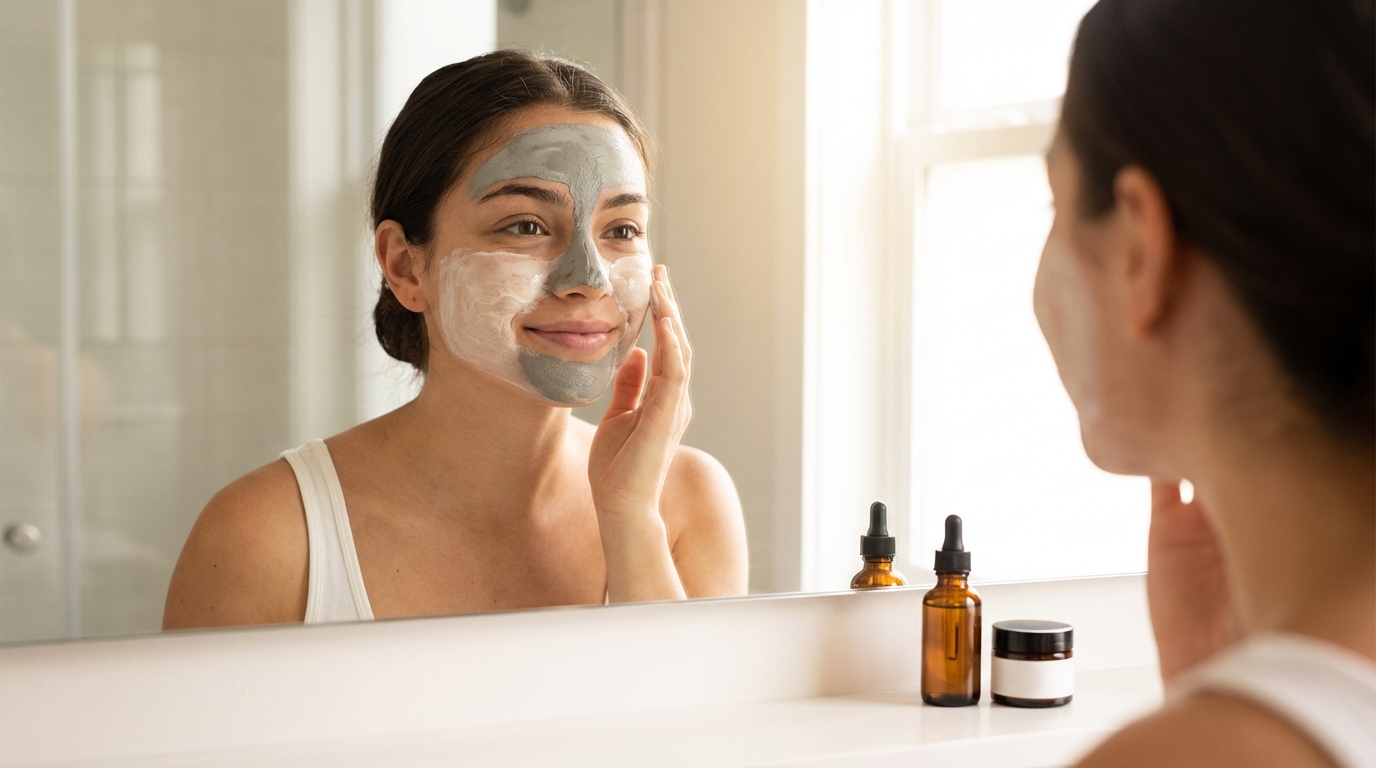
The concept is simple: use different masks (or treatments) on different areas of your face at the same time. Clay mask on your oily T-zone, hydrating mask on your dry cheeks. You look a little ridiculous for 15 minutes, but the results are worth it.
Here’s how I usually do it:
- For the oily zones: A clay or charcoal mask works well here. Look for ingredients like kaolin clay or bentonite, which absorb excess oil without being too harsh. I apply this to my forehead, nose, and chin.
- For the dry zones: A hydrating or cream-based mask on the cheeks. Ingredients like hyaluronic acid, aloe, or glycerin are your friends here. These areas need moisture, not more stripping.
- Timing matters: Start with the clay mask since it usually needs longer to dry. Then apply your hydrating mask a few minutes later so everything can rinse off together.
You can do this once or twice a week, depending on how your skin is behaving. And honestly, it’s kind of satisfying to address both issues at once instead of playing whack-a-mole with your skin problems.
Zone-Specific Daily Care (Without Losing Your Mind)
Multi-masking is great for weekly maintenance, but what about your daily routine? This is where things used to get complicated for me. I’d stand in my bathroom with five different products, trying to remember which areas got what.
After simplifying (a lot), here’s what actually works:
Cleanser: Use a gentle, balanced cleanser all over. You don’t need separate cleansers for different zones, that’s just exhausting. Look for something labeled “for all skin types” or “pH-balanced.” The research on skin pH shows that keeping your cleanser gentle matters more than targeting specific areas.
Toner or essence: This is optional, but if you use one, apply it everywhere. A hydrating toner won’t make your oily areas worse. The whole “toner strips oil” thing is outdated (unless you’re using those old-school astringent ones, which, please don’t).
Moisturizer: Here’s where you can customize without going overboard:
- Use a lightweight, gel-based moisturizer on your T-zone
- Use a richer cream on your dry areas
- Or (the lazy-but-effective approach) use a medium-weight moisturizer everywhere and just apply a thinner layer on oily spots
Sunscreen: Non-negotiable for everyone, everywhere on your face. If you’re worried about it making your T-zone oily, look for a mattifying formula or one labeled “oil-free.” But please don’t skip it on certain areas. Your whole face needs sun protection.
Products That Actually Work for Both Worlds
I’m not going to give you a shopping list of 20 products (your wallet and I both know that’s not helpful). Instead, here are some ingredient and formula types that tend to work well for combination skin across the board:
Niacinamide: This is honestly the MVP for combination skin. It helps regulate oil production in oily areas while also strengthening the skin barrier everywhere. Most skin types tolerate it well, and it plays nice with other ingredients. Paula’s Choice has a good breakdown on why it works.
Hyaluronic acid: Despite the “acid” in the name, this is actually a hydrator. It draws moisture into the skin without adding oil, which makes it great for both dry and oily zones. Lightweight formulas with hyaluronic acid won’t clog pores or feel heavy.
Gel-cream hybrids: These moisturizers have become more common lately, and they’re kind of perfect for combination skin. They hydrate without being heavy, and they absorb quickly. If you don’t want to use different moisturizers on different zones, a gel-cream is a solid middle ground.
What to avoid (or use sparingly):
- Heavy oils all over your face, save these for dry patches only if you want to use them
- Harsh exfoliants that strip everything, these trigger more oil production in oily areas and make dry areas worse
- Products with high alcohol content, drying for everyone, but especially confusing for combination skin
If you’re looking for more guidance on building a routine that doesn’t require a PhD in skincare, check out our other routine guides for some no-nonsense starting points.
The Real Talk Part
Look, combination skin isn’t a problem to be “fixed.” It’s just how your face works. The goal isn’t to turn your entire face into one skin type (that’s not really possible anyway). The goal is to give each area what it needs so you can stop fighting with your own skin.
Some days, your T-zone will be oilier than others. Some days, your cheeks will be drier. Hormones, weather, stress, and about a hundred other factors can shift things around. That’s normal. The strategy isn’t about achieving some perfect balance. It’s about having the tools to adjust when you need to.
And honestly? Once you stop trying to force your whole face into one routine and start treating it like the complex, zone-having situation it actually is, everything gets easier. (Plus, multi-masking is genuinely fun once you get over looking like a patchwork quilt for 15 minutes.)
Now go forth and treat your zones accordingly. Your forehead and your cheeks can both win. At the same time.