
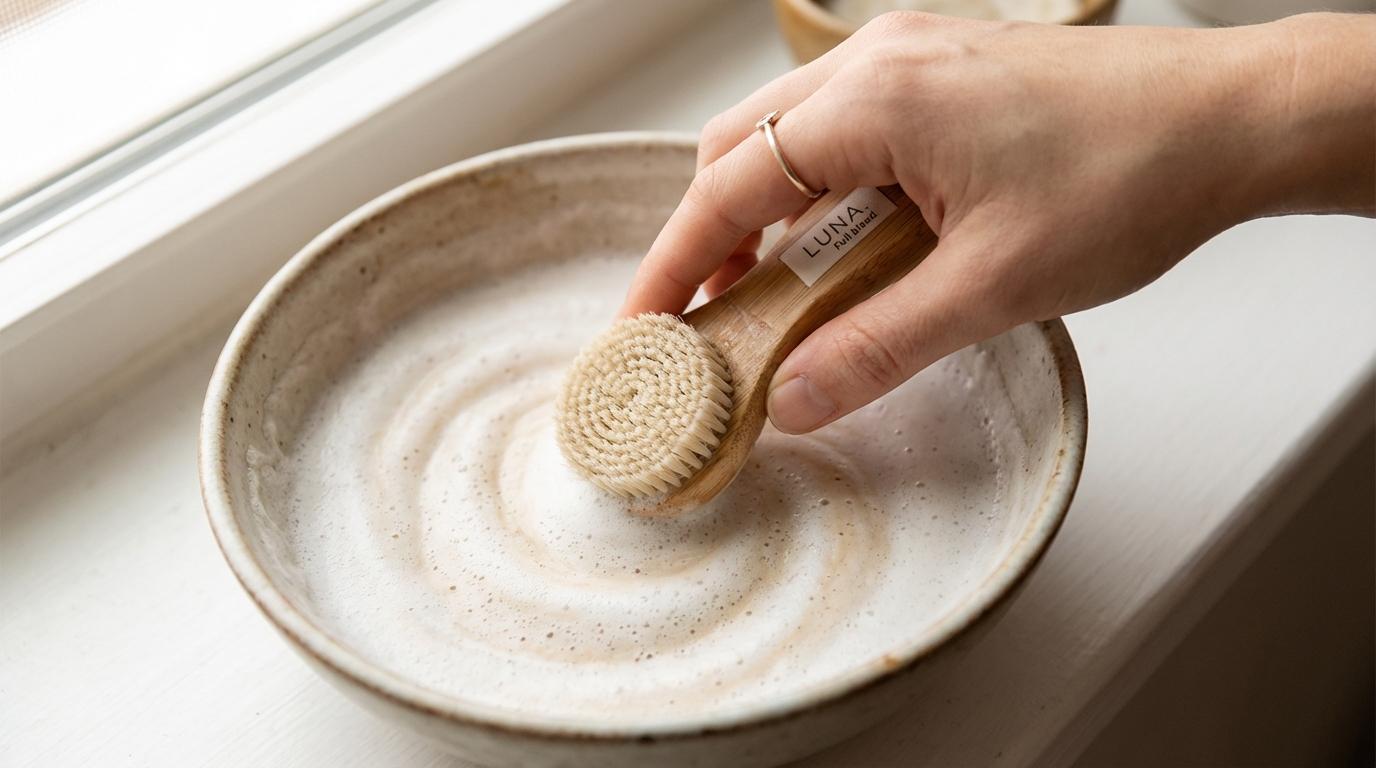
Scrubbing your face harder will get rid of acne faster. Except, no, it absolutely will not, and I had to learn that the hard way after spending my entire sophomore year looking like I lost a fight with a cheese grater (spoiler: the cheese grater was a walnut scrub). Physical exfoliation seems so logical, right? You see dead skin, you scrub it off, problem solved. But when acne enters the chat, all those tiny scrubbing particles become little vehicles for spreading bacteria across your face like you’re seeding a field of future pimples.
Chemical exfoliation, on the other hand, doesn’t physically scrape anything. It dissolves the glue holding dead skin cells together and gets deep into pores without all that friction. And honestly? Once I made the switch, my skin calmed down so much that I genuinely thought something was wrong at first (turns out clear skin just feels weird when you’re not used to it).
Why Physical Scrubs Are Basically Sabotage for Acne-Prone Skin
Let me paint you a picture. You’ve got a pimple (or five). It’s inflamed, maybe a little angry, definitely plotting something. And you go in with a scrub full of crushed apricot pits or sugar crystals, thinking you’re helping. What actually happens is you’re creating micro-tears in your skin, which is already compromised from the acne inflammation.
But here’s where it gets really fun (and by fun I mean horrifying): when you scrub over active breakouts, you’re literally dragging bacteria from one spot to another. That pustule you just scraped? You’ve now introduced its contents to the surrounding area. It’s like if someone sneezed and you decided the best response was to rub their face all over yours. Your breakouts aren’t staying contained anymore because you’re giving them a guided tour of your entire face.
According to the American Academy of Dermatology, scrubbing acne-prone skin can actually worsen breakouts and increase the risk of scarring. And nobody wants that. Especially when there’s a gentler option sitting right there.
AHA vs BHA: Your Chemical Exfoliation Starter Guide
Okay, so chemical exfoliation uses acids (don’t panic) to dissolve dead skin instead of scraping it. The two main players are AHAs and BHAs, and understanding which one you need is half the battle.
AHAs (Alpha Hydroxy Acids) include glycolic acid and lactic acid. They’re water-soluble, which means they work on the surface of your skin. They’re amazing for improving texture, fading dark spots from old breakouts, and giving you that smooth, even skin tone you’ve been dreaming about. If your acne situation is mostly under control but you’re dealing with the aftermath (hello, post-inflammatory hyperpigmentation), AHAs are your friend.
BHAs (Beta Hydroxy Acids), specifically salicylic acid, are oil-soluble. This is the important part for acne: because they can dissolve in oil, they can actually penetrate into your pores where the sebum and bacteria are having their little party. BHAs get in there and break up the gunk that’s causing clogs in the first place. If you’re still actively breaking out, salicylic acid should probably be your first pick.
The thing is, you don’t always have to choose. Some products combine both (looking at you, The Ordinary’s AHA 30% + BHA 2% Peeling Solution), but that’s advanced stuff. If you’re just starting out, I’d go with a straightforward salicylic acid product and see how your skin responds. You can check out our breakdown of The Ordinary products to find affordable options that actually work.
Why Chemical Exfoliation Wins Every Time
Here’s what makes chemical exfoliants so much better for acne-prone skin:
- No physical trauma: You’re not creating micro-tears or spreading bacteria around. The acid does its thing without you scrubbing like you’re trying to remove a tattoo.
- Pore penetration: Especially with BHAs, you’re getting into the pore itself, not just the surface. This means actually addressing the cause of breakouts, not just the symptoms.
- Anti-inflammatory properties: Salicylic acid is actually derived from the same source as aspirin and has natural anti-inflammatory benefits. So it’s calming your skin while it’s clearing it.
- Consistent results: You can’t really over-scrub with a leave-on acid (well, you can overuse it, but that’s a different conversation). The formula does the work evenly across your face.
Plus, and this is purely a me thing, chemical exfoliation feels fancy. Like you’re giving yourself a mini facial instead of aggressively sandpapering your face while standing in your bathroom at 11pm questioning your life choices.
How Often Should You Actually Do This?
This is where people mess up (myself included, multiple times). You find out chemical exfoliation works, so you think more is better. Suddenly you’re using your salicylic acid morning and night, you’ve added a glycolic toner, maybe a retinol for good measure, and your skin barrier is screaming for mercy while you wonder why you’re somehow breaking out worse than before.
Here’s the deal: start slow. Like, embarrassingly slow.
For beginners:
- Start with 2-3 times per week
- Use it at night (your skin repairs while you sleep anyway)
- Wait at least 3-4 weeks before increasing frequency
- If you’re using a leave-on BHA like a serum, once a day max once you’ve built tolerance
For the overeager among us:
- If your skin feels tight, looks red, or is flaking excessively, you’re doing too much
- Skip a few days and let your barrier recover
- Adding more products won’t fix irritation (trust me on this one)
Dr. Shereene Idriss, a board-certified dermatologist, has talked extensively about the importance of not overdoing active ingredients. Your skin isn’t a project that needs to be completed in a weekend. It’s more like a long-term relationship where consistency matters more than intensity.
Putting It Into Your Actual Routine
Because I know someone’s going to ask: here’s how this fits into a routine you can actually stick to.
Night routine with chemical exfoliation:
- Oil cleanser (if you wear makeup/sunscreen)
- Water-based cleanser
- BHA serum or AHA toner (wait about a minute to let it work)
- Moisturizer
That’s it. You don’t need seventeen steps. You don’t need to layer six different acids. You need consistency and patience, two things that are admittedly very boring but extremely effective.
On the nights you’re not using your acid, you can use other treatments like niacinamide (which pairs well with BHAs actually) or a simple hydrating serum. The goal is to rotate, not pile on.
What About Enzyme Exfoliants?
Quick honorable mention to enzyme exfoliants because they’re kind of a middle ground. Papaya enzyme, pineapple enzyme, these work by breaking down dead skin proteins without the harshness of scrubs or the intensity of acids. They’re gentler and could be a good option if you have super sensitive skin that throws a tantrum at everything.
That said, for acne specifically, enzymes don’t penetrate pores the way BHAs do. They’re more of a surface-level situation. Nice to have, but probably not your main event if you’re trying to tackle active breakouts.
Real Talk: The Purging Phase
When you start chemical exfoliation, you might experience something called purging. This is different from a breakout caused by a product not agreeing with your skin. Purging happens because the acid is speeding up cell turnover, which means all those clogs that were forming deep in your pores are coming to the surface faster than usual.
Purging typically:
- Happens in places you normally break out
- Looks like small whiteheads or bumps coming to a head quickly
- Resolves within 4-6 weeks
A regular breakout from a product that doesn’t work for you:
- Shows up in new places
- Might include cystic acne or prolonged irritation
- Doesn’t get better with continued use
If you’re not sure which one you’re experiencing, Lab Muffin has a great breakdown of how to tell the difference.
Products That Actually Work (Without Breaking the Bank)
Because I know you’re wondering:
For BHA/Salicylic Acid:
- Paula’s Choice 2% BHA Liquid Exfoliant (the gold standard, honestly)
- The Ordinary Salicylic Acid 2% Solution (budget-friendly and effective)
- CeraVe SA Cleanser (if you want a rinse-off option to start with)
For AHA:
- The Ordinary Glycolic Acid 7% Toning Solution
- Pixi Glow Tonic (glycolic acid at a gentler percentage)
- Good Molecules Overnight Exfoliating Treatment
You don’t need the expensive version to see results. According to research published in the Indian Dermatology Online Journal, salicylic acid at concentrations between 0.5-2% is effective for treating acne, regardless of whether it’s in a $12 bottle or a $60 one.
When to Call In Backup
Chemical exfoliation is amazing, but it’s not a miracle worker (I know I’m not supposed to use that word but I’m using it here to say it’s NOT that). If you’re dealing with cystic acne, hormonal breakouts that coincide with your cycle, or acne that just won’t quit no matter what you try, it might be time to see a dermatologist.
Over-the-counter chemical exfoliants work best for:
- Blackheads and whiteheads (comedonal acne)
- Mild to moderate breakouts
- Texture issues and clogged pores
- Prevention more than treatment of severe acne
There’s no shame in needing prescription-strength help. Sometimes topical retinoids, antibiotics, or other treatments are what you need, and chemical exfoliation can complement those once your skin is stable.
The Part Where I Tell You to Be Patient
I really, genuinely wish I could tell you that switching from physical to chemical exfoliation will clear your skin in two weeks. But skin cells take about 28 days to turn over (longer as you get older, which is rude but whatever), so any skincare change needs at least a month to show real results.
Throw away the walnut scrub (please, I’m begging you). Get yourself a simple BHA product. Use it consistently, not aggressively. Wear sunscreen because AHAs and BHAs can increase sun sensitivity. And give it time.
Your face isn’t a problem to be solved with force. It’s skin. It wants to be healthy. Sometimes you just have to stop scrubbing long enough to let it do its thing.