
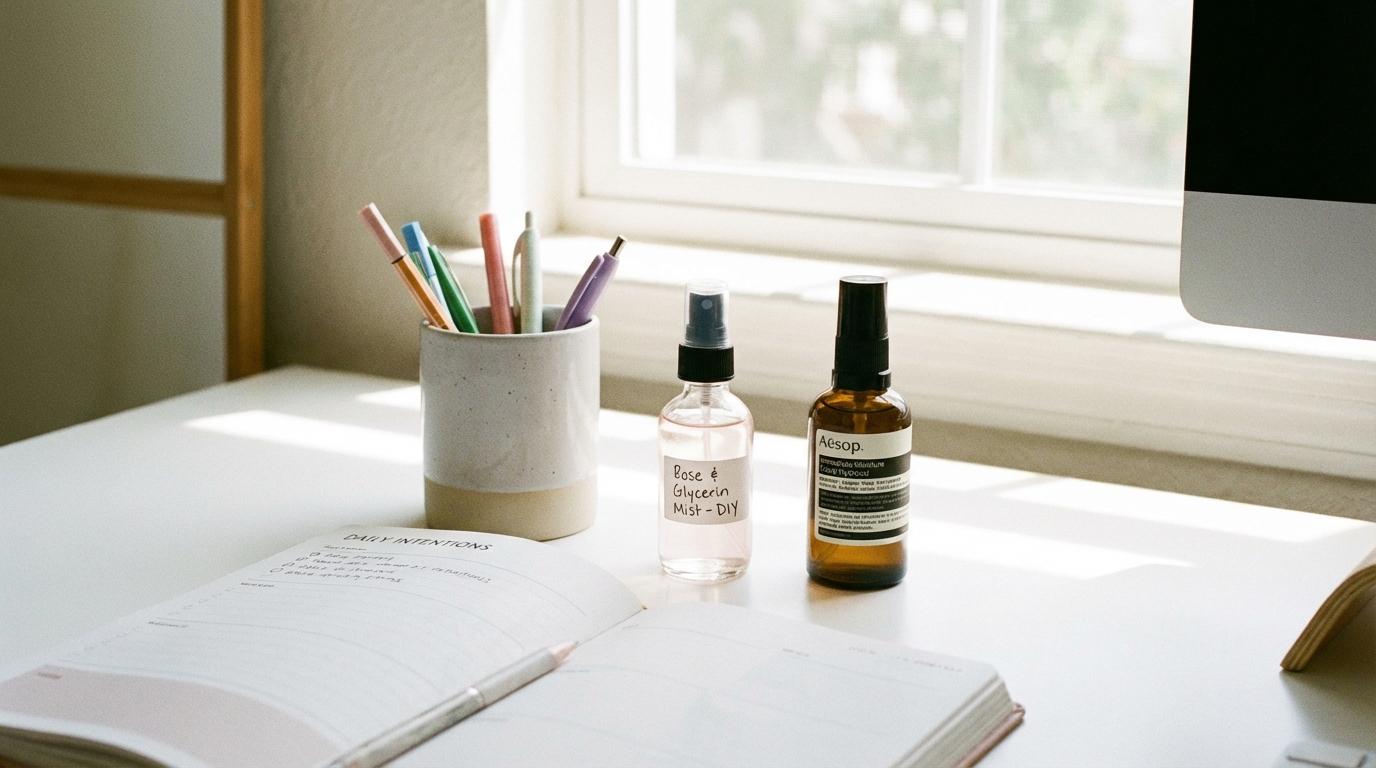
About 97% of homemade water-based skincare products, including face mists, will grow bacteria within two weeks if not properly preserved. That statistic alone should make you pause before whipping up a rose water spray from your latest Pinterest find. I love a good DIY moment, but the science behind preservation is where most homemade mists fall apart, sometimes literally.
The Real Cost Comparison
Let’s break down the math people rarely do. A basic DIY face mist requires distilled water, a hydrosol or botanical extract, maybe some aloe vera, and a preservative if you want it to last more than a week. The distilled water runs about $1. A decent rose hydrosol costs $15-25 for a bottle that might make four batches. Aloe vera is another $8-12. A proper cosmetic preservative like Optiphen or Leucidal costs $10-15 for a small amount you might never finish before it expires.
Your first batch alone costs roughly $35-50 in supplies. Compare that to the Pixi Glow Mist at $15, Heritage Store Rosewater at $8, or Mario Badescu Facial Spray at $7-12. The store-bought option wins on cost unless you plan to make mists constantly for years. Even then, the math gets questionable when you factor in ingredient waste and the risk of spoiled batches.
Why Homemade Mists Spoil So Fast
Water is bacteria’s favorite environment. The moment you add water to anything, you create a potential breeding ground for microorganisms. Commercial face mists contain carefully calibrated preservative systems tested in labs to ensure stability for 12-24 months. Your kitchen has none of these safeguards.
Without preservatives, a homemade face mist lasts 3-7 days refrigerated. With grapefruit seed extract, which many DIY recipes suggest, you might get two weeks if you’re lucky. The problem? Grapefruit seed extract isn’t actually an effective preservative for cosmetics. Studies have shown its antimicrobial properties often come from contaminants introduced during processing, not the extract itself.
Proper cosmetic preservatives require precise pH ranges and concentrations to work. Using too little fails to protect the product. Using too much can irritate skin. Without pH testing equipment and formulation knowledge, you’re essentially guessing.
When DIY Face Mists Actually Make Sense
I’m not saying never make your own. There are specific situations where DIY works well:
- You want a simple thermal water spray and will use it within 2-3 days
- You have sensitive skin reacting to specific preservatives in commercial products and can commit to fresh batches every few days
- You’re making it for immediate use before an event, not storing it
- You understand formulation chemistry and have the proper equipment
The key is treating homemade mists like fresh food, not shelf-stable products. Make small batches, refrigerate immediately, and discard anything over a week old regardless of how it looks or smells. Bacteria can multiply to dangerous levels before causing visible changes.
Quality Store-Bought Options Worth Your Money
If you want a reliable facial mist without the preservation headaches, several affordable options use gentle ingredients. Heritage Store Rosewater has been around for decades, uses a simple formula, and costs under $10 for a bottle that lasts months. The preservative system is minimal but effective.
For something more hydrating, La Roche-Posay Thermal Spring Water contains no additives at all because it’s just water from a specific mineral spring, packaged in an airtight aerosol that prevents contamination. It’s about $14 but incredibly gentle for reactive skin. Mario Badescu’s various sprays offer different botanical benefits at drugstore prices with proper preservation.
If your concern is cost per use, store-bought mists actually deliver better value when you calculate how much product you’ll realistically use before expiration.
The Middle Ground: Refrigerator Sprays
There’s a compromise that gives you some DIY satisfaction without the bacterial roulette. Make a very simple mist using only refrigerated green tea or chamomile tea, store it in a clean spray bottle in the fridge, and use it within 3-4 days. No fancy ingredients, no false sense of security about shelf life.
This works because you’re treating it like the perishable item it is. You wouldn’t drink week-old tea sitting on your bathroom counter, and you shouldn’t spray it on your face either. The fridge slows bacterial growth enough for short-term use, and green tea actually offers some antioxidant benefits for skin during that window.
Red Flags in DIY Mist Recipes
Be skeptical of any recipe claiming months of shelf life without proper preservatives. If someone says vitamin E preserves water-based products, they’re confusing antioxidants with antimicrobials. Vitamin E prevents oils from going rancid but does nothing against bacteria in water.
Also question recipes calling for essential oils as preservatives. While some essential oils have antimicrobial properties, they’re not reliable enough at safe skin concentrations to actually preserve a product. You’d need levels that would irritate most people’s skin to achieve preservation.
If your mist recipe takes longer to explain than a store-bought ingredient list, something’s probably off. The whole appeal of DIY is simplicity, but that simplicity comes with short shelf lives. Complex formulations require complex preservation, which is exactly what you’re trying to avoid.
Making the Call
For most people, store-bought face mists offer better value, safety, and convenience. The preservation technology in commercial products exists because water-based skincare needs it. Your enthusiasm for natural ingredients doesn’t change microbiology.
If you still want to experiment, keep batches tiny, use them fast, and never ignore changes in smell, texture, or color. Those signs often appear after bacteria has already reached problematic levels, but they’re still your last line of defense. Refrigeration extends your window slightly but doesn’t make homemade mists shelf-stable.
The best face mist is the one you’ll actually use consistently without risking skin infections. For most of us, that means buying a properly preserved product and saving DIY energy for projects where freshness matters less, like oil-based serums or sugar scrubs that naturally resist bacterial growth.