
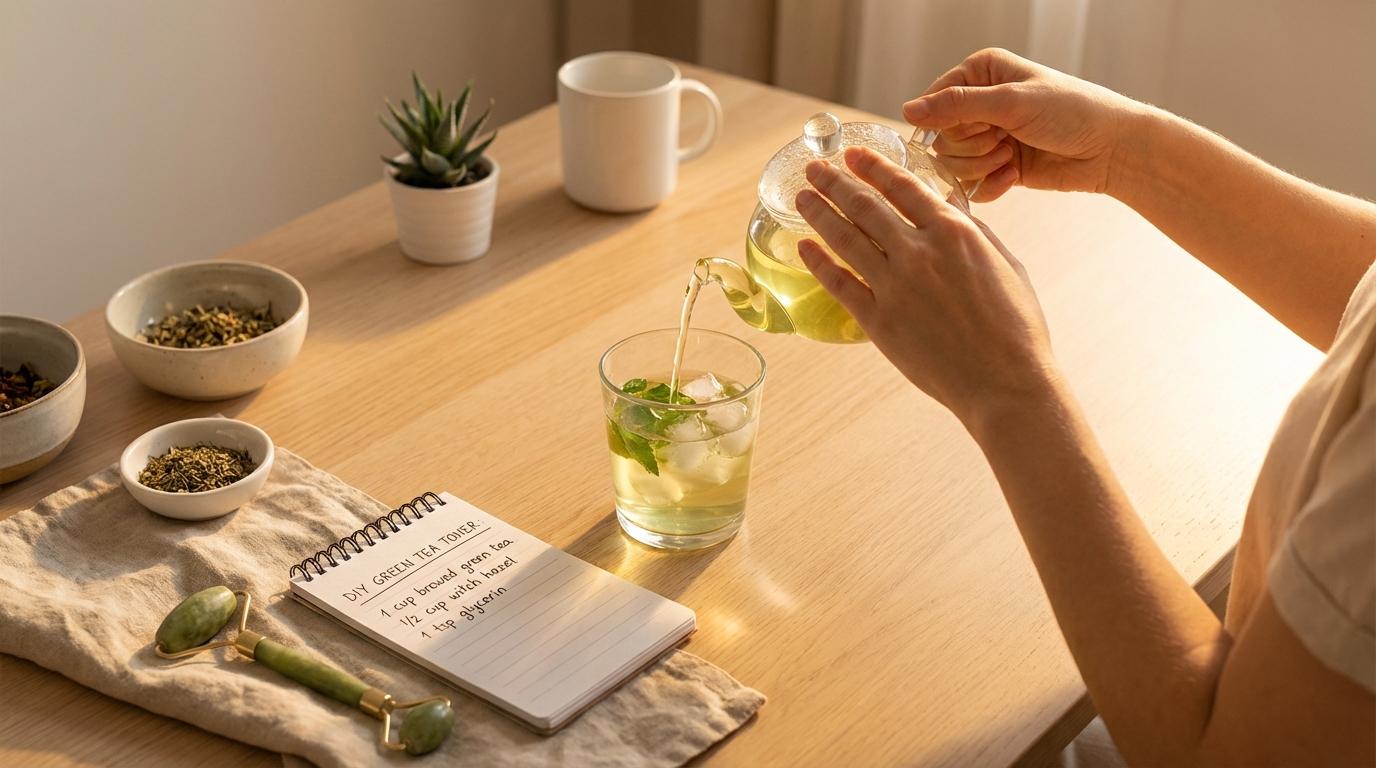
I used to roll my eyes at DIY skincare recipes until my broke college self actually tried making a green tea toner. Three years and dozens of batches later, I still keep a jar of this stuff in my fridge. The thing is, green tea genuinely works for your skin, and the science backs it up in ways that most trendy ingredients never could.
Green tea contains powerful compounds called catechins, particularly one called EGCG (epigallocatechin gallate), which has been studied extensively for skin benefits. Research published in the International Journal of Molecular Sciences shows that green tea polyphenols protect skin from UV damage, reduce inflammation, and fight oxidative stress. These are not just claims on a label. These are real, measurable effects documented in clinical studies.
Why Green Tea Works for Your Skin
The catechins in green tea act as antioxidants, which means they neutralize the free radicals that cause premature aging and skin damage. When you apply green tea topically, EGCG can help prevent collagen breakdown, reduce redness, and even calm acne-related inflammation. Studies have found that topical green tea application can reduce sebum production in oily skin types, making it especially useful if you struggle with shine or breakouts.
The anti-inflammatory properties are particularly impressive. Green tea has been shown to inhibit the enzymes that break down collagen and elastin in your skin. This means regular use might help your skin stay firmer and more resilient over time. For anyone dealing with irritation, redness, or sensitivity, green tea can provide gentle relief without the harsh side effects of some active ingredients.
The Simple Green Tea Toner Recipe
This is the recipe I have been making for years, and it costs literally pennies per batch. You will need loose leaf green tea or tea bags (the kind you drink), distilled water, and optionally a small amount of vegetable glycerin for extra hydration.
Start by brewing a strong cup of green tea. Use about two tea bags or two teaspoons of loose leaf tea in one cup of hot (not boiling) water. Let it steep for 10 to 15 minutes until it cools to room temperature. This extended steeping time extracts more of the beneficial catechins.
Strain the tea into a clean glass jar or spray bottle. If you want extra hydrating power, add about half a teaspoon of vegetable glycerin. Store this in your refrigerator and use it within one week. The cold storage is important because without preservatives, this mixture can grow bacteria quickly at room temperature.
To use, apply with a cotton pad or spray directly onto clean skin after washing your face. You can use this morning and night before your moisturizer. The slight tightening feeling you might notice is the tannins in the tea, which can temporarily minimize the appearance of pores.
The Ice Cube Method
If you want to level up your green tea skincare without spending any extra money, try the ice cube method. This technique combines the benefits of green tea with the skin-tightening effects of cold therapy.
Brew your green tea using the same method described above. Once cooled, pour the tea into an ice cube tray and freeze. When you wake up puffy or need to calm down irritated skin, wrap one cube in a thin cloth (never apply ice directly to skin) and gently massage it across your face for one to two minutes.
The cold helps constrict blood vessels, reducing puffiness and redness, while the green tea delivers its antioxidant benefits. This works especially well for mornings when you have not slept enough or after crying (no judgment, we have all been there). The combination of cold and green tea can make your skin look noticeably more awake and less inflamed.
You can also add other ingredients to your green tea ice cubes. A squeeze of aloe vera gel makes them extra soothing for irritated skin. Just make sure any additions are things you have already patch tested on your skin.
Beyond Toner: Other DIY Green Tea Ideas
Once you have the basics down, you can experiment with other green tea applications. A simple face mask combines cooled brewed green tea with honey for a soothing, hydrating treatment. Mix one tablespoon of strong brewed green tea with one tablespoon of raw honey, apply to clean skin for 15 minutes, and rinse with warm water.
Used green tea bags themselves make excellent eye compresses. Brew your tea, let the bags cool completely in the refrigerator, then rest them on closed eyes for 10 to 15 minutes. The caffeine in green tea can help reduce under-eye puffiness, while the cold temperature soothes tired eyes. This is a great use for tea bags after you have made your toner.
For those dealing with oily skin or occasional breakouts, you can make a green tea spot treatment by mixing the tea with a small amount of bentonite clay. The combination of clay’s oil-absorbing properties with green tea’s anti-inflammatory benefits makes for an effective (and affordable) treatment.
When You Should Buy Instead of DIY
Now for the honest part that most DIY posts skip: sometimes you should just buy a product. Homemade green tea preparations have a very short shelf life and require refrigeration. If you cannot commit to making fresh batches weekly, a store-bought green tea product with proper preservatives will actually be more effective because it maintains potency longer.
If you want stable vitamin C combined with green tea (a powerful antioxidant combination), you will need to buy a formulated product. DIY vitamin C serums are notoriously unstable and can oxidize quickly, becoming useless or even irritating. Many affordable drugstore products combine green tea with other actives in ways that stay stable and effective.
For serious acne, aging concerns, or skin conditions, DIY green tea treatments are complementary, not replacements for proven actives like retinoids, benzoyl peroxide, or prescription treatments. Green tea works best as a supportive ingredient in your routine, not the main player for treating specific conditions.
Additionally, the concentration of EGCG in brewed tea is lower than in properly formulated skincare products. Clinical studies typically use formulations containing 10 to 15 percent green tea catechins. Your homemade toner will have less, though it can still provide benefits at lower concentrations.
Making It Work on a Budget
The beauty of DIY green tea skincare is how cheap it actually is. A box of green tea bags costs a few dollars and will make weeks worth of toner. Compare that to commercial green tea products that often run fifteen to thirty dollars or more.
Buy loose leaf green tea from Asian grocery stores for even better value. You will get higher quality tea for less money than the fancy wellness brands charge. Matcha powder (finely ground green tea) can also be used, though it is pricier and messier to work with.
Your grocery store probably has everything you need. Simple green tea, distilled water (essential for DIY skincare to avoid mineral buildup and bacteria from tap water), and glycerin from the first aid section are all you need to get started.
Tips for Getting the Best Results
Quality matters with tea. Cheap tea bags filled with dust and fannings (the tiny broken pieces left over from processing) contain fewer catechins than whole leaf tea. If you can afford it, go for higher quality tea for your skincare. You do not need the most expensive ceremonial grade matcha, but avoid the bottom shelf options.
Always patch test before going all in. Even natural ingredients can cause reactions, especially if you have sensitive skin. Apply your green tea mixture to a small area on your inner arm and wait 24 hours to check for irritation.
Consistency is key. Like most skincare, you will not see dramatic results from using green tea toner once. Aim for daily use for at least four to six weeks before deciding if it works for you. The antioxidant benefits build up over time.
Store your DIY products properly. The refrigerator is not optional for preservative-free skincare. Label everything with the date you made it and toss anything that looks cloudy, smells off, or has been sitting around longer than a week. No skincare benefit is worth a bacterial infection.
Green tea toner will not replace your entire routine, but it makes an excellent low-cost addition that genuinely benefits your skin. Start simple with the basic toner recipe, see how your skin responds, and build from there. Your wallet and your face will both appreciate the effort.