
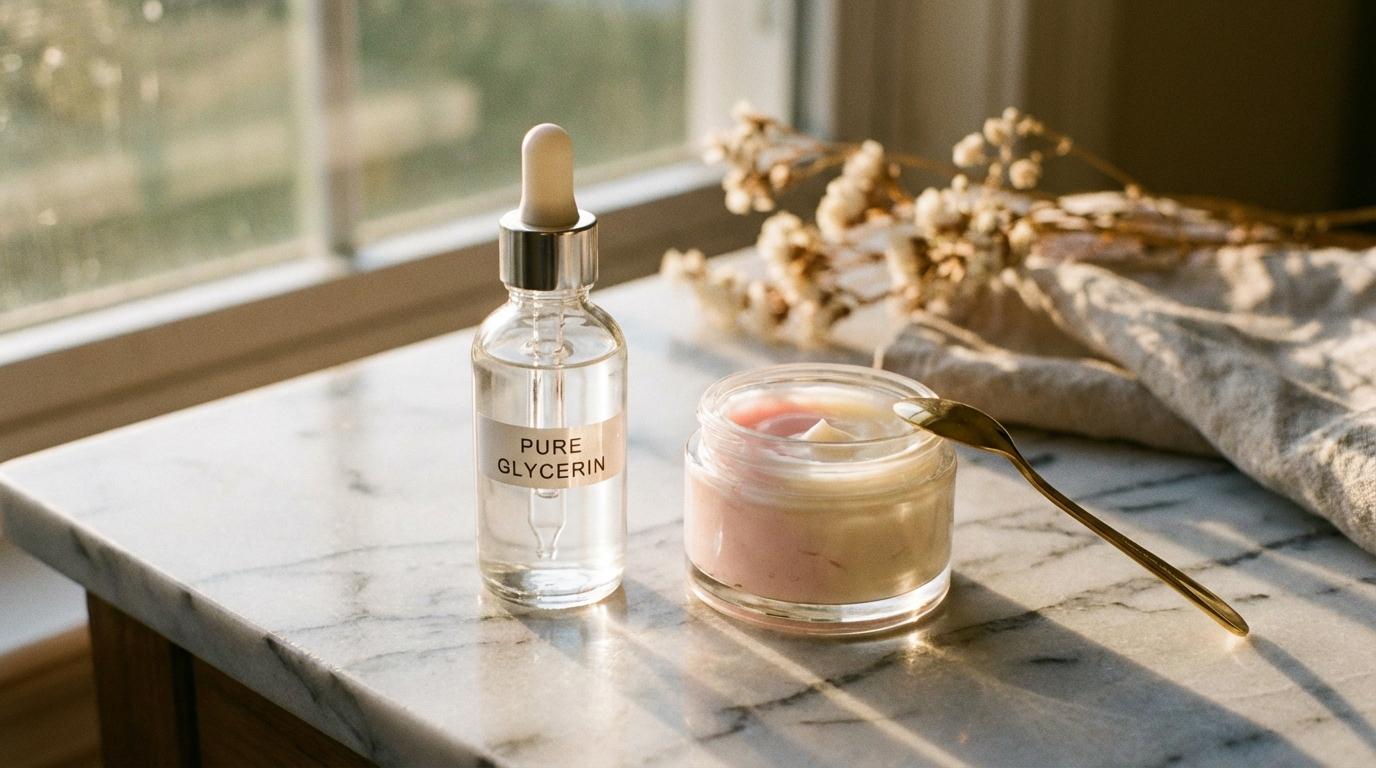
Why does everyone keep sleeping on glycerin when it costs like three dollars and works better than half the fancy serums out there? I’m genuinely asking because this ingredient has been quietly fixing dehydrated skin for decades while we all chase the next big thing.
If your skin has been feeling tight, flaky, or just generally unhappy despite layering on moisturizers, glycerin might be the missing piece. And the best part? You probably already have some lying around, whether in your current products or sitting in your kitchen cabinet from that one time you tried to make homemade skincare (no judgment, we’ve all been there).
How Glycerin Actually Works on Your Skin
Glycerin is a humectant, which means it pulls water from the environment and the deeper layers of your skin to hydrate the outer layers. Think of it as a tiny moisture magnet working overtime to keep your skin barrier happy.
Unlike occlusive ingredients that just sit on top and prevent water loss, glycerin actively draws moisture in. It can hold water at nearly its own weight, which sounds boring and science-y but basically means it’s incredibly efficient at what it does. Your skin ends up plumper, softer, and way less angry-looking.
The really cool thing is glycerin also strengthens your skin barrier over time. A healthy barrier means better moisture retention naturally, so you’re not just putting a bandaid on dehydration; you’re actually helping your skin fix itself. That’s the kind of ingredient relationship I’m looking for (unlike my last situationship, but I digress).
If you’ve been wondering whether you can overdo hyaluronic acid, glycerin offers a gentler alternative that’s harder to mess up and works similarly by drawing in moisture.
The Glycerin-in-Your-Moisturizer Trick
This is the method that changed everything for me during a particularly brutal winter when my skin was staging a full revolt. Instead of buying a new product, I just added a few drops of pure glycerin to my existing moisturizer.
The ratio that works for most people is about 2-3 drops of glycerin per pump of moisturizer. Mix it in your palm before applying. Your moisturizer suddenly becomes a hydration powerhouse without you having to learn a whole new product or disrupt your routine.
You can also add glycerin to:
- Body lotions (especially great for ashy knees and elbows)
- Hair leave-in conditioners
- Toners or essences
- DIY face mists (glycerin + water + optional aloe)
The key is not going overboard. Too much glycerin and your face will feel sticky and weird, like you forgot to wash off a face mask. Start with less than you think you need because you can always add more.
Some people apply a thin layer of diluted glycerin (mixed with water, not straight) before their moisturizer as a standalone hydrating step. This works especially well if you have a basic moisturizer that doesn’t have much glycerin already. Just dampen your face, apply the diluted glycerin, then follow with your regular products.
The Humidity Factor (This Part Is Actually Important)
Remember how I said glycerin pulls moisture from the environment? This is where things get slightly complicated, and honestly, it’s the one thing about glycerin that nobody explains properly.
In dry environments (think heated rooms in winter or desert climates), there’s less moisture in the air for glycerin to grab. When that happens, some humectants can start pulling water from the deeper layers of your skin instead, which defeats the whole purpose and can actually make dehydration worse.
But glycerin is actually less aggressive about this than hyaluronic acid. Research suggests glycerin is gentler and causes less of this “reverse hydration” effect. Still, in really dry conditions, you want to:
- Always layer an occlusive or heavier cream on top to seal everything in
- Apply glycerin-based products to damp skin
- Consider using a humidifier in your bedroom
- Not go crazy with super high concentrations
If you live somewhere humid, congratulations, glycerin is about to become your skin’s best friend with zero caveats. The moisture in the air gives it plenty to work with, and your skin will look ridiculously plump.
Finding Pure Glycerin (It’s Easier Than You Think)
You don’t need to order anything fancy from a specialty store. Pure vegetable glycerin is available at:
- Most pharmacies (check the first aid or skincare section)
- Grocery stores (sometimes in the baking aisle, sometimes pharmacy)
- Online (Amazon has like a million options)
- Craft stores (it’s used in soap making)
Look for “vegetable glycerin” or “glycerine USP” on the label. USP means it meets pharmaceutical standards, so you know it’s pure and safe for skin. Avoid anything with added fragrances or colors unless you specifically want those.
A small bottle will last forever since you’re using drops at a time. I’ve had the same bottle for over a year and it’s not even half empty. If you’re looking at budget skincare that actually delivers, glycerin is legitimately one of the best investments you can make.
How to Actually Use It: A Realistic Routine
I know some people want a whole complicated protocol, but truly it doesn’t need to be that deep. A simple approach:
Morning:
- Cleanse (or just splash with water)
- While face is still damp, apply a few drops of diluted glycerin or your glycerin-boosted moisturizer
- Sunscreen
Evening:
- Cleanse
- Any treatments you’re using (retinol, acids, whatever)
- Glycerin-boosted moisturizer or glycerin followed by a rich cream
That’s literally it. You don’t need a 12-step routine to see results. The main thing is consistency and making sure you’re sealing the hydration in with something occlusive, especially at night.
If you’re using active ingredients that can be drying (like retinoids or BHAs), adding glycerin to your routine can help counteract that without reducing their effectiveness. It’s basically damage control for your moisture barrier while still getting the benefits of your other products.
What to Expect (Managing Your Expectations)
Glycerin isn’t going to give you a face transplant overnight. But within a few days of consistent use, you should notice:
- Less tightness after cleansing
- Skin that looks more plump and bouncy
- Makeup applying more smoothly (if you wear it)
- Fewer dry patches
- That “glass skin” dewiness everyone’s always chasing
Over weeks and months, your overall skin texture may improve as your barrier gets stronger. Some people notice their products work better because healthy, hydrated skin absorbs actives more efficiently. It’s one of those foundational things that makes everything else work better.
Common Mistakes to Avoid
Because I’ve made all of these myself and would like to save you the trouble:
Using it straight without diluting: Pure glycerin is extremely thick and sticky. Unless you like the sensation of a slug crawling on your face, mix it with water or add it to products. A typical dilution is about 1 part glycerin to 3-4 parts water if you’re making your own mixture.
Applying to completely dry skin: Humectants need some moisture to work with. Always apply to damp skin or layer over a hydrating toner. If you put glycerin on bone-dry skin in a dry environment, it has nothing to pull from except your skin itself.
Skipping the occlusive layer: In dry climates especially, you need to seal that hydration in. Follow glycerin with a cream, oil, or sleeping pack (at night) to prevent the moisture from evaporating.
Going way overboard: More is not better. Too much glycerin leaves a tacky film that can make your face feel gross and actually prevents your other products from absorbing properly. Start with less.
DIY Glycerin Hydrating Mist
If you want to get a little fancy (but still keep it budget-friendly), here’s a simple recipe that takes about two minutes:
- 1 tablespoon vegetable glycerin
- 4 tablespoons distilled water (or rose water if you’re feeling extra)
- Optional: a few drops of aloe vera juice
Mix everything in a small spray bottle. Shake before each use. Spritz on your face throughout the day, especially in dry offices or during flights. Store in the fridge for a refreshing mist and to extend shelf life (use within a week or two since there are no preservatives).
This is perfect for those 3pm moments when your skin is looking sad under the fluorescent office lights. A quick spritz and you’re back to looking hydrated and alive (even if you don’t feel it internally, at least your skin won’t show it).
Glycerin and Different Skin Types
Dry skin: This is where glycerin really shines. Layer it generously (but not excessively) and always follow with a rich moisturizer.
Oily skin: Glycerin still works for you! It’s lightweight and non-comedogenic. Dehydrated oily skin often overproduces oil to compensate, so adding hydration can actually help balance things out. Use a lighter hand and choose a gel moisturizer on top.
Combination skin: Apply more to dry areas, less to oily zones. Simple as that.
Sensitive skin: Glycerin is generally super well-tolerated since it’s already naturally present in your skin. It’s one of the safest hydrating ingredients out there. Just patch test the specific product you buy in case there are any additives. For those with eczema-prone skin, glycerin can be a gentle addition to your hydration routine.
The Glycerin Renaissance
Skincare marketing has us chasing new ingredients constantly (looking at you, every brand that just discovered peptides), but sometimes the old reliable stuff is old and reliable for a reason. Glycerin has been used in skincare since literally the 1800s. It’s not glamorous, it’s not exciting, and it doesn’t have a cute Instagram aesthetic.
But it works. Quietly, effectively, affordably. And in a world where a single serum can cost more than groceries, that matters.
Try the glycerin trick for two weeks. Mix a few drops into your moisturizer tonight. Set a reminder on your phone if you need to. Give your dehydrated skin what it’s been asking for, and stop overcomplicating things. Sometimes the simplest solutions really are the best ones (and your wallet will thank you even if the marketing departments won’t).