
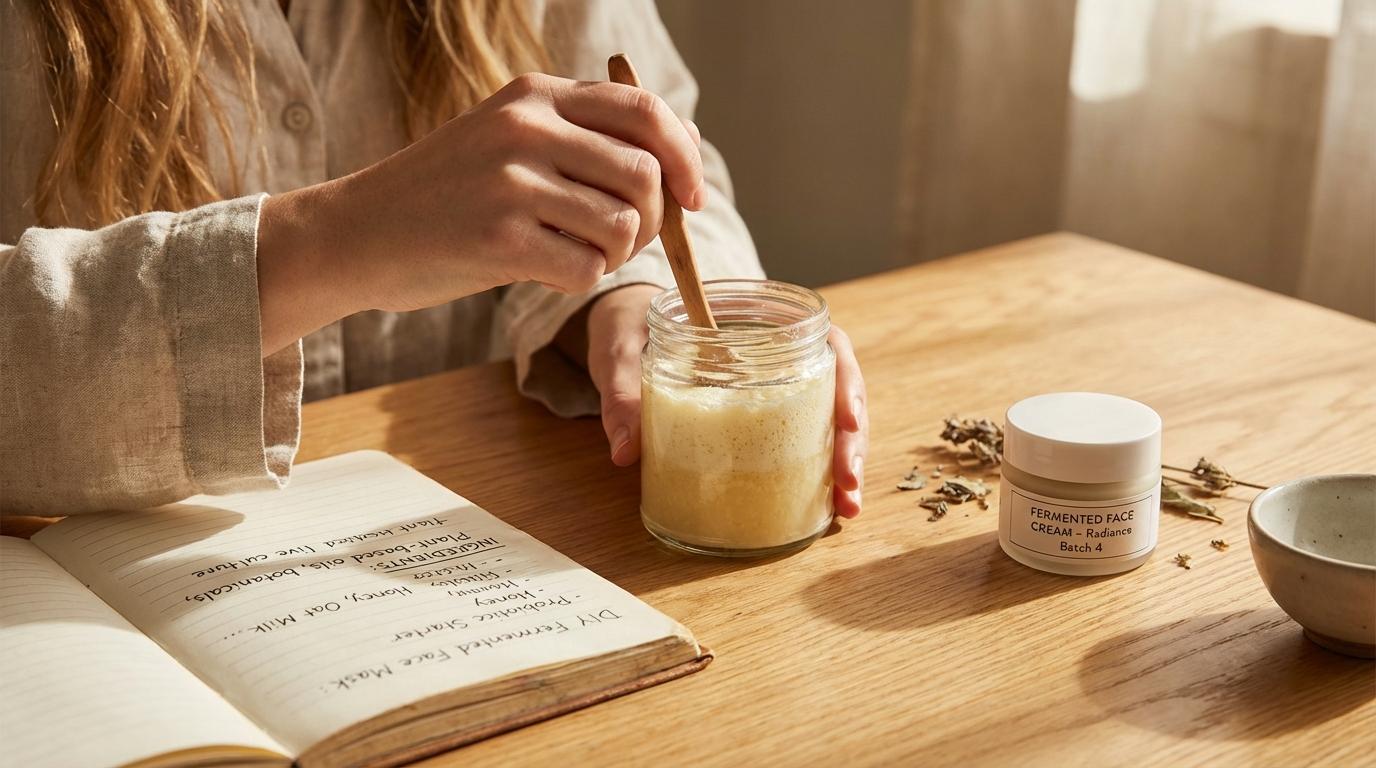
Galactomyces ferment filtrate sounds like something you’d find in a laboratory, not slathered on your face at 10 PM. But this fermented yeast extract has become one of K-beauty’s most celebrated ingredients, and there’s actual science backing up the hype. As someone who spent way too many hours in biochemistry labs during undergrad, I find fermented skincare genuinely fascinating because it represents a convergence of traditional practices and modern biotechnology.
Fermented ingredients aren’t just a marketing gimmick. The fermentation process fundamentally transforms raw materials at the molecular level, creating bioactive compounds that didn’t exist in the original ingredient. Let me break down exactly what’s happening when skincare brands ferment their ingredients, and whether these products deserve a spot in your routine.
What Actually Happens During Fermentation?
Fermentation is a metabolic process where microorganisms like bacteria, yeast, or fungi break down complex substances into simpler compounds. In skincare, this usually means taking a raw material (rice, soy, or specific yeast strains) and letting controlled microbial cultures work their magic over days or weeks.
During this process, enzymes produced by the microorganisms chop up large molecules into smaller ones. Proteins become amino acids and peptides. Complex carbohydrates transform into simpler sugars. Lipids break down into fatty acids. The resulting “filtrate” or “lysate” is essentially a nutrient-rich liquid packed with these smaller, more bioavailable molecules.
A 2019 study published in the Journal of Cosmetic Dermatology found that fermented rice extract contained significantly higher concentrations of free amino acids, organic acids, and antioxidants compared to non-fermented rice extract. The fermentation process essentially pre-digests the ingredients, making them easier for your skin to absorb and utilize.
Think of it like this: eating a whole almond is nutritious, but your body has to work to break it down. Fermentation does that breakdown work externally, so when the ingredients hit your skin, they’re already in a form your cells can immediately use.
The Star Players: Galactomyces and Saccharomyces
Two yeast-derived ingredients dominate the fermented skincare conversation: galactomyces ferment filtrate and saccharomyces ferment filtrate. Despite sounding almost identical, they’re produced by different yeast species and have slightly different benefits.
Galactomyces Ferment Filtrate
Galactomyces is a genus of yeast, and the filtrate is the liquid left after the yeast ferments a nutrient medium (usually a sugar-based solution). This ingredient gained fame through SK-II’s Facial Treatment Essence, which has been a cult favorite since the 1980s.
Research published in the Journal of Cosmetic Dermatology has shown that galactomyces ferment filtrate can help regulate sebum production, which is particularly relevant if you’re dealing with oily or combination skin. The ingredient contains vitamins, minerals, amino acids, and organic acids that work together to support skin barrier function.
A clinical study demonstrated that subjects using a galactomyces-based product showed improvements in skin clarity and texture after 8 weeks of use. The mechanism appears to involve both direct nourishment of skin cells and modulation of the skin’s microbiome.
Saccharomyces Ferment Filtrate
Saccharomyces cerevisiae is better known as baker’s or brewer’s yeast. When fermented and filtered, it produces a compound rich in beta-glucans, B vitamins, and proteins. This ingredient tends to focus more on hydration and barrier repair.
Beta-glucans are particularly interesting because they’re proven wound-healing agents. They stimulate macrophages (immune cells) and promote collagen synthesis. In skincare, this translates to faster recovery from irritation and enhanced skin repair processes.
A 2020 study in the International Journal of Biological Macromolecules found that beta-glucans from yeast fermentation showed significant antioxidant and anti-inflammatory properties when applied topically. For anyone dealing with sensitized or reactive skin, saccharomyces-based products might offer soothing benefits beyond basic hydration.
Other Fermented Ingredients Worth Knowing
While galactomyces and saccharomyces get most of the attention, the fermented ingredient world is much broader:
Bifida Ferment Lysate: Produced from bifidobacteria (the good gut bacteria), this ingredient has been shown to strengthen skin’s resistance to environmental stressors. Lancome and Estee Lauder have built entire product lines around bifida lysate. Research suggests it may help protect against UV-induced damage and support the skin barrier.
Fermented Rice (Sake) Extract: Traditional Japanese sake brewing produces a byproduct rich in kojic acid, ferulic acid, and amino acids. Kojic acid is a well-documented tyrosinase inhibitor, meaning it can help with hyperpigmentation by interrupting melanin production.
Fermented Soybean Extract: Fermentation of soybeans increases the concentration of isoflavones, which have mild estrogenic activity. These compounds may help with collagen production and skin firmness, though the topical effects are less dramatic than the marketing might suggest.
Lactobacillus Ferments: Various lactobacillus strains produce ferments rich in lactic acid and other alpha-hydroxy acids. These provide gentle exfoliation and help maintain skin’s optimal pH.
The Bioavailability Question
One of the biggest advantages of fermented ingredients is enhanced bioavailability. Molecular weight matters in skincare because your skin is designed to keep things out. Smaller molecules penetrate more easily through the stratum corneum (the outermost skin layer).
Fermentation naturally reduces molecular weight. When proteins break down into amino acids and small peptides, they go from thousands of daltons to hundreds or even less. According to dermatological research, molecules under 500 daltons have the best chance of penetrating the skin barrier effectively.
This is why you might notice that fermented essences feel different from regular serums. They often absorb faster and leave less residue because the smaller molecules are actually getting into your skin rather than sitting on top of it.
Antioxidant Enhancement
Fermentation doesn’t just break things down. It can also create entirely new compounds with beneficial properties. Many fermented ingredients show higher antioxidant activity than their non-fermented counterparts.
A study comparing fermented and non-fermented green tea extracts found that fermentation increased the total phenolic content and DPPH radical scavenging activity. The fermentation process creates new antioxidant compounds through metabolic transformations that don’t occur naturally.
For your skin, this means better protection against free radicals from UV exposure, pollution, and other environmental stressors. Antioxidants neutralize unstable molecules before they can damage your cells, collagen, or DNA.
Is Fermented Skincare Worth It?
After all that science, here’s the honest answer: it depends on your skin concerns and budget.
Fermented skincare makes sense if you:
- Have sensitive skin that reacts to harsh actives (fermented ingredients tend to be gentler)
- Want to improve overall skin texture and radiance without aggressive treatments
- Are looking for hydrating products that absorb well
- Have oily or combination skin that could benefit from sebum regulation
- Prefer products with multiple benefits in one formula
Fermented skincare might not be necessary if you:
- Already have a routine with targeted actives (vitamin C, retinol, AHAs) that’s working for you
- Have fungal acne or are prone to yeast-related skin issues (some fermented ingredients can aggravate this)
- Are on a strict budget and need to prioritize other essentials
The research supporting fermented ingredients is legitimate, but it’s not as extensive as the evidence behind ingredients like retinoids, vitamin C, or niacinamide. Fermented products work best as supporting players in a routine rather than standalone miracle workers.
How to Incorporate Fermented Ingredients
If you want to try fermented skincare, essences are the classic entry point. These lightweight, watery products are designed to be applied after cleansing and before heavier serums or moisturizers. Pat them into slightly damp skin for best absorption.
Start with one fermented product rather than layering multiple. This lets you gauge how your skin responds without overloading it. Most fermented ingredients are gentle enough for twice-daily use, but if you’re new to them, starting with evening application gives you time to monitor for any reactions.
Pay attention to the full ingredient list, not just the highlighted ferment. Some products contain minimal amounts of the fermented ingredient alongside a bunch of other actives. The position on the ingredient list (higher means higher concentration) can give you a rough idea of how much you’re actually getting.
For those interested in unusual but effective ingredients, fermented skincare sits in a similar category to snail mucin: sounds weird, works through legitimate biological mechanisms, and has a growing body of research to support its use.
Budget Considerations
High-end fermented skincare can get expensive fast. SK-II’s signature essence runs well over $100 for a standard bottle. But the K-beauty market offers plenty of affordable alternatives that contain the same key ingredients.
According to the National Library of Medicine database, the concentration of ferment filtrate matters more than the brand name. A $15 essence with galactomyces listed high on the ingredient list will deliver similar benefits to a luxury version, assuming the fermentation process was done properly.
Brands like COSRX, Missha, and Benton offer galactomyces and saccharomyces products at accessible price points. If you’re exploring budget-friendly skincare options, several fermented essences fall comfortably under the $20 mark.
The Bottom Line
Fermented skincare represents a genuine innovation, not just clever marketing. The fermentation process creates smaller, more bioavailable molecules, enhances antioxidant activity, and produces compounds that can support skin barrier function and overall radiance.
Is it a miracle? No. Your fermented essence isn’t going to replace sunscreen, retinol, or a solid basic routine. But as an additional layer of nourishment and support, fermented ingredients have earned their place in the skincare conversation.
The K-beauty trend around fermentation is rooted in real biochemistry. If you’ve been curious about these products, the science suggests they’re worth trying. Start with a well-formulated essence, give it 6-8 weeks (real skin changes take time), and see how your skin responds. Sometimes the weirdest-sounding ingredients turn out to be exactly what your skin needed.