
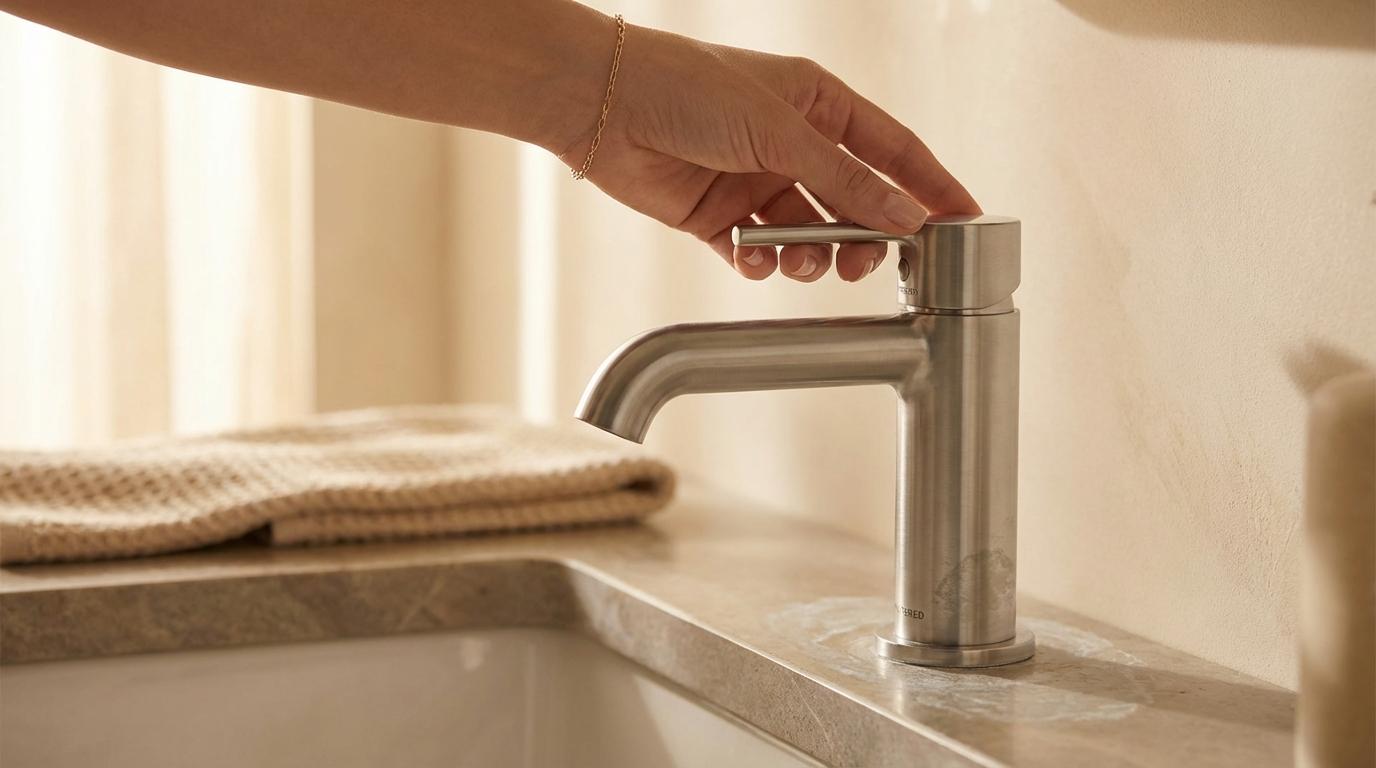
Around 85% of homes in the United States have hard water running through their pipes, which means most of us are washing our faces with water that contains dissolved minerals like calcium, magnesium, and sometimes iron. If you’ve ever noticed a stubborn white film on your shower door or struggled to get your cleanser to lather properly, you’ve already met hard water firsthand. But here’s something you might not have considered: those same minerals could be contributing to your breakouts.
I’ve spent a lot of time digging through dermatological research on this topic because the connection between hard water and acne isn’t as straightforward as some skincare influencers make it seem. The relationship is real, but it’s more nuanced than “hard water = bad skin.” Let me break down what’s actually happening at the molecular level and what you can do about it.
What Hard Water Actually Does to Your Skin
When we talk about hard water, we’re really talking about the concentration of dissolved minerals, primarily calcium carbonate and magnesium carbonate. These minerals pick up as water travels through limestone and chalk deposits underground. The “hardness” is measured in milligrams per liter (mg/L) or grains per gallon (gpg), and anything above 120 mg/L is considered hard.
These minerals don’t just disappear when they touch your skin. They form a thin film that deposits on your skin’s surface with every wash. Think of it like the buildup you see in your kettle or on your faucets, except it’s happening on your face. This mineral residue is alkaline, and your skin prefers to be slightly acidic (around pH 4.5-5.5). When you consistently expose your skin to alkaline substances, you’re disrupting what dermatologists call the acid mantle.
The acid mantle is basically your skin’s first line of defense. It’s a thin, slightly acidic film made up of sebum and sweat that keeps harmful bacteria out and moisture in. When hard water raises your skin’s pH repeatedly, this protective barrier gets compromised. Studies have shown that elevated skin pH is associated with increased activity of certain enzymes that break down structural proteins in the skin, and it creates an environment where acne-causing bacteria like Cutibacterium acnes can thrive more easily.
The Cleanser Residue Problem
Here’s where things get really interesting from a chemistry standpoint. Hard water doesn’t just affect your skin directly; it also interferes with how your cleanser works. When soap or cleanser molecules interact with calcium and magnesium ions, they form what’s called “soap scum.” Yes, the same stuff that leaves that ring around your bathtub.
This reaction creates insoluble salts that don’t rinse away easily. Instead of your cleanser lifting dirt, oil, and dead skin cells off your face and washing down the drain, some of it converts into this sticky residue that clings to your skin. You might feel like your face isn’t quite clean after washing, and you’d be right. That film you’re feeling isn’t just water residue; it’s actually mineral-soap complexes sitting in your pores.
These deposits can clog pores directly, but they also have another effect. They leave behind surfactant residue that continues to strip your skin of its natural oils long after you’ve patted dry. Your skin responds to this over-stripping by producing more sebum to compensate. If you’ve ever noticed that your skin feels tight and dry right after cleansing but gets oily within a few hours, this could be part of the reason why. That rebound oil production, combined with clogged pores, is a recipe for breakouts.
How to Test Your Water Hardness
Before you go buying a whole-house water softener, it makes sense to actually figure out whether hard water is a problem in your area. There are a few ways to do this.
The simplest method is a visual test. Fill a clear bottle about one-third full with your tap water, add a few drops of liquid dish soap, cap it, and shake vigorously. If the water becomes cloudy with minimal bubbles, you likely have hard water. Soft water will create lots of fluffy suds and the water will stay relatively clear below the foam.
For more precise results, you can buy water testing strips online or at hardware stores for just a few dollars. These give you an actual reading of mineral content. The United States Geological Survey also provides maps and data on water hardness by region, which can give you a general idea before you even test.
You can also call your local water utility. They’re required to test water quality and provide annual reports, often called Consumer Confidence Reports. These will tell you the hardness level of your municipal water supply. If you’re on well water, you’ll need to test it yourself since private wells aren’t monitored by utilities.
Solutions That Actually Work
If testing confirms you have hard water and you’ve noticed your skin has been struggling, there are several approaches you can take depending on your budget and living situation.
Micellar Water as a First Cleanse
One of the simplest switches you can make is adding micellar water to your routine. Micellar water contains tiny oil molecules called micelles suspended in soft water. Using it as a first cleanse removes makeup, sunscreen, and surface impurities without requiring you to rinse with tap water. You can then do a gentle second cleanse if needed, but the micellar water has already done most of the heavy lifting.
Switch to Water-Free or Low-Water Cleansers
Oil cleansers and cleansing balms work by dissolving sebum and makeup with oil rather than surfactants, so they’re less affected by water hardness. When you do rinse, there’s less soap to react with the minerals. Some people find that switching to a purely oil-based first cleanse followed by a very gentle, low-foaming second cleanser significantly reduces the residue problem.
Use Distilled or Filtered Water for Final Rinse
Keep a bottle of distilled water by your sink. After washing your face normally, do a final rinse with the distilled water to remove mineral residue. This doesn’t have to be a full wash; just splashing your face a few times and gently patting dry can make a difference. Some people keep a spray bottle of distilled water in the bathroom for this purpose.
Chelating or Clarifying Products
Chelating agents are ingredients that bind to metal ions and help remove them from surfaces. Products containing ingredients like EDTA or phytic acid can help lift mineral deposits from your skin. Some toners and essences are specifically formulated to help neutralize hard water effects. Using one after cleansing can help restore your skin’s proper pH and remove lingering mineral residue.
Showerhead Filters
If you’re serious about addressing hard water, a filtered showerhead is a worthwhile investment. These typically cost between $25 and $60 and use various filtration media like KDF (kinetic degradation fluxion) or vitamin C to reduce mineral content. While they won’t make your water completely soft, they can significantly reduce the concentration of calcium and magnesium that reaches your skin. They also filter out chlorine, which is another potential irritant for sensitive or acne-prone skin.
According to research published in the Journal of Investigative Dermatology, there’s evidence that hard water exposure may increase eczema severity and could contribute to skin barrier dysfunction. While this study focused on eczema rather than acne specifically, the underlying mechanism of barrier disruption is relevant to both conditions.
Whole-House Water Softeners
If you own your home and have severe hard water issues, a whole-house water softening system is the most comprehensive solution. These systems use ion exchange to replace calcium and magnesium with sodium ions, resulting in truly soft water throughout your home. They’re an investment (typically $1,000-$3,000 installed) but address the problem at its source.
Preventing Future Breakouts: A Practical Routine
If you’ve identified hard water as a contributing factor to your breakouts, here’s a routine approach that accounts for it. This isn’t about adding ten new steps; it’s about being strategic with what you’re already doing.
Morning: Start with micellar water on a cotton pad to remove any overnight oils without exposing your skin to hard water first thing. Follow with your regular serums and moisturizer. If you want to rinse your face, use filtered or distilled water.
Evening: Use an oil-based cleanser or cleansing balm to remove sunscreen and makeup. Rinse, then follow with a gentle, non-foaming cleanser. After patting dry, use a pH-balancing toner to help restore your acid mantle. Continue with your regular evening routine.
It’s also worth mentioning that hard water can affect your hair, and product buildup on your hair can transfer to your face and cause breakouts around your hairline and temples. If you’ve been dealing with acne in those areas specifically, check out how your pillowcase might be contributing to breakouts, since hair products and oils accumulate there overnight.
When Hard Water Isn’t the Problem
I want to be honest here: hard water might not be your main issue. Acne is multifactorial, meaning it can be caused by hormones, diet, stress, genetics, product reactions, and more. If you live in a soft water area and still struggle with breakouts, hard water obviously isn’t your culprit.
Similarly, if you’ve always lived in the same hard water area and your skin has been fine until recently, something else likely changed. New product? Different diet? Increased sugar intake? Stress from work or school? These factors can all trigger breakouts independently of water quality.
The best way to figure out whether hard water is actually affecting your skin is to change one variable at a time. Try using filtered water for face washing for two weeks while keeping everything else constant. If you see improvement, you’ve found a contributing factor. If nothing changes, you can rule it out and investigate other possibilities.
For those who recently moved to a new location and noticed their skin freaking out, water hardness is definitely worth investigating. I wrote more extensively about environmental factors when moving to a new city affects your skin, which covers water quality along with climate and pollution changes.
The Science Behind the Solutions
Let me get a bit nerdy here because understanding why these solutions work can help you troubleshoot your own situation. The mineral deposits from hard water have a positive charge. Your skin’s surface, when healthy, has a slight negative charge. Opposite charges attract, which is why the minerals stick so readily to your skin.
Chelating agents work because they have multiple binding sites for these positively charged metal ions. They essentially grab onto the minerals and hold them in suspension so they can be rinsed away. This is why a chelating toner after cleansing can be so effective; it’s chemically designed to lift what your cleanser left behind.
Water softeners work on an ion exchange principle. The resin beads inside the softener are coated with sodium ions. When hard water flows through, the calcium and magnesium ions swap places with the sodium ions because they have a stronger attraction to the resin. The result is water with very low mineral content.
Some people worry about the sodium in softened water, but the amount that ends up on your skin through washing is negligible and easily rinsed away. It doesn’t penetrate into your body in any meaningful way. The Water Quality Association has good resources if you want to read more about water softening safety.
Putting It All Together
Hard water can contribute to breakouts through multiple mechanisms: disrupting your skin’s acid mantle, leaving mineral deposits in pores, and preventing your cleanser from working properly. But it’s rarely the sole cause of acne. Think of it as one piece of a larger puzzle.
If you suspect hard water is affecting your skin, start with the cheapest interventions first. Test your water, try a micellar water cleanse, experiment with a final rinse of distilled water. If those help, you can decide whether a showerhead filter or other solutions are worth the investment.
Your skin is constantly responding to its environment, and water is something you expose it to multiple times per day. Paying attention to water quality isn’t obsessive; it’s logical. Just don’t get so focused on this one factor that you ignore other basics like gentle cleansing, proper hydration, sun protection, and not picking at your face.
The relationship between hard water and skin is a perfect example of why skincare is as much about understanding chemistry as it is about buying products. When you know what’s actually happening at the molecular level, you can make informed decisions rather than just trying every trending product and hoping something sticks.