
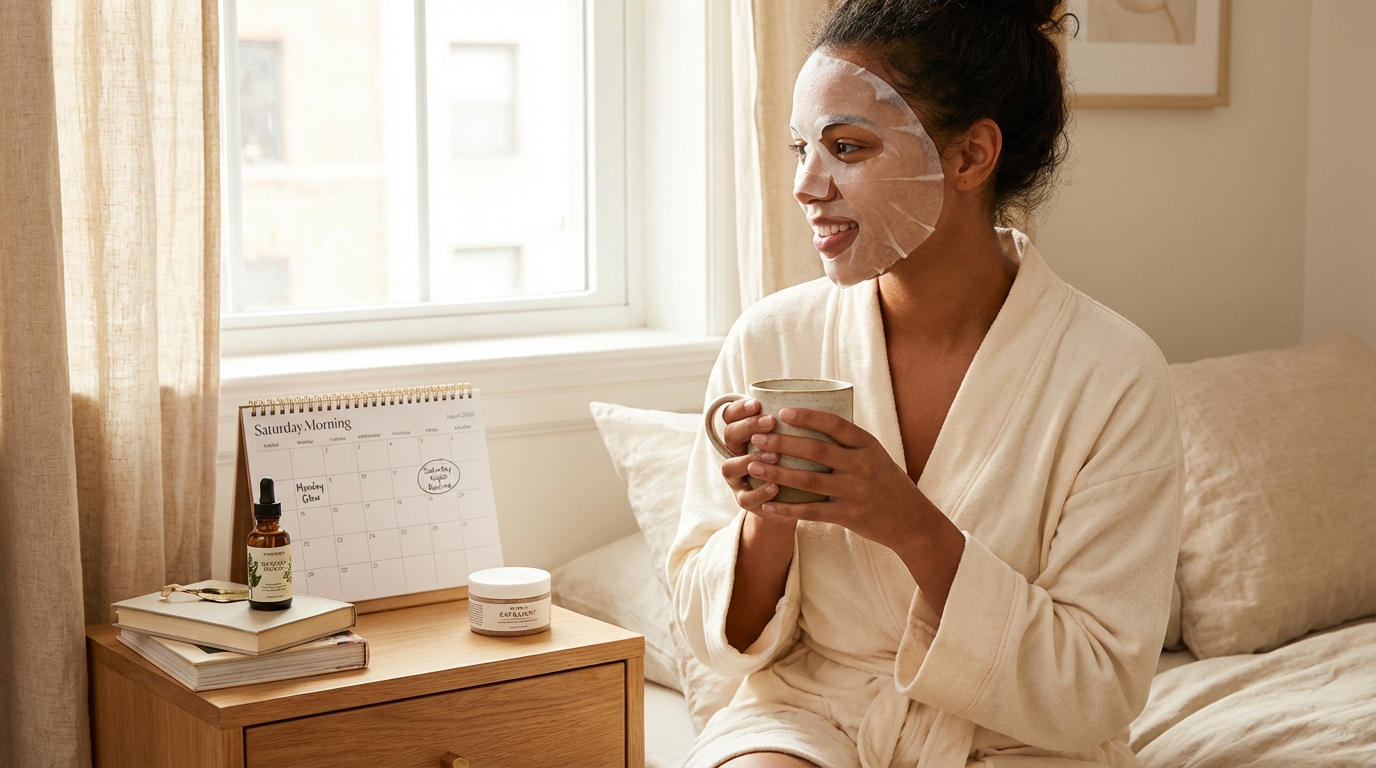
There is something special about Saturday nights. The pressure of the week lifts, tomorrow stretches out with possibility, and you finally have time to give your skin a little extra attention. This is not about cramming in every product you own. It is about choosing a few intentional steps that set you up for brighter, more rested skin by Monday morning.
I have tried the elaborate multi-step weekend routines. Most of them left my skin irritated or just felt like too much work to maintain. What I have landed on is something simpler: a gentle exfoliation, deep hydration, and creating the conditions for genuinely restorative sleep. Let me walk you through it.
Why Saturday Matters for Monday Skin
Your skin repairs itself most actively while you sleep. The cell turnover that keeps your complexion fresh peaks during deep sleep cycles, and your skin’s permeability increases at night, meaning products absorb more effectively. Saturday night gives you the luxury of a longer sleep window and no alarm clock stress, which is actually significant for skin health.
Research from the American Academy of Sleep Medicine has shown that poor sleep quality is directly linked to increased signs of skin aging. One night of truly restorative sleep will not fix everything, but it is a foundation that nothing else can replace.
The other advantage of Saturday is recovery time. If you use an exfoliating treatment, you have all of Sunday for your skin to calm down before facing the world on Monday. No rushing, no stress, just time for your skin to do what it does naturally.
Exfoliation: Timing It Right
If you are going to exfoliate, Saturday night is the time to do it. You want at least 24 hours of recovery before any big event or even just Monday morning meetings where you want to look your best.
Choose one exfoliation method. Not two, not three. I prefer a gentle chemical exfoliant over physical scrubs because they work more evenly and with less risk of irritation. Something with glycolic acid or lactic acid at moderate strength works beautifully. The Ordinary’s AHA 30% + BHA 2% is effective, but only if your skin has built up tolerance to acids. If you are newer to chemical exfoliation, something gentler like a 5% lactic acid serum is a better starting point.
Leave the product on for the recommended time (usually 10-20 minutes for masks, or according to instructions for serums), then rinse thoroughly. Your skin might look a bit pink immediately after. That is normal. By morning, it should feel smoother and look more even.
One important note: do not exfoliate if you have active breakouts or irritation. Exfoliation works best on healthy skin that just needs a refresh. If your skin is already stressed, skip this step entirely and focus on hydration instead.
The Hydrating Mask That Actually Works
After exfoliating (or instead of, if you skipped that step), this is where hydration comes in. Your freshly exfoliated skin is primed to absorb moisture, and a good hydrating mask takes advantage of that.
What makes a mask worth your time? Look for ingredients like hyaluronic acid, glycerin, aloe, or ceramides. Sheet masks can work well because they force you to sit still for 15-20 minutes, which is honestly half the benefit. The act of doing nothing while your skin drinks in moisture is its own kind of self-care.
If sheet masks feel wasteful to you (valid concern), a wash-off hydrating mask or even a thick layer of your regular moisturizer left on for 20 minutes achieves similar results. The method matters less than the intention: giving your skin time to absorb and recover.
Pat in any remaining product after removing the mask. Do not rinse unless the instructions say to. Then follow with your regular moisturizer to seal everything in.
Sleep Quality: The Overlooked Step
You can have the best products in the world, but if you sleep poorly, your skin will show it. This is the part of Saturday night routines that most skincare articles skip, and it is arguably the most important.
A few things that actually help:
- Temperature matters. Cooler rooms (around 65-68 degrees Fahrenheit) support deeper sleep. Your body temperature naturally drops as you fall asleep, and a cool room helps that process.
- Screens off at least 30 minutes before bed. Blue light suppresses melatonin production. I know, you have heard this a million times. But it keeps being true.
- Silk or satin pillowcase. This is not just about reducing friction (though that helps prevent creasing and hair breakage). Silk pillowcases also absorb less moisture from your skin than cotton, so your skincare products stay where you put them.
- Sleeping position. If you are a side or stomach sleeper, you are pressing half your face into your pillow for hours. Sleeping on your back is gentler on your skin, though I know that is easier said than done.
The Sleep Foundation has solid research-backed tips if you want to go deeper on sleep hygiene. It is worth the investment, and not just for your skin.
What to Avoid Saturday Night
Let me be clear about a few things that will undermine your efforts:
Do not try new products. Saturday before a Monday you care about is not the time to experiment. Stick with what you know works for your skin. New products can cause unexpected reactions, and you want predictability here.
Skip the retinol if you exfoliated. Both are powerful treatments that increase cell turnover. Layering them on the same night is asking for irritation. If you use retinol regularly, move it to a different night this week.
Go easy on alcohol. I am not saying you cannot have a glass of wine on Saturday night. But alcohol is dehydrating, disrupts sleep quality, and can trigger inflammation. If Monday glow is the goal, moderation helps.
Do not overdo it. More products do not mean better results. Your skin can only absorb so much, and layering too many actives creates irritation, not improvement. Pick your priorities: exfoliation or retinol, not both. Hydrating mask or serum, not five serums.
The Sunday Morning Check-In
When you wake up Sunday, your skin should feel calm and hydrated. If it looks irritated or red, dial back your routine next Saturday. Skincare should never be a punishment.
Sunday is a rest day for your skin too. Keep your routine simple: gentle cleanser, moisturizer, sunscreen if you are going outside. Let your skin recover from the extra attention. By Sunday evening, you should notice that your skin looks brighter and feels smoother. That is what we are going for.
Monday morning, wash your face as usual and apply your regular products. The work is done. You have given your skin the time and support it needed, and now you just maintain.
Making This Sustainable
The best skincare routine is one you actually do. If a full Saturday night routine feels like too much, scale it back. Even just the hydrating mask and an earlier bedtime will make a difference. You do not have to do everything every week.
Think of this as a ritual, not a requirement. Something you do for yourself because it feels good, not because you are chasing some impossible standard of perfect skin. The goal is to feel rested and comfortable in your skin, not to perform elaborate maintenance forever.
Your skin will tell you what it needs. Some weeks, that is extra hydration. Some weeks, it is just good sleep. Listen to it, adjust as needed, and remember that consistency with simple steps always beats sporadic intensity with complicated ones.