
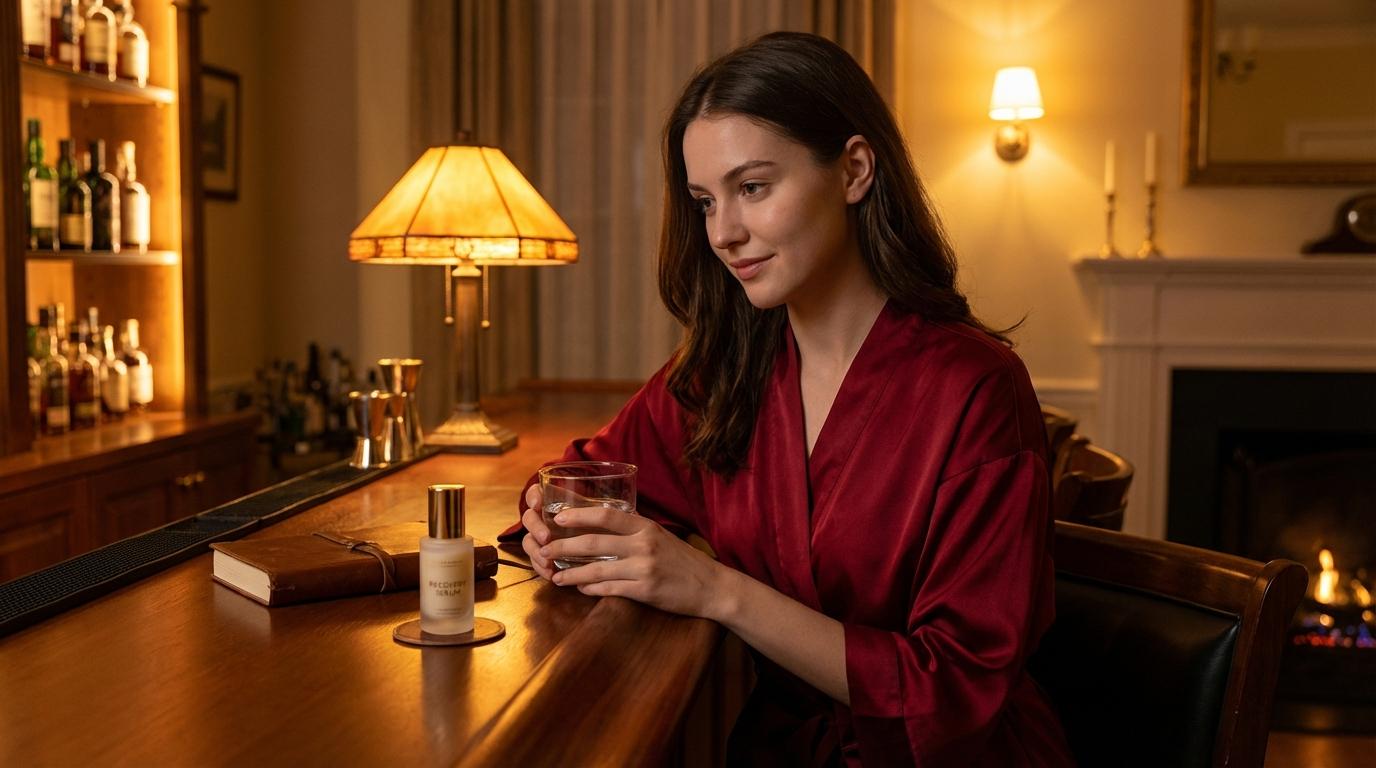
I used to think my skin just randomly decided to hate me on weekends until I noticed a pattern: brunch mimosas on Saturday, puffy disaster face on Sunday. Took me way too long to connect those dots.
Alcohol affects your skin in ways that go beyond just dehydration (though that’s definitely part of it). If you’ve ever woken up after a night out wondering why you aged five years overnight, there’s actual science behind what’s happening. And honestly, understanding it helped me make better choices about when drinking is worth the skin consequences and when it’s really not.
The Dehydration Problem
Alcohol is a diuretic. That’s the fancy way of saying it makes you pee a lot. Every glass of wine, beer, or cocktail is essentially telling your kidneys to flush out more water than you’re taking in. The result is systemic dehydration that shows up everywhere, including your face.
Dehydrated skin looks different from dry skin. It’s that dull, tired appearance where your fine lines suddenly seem way more noticeable. Your skin might feel tight but also somehow greasy at the same time (your oil glands try to compensate for the water loss, which is super fun). That plump, bouncy quality disappears because your skin cells are literally lacking water.
The under-eye area takes the biggest hit because the skin there is already thinner with fewer oil glands. Dark circles and puffiness get worse when you’re dehydrated, which is why the morning-after mirror is never kind.
If you’re dealing with dehydration effects, hyaluronic acid helps pull moisture back into skin. Just be careful not to overdo it (yes, you can actually overdo hyaluronic acid, which I learned the hard way).
Inflammation From Alcohol
Alcohol triggers inflammation throughout your body, and your skin is no exception. When you drink, your body treats alcohol as a toxin (because it basically is one) and launches an inflammatory response to deal with it.
This inflammation shows up as:
- Redness, especially across cheeks and nose
- Puffiness in the face and around eyes
- Acne flare-ups or increased breakouts
- Worsening of existing skin conditions like rosacea or eczema
The inflammatory response can last well beyond your hangover. Even after you feel fine again, your skin might still be dealing with residual inflammation for days. This is especially noticeable if you’re already prone to redness or inflammatory skin conditions.
Sugar-heavy drinks (looking at you, frozen margaritas and fruity cocktails) make this worse. The sugar spikes insulin, which triggers more inflammation on top of what the alcohol is already causing. It’s a double hit your skin doesn’t need.
Histamine and Flushing
Ever notice that some drinks make you flush more than others? That’s histamine at work. Red wine is notorious for this because it contains higher histamine levels, but beer and champagne can also trigger flushing in some people.
When you drink, your body has to process both the alcohol AND the histamines in the beverage. If you’re someone who already has histamine sensitivity (common in people with rosacea or allergies), drinking can turn your face into a red, hot mess within minutes.
The flushing isn’t just cosmetic embarrassment. Repeated vasodilation (that’s the blood vessels expanding) can eventually lead to broken capillaries and persistent redness. Those tiny red lines that don’t go away? Years of flushing can contribute to them becoming permanent.
If redness is your main concern, azelaic acid might help on non-drinking days. But honestly, reducing the trigger is more effective than trying to fix the aftermath.
How Different Drinks Affect Your Skin
Not all alcohol hits your skin the same way (though none of it is exactly great for your complexion).
Clear spirits like vodka and gin tend to be “less bad” because they have fewer congeners (impurities from fermentation). They’re still dehydrating but may cause less inflammation and flushing than darker options.
Red wine is rough on skin. High histamine content plus tannins plus sugar equals maximum inflammatory potential. If you’re prone to rosacea or redness, red wine is probably your worst choice.
Beer is carb-heavy and can cause bloating along with the usual dehydration. The salt in many beers doesn’t help either.
Sweet cocktails combine alcohol with sugar, which is an inflammatory double whammy. A single sugary mixed drink can cause more skin issues than a glass of straight whiskey.
None of this means you can never drink (unless you want to, which is also valid). It just helps to know which choices might be gentler on your skin if that’s something you care about.
Recovery Time for Skin
How long does it take your skin to bounce back after drinking? It depends on how much you consumed and your individual skin resilience, but here’s a general timeline:
24-48 hours: Peak dehydration and puffiness. Your skin looks the worst during this window. Chugging water helps but won’t fully reverse things immediately.
2-3 days: Inflammation starts calming down. Puffiness decreases and color starts normalizing. Breakouts that were triggered might start appearing (annoying but normal).
4-7 days: Most people’s skin returns to baseline after moderate drinking. If you went harder, it might take longer.
For regular drinkers, skin might never fully get back to its best state. Chronic alcohol use keeps inflammation elevated, impairs collagen production, and can lead to premature aging signs that stick around.
What Actually Helps Recovery
You can’t completely undo alcohol’s effects on your skin, but you can support recovery:
- Hydrate aggressively before, during, and after drinking. Water is obvious but electrolyte drinks help too.
- Skip the heavy skincare on drunk skin. Your barrier is already stressed. This is not the time for retinol or acids.
- Use gentle, hydrating products the morning after. Hyaluronic acid, ceramides, and calming ingredients like centella help.
- Cold spoons or an ice roller genuinely help with puffiness. Sounds like an old wives tale but the vasoconstriction does reduce swelling.
- Sleep elevated to prevent fluid pooling in your face overnight.
If stress is part of why you’re drinking (no judgment, we’ve all been there), it’s worth noting that stress itself affects your skin too. Sometimes addressing the underlying cause helps more than managing the symptoms.
Being Realistic About Choices
I’m not here to tell you never to drink. That would be annoying and unrealistic for most people. But knowing how alcohol affects your skin lets you make informed decisions.
Before a big event where you want to look your best? Maybe skip the drinks for a few days. Random Tuesday with friends where skin isn’t a priority? Live your life.
If you notice your skin consistently looks worse and you’re drinking regularly, it might be worth experimenting with cutting back just to see what happens. A lot of people are surprised by how much better their skin looks after even a couple weeks of reduced alcohol intake.
The bottom line is that alcohol affects way more than just hydration. It triggers inflammation, histamine responses, and impairs your skin’s ability to repair itself. Understanding the mechanism helps you decide when the trade-off is worth it and when you’d rather wake up looking like yourself.