
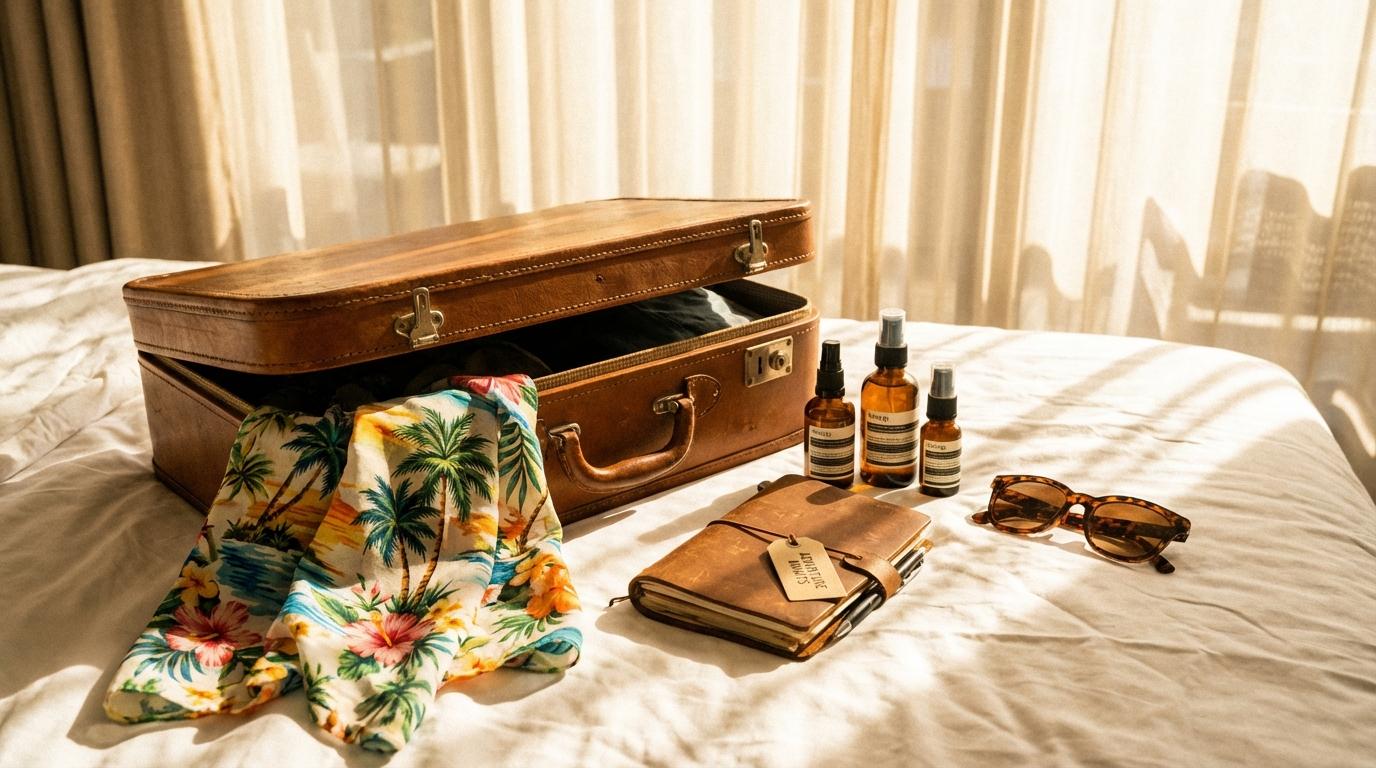
I completely destroyed my skin the first time I moved across the country for school. Went from the Pacific Northwest, where my skin basically took care of itself in all that humidity, to a bone-dry college town in the Southwest where my face started flaking within the first week. I panicked, bought a bunch of heavy creams, broke out everywhere, panicked again, stripped my routine down to nothing, and then my skin got even drier. It took me almost two months to figure out what was going on and another month to fix the damage I had caused by overreacting.
If you are dealing with a climate move right now, or planning one, I can save you from repeating my mistakes. Your skin is going to freak out a little. That is normal. The key is knowing what to expect and not making it worse by changing everything at once.
What Happens to Your Skin During a Climate Shift
Your skin has been calibrated to wherever you have been living. If you have been in a humid environment, your skin has adjusted its oil production, its water retention, and its barrier function to match those conditions. Move somewhere dry and suddenly your skin is losing moisture faster than it can replace it. Move somewhere humid from a dry climate and your skin might overproduce oil because it is still operating in “protect against dryness” mode.
This recalibration period is real and it takes time. Most dermatologists say your skin needs anywhere from two to six weeks to fully adjust to a new climate, though some people notice changes for up to three months. During that adjustment window, you might experience breakouts, dryness, oiliness, sensitivity, or some combination of all four. It feels chaotic, but it is your skin doing exactly what it is supposed to do: adapting.
The worst thing you can do during this period is overhaul your entire routine. I know it is tempting because your skin feels completely different and your old products seem like they are not working. But introducing five new products during a time when your skin is already stressed is a recipe for irritation, breakouts, and confusion about what is actually helping versus hurting.
Building Two Routines (Without Going Broke)
If you are going to be moving between climates regularly, like splitting time between two places or traveling frequently for work, it helps to think of your routine in modular terms. You keep a core set of products that work everywhere, and then you swap out one or two items depending on where you are.
Your cleanser, your sunscreen, and your treatment products (retinol, vitamin C, whatever actives you use) can usually stay the same regardless of climate. These are your constants. What changes is mainly your moisturizer and potentially adding or removing a hydrating layer.
In dry climates, you want a richer moisturizer with ceramides and occlusives that help lock moisture in. A hyaluronic acid serum underneath can help, but only if the air has some moisture to pull from. In extremely arid conditions, hyaluronic acid can actually pull water out of your deeper skin layers, which makes things worse. Layer it under a solid occlusive moisturizer to prevent that. Reviva Labs has a helpful guide on adjusting products for different climate conditions.
In humid climates, a lighter gel moisturizer usually works better. Heavy creams can feel suffocating when the air is already providing moisture, and they can contribute to congestion and breakouts. If you have dealt with adjusting your routine for humid weather, you know the drill. Scale back the richness and let the humidity do some of the hydrating work for you.
The budget-friendly version of this: buy one mid-weight moisturizer that works okay in both conditions, and supplement it. In dry climates, mix in a few drops of a facial oil or layer a thin occlusive on top. In humid climates, use less of it or skip it on your oilier zones. You do not need two completely separate routines. You need one flexible routine with a couple of swappable pieces.
Products That Work Everywhere
Some products genuinely do not care what the weather is doing outside. These are the ones worth investing in because they earn their spot in your bag no matter where you are.
A gentle, non-foaming cleanser works in every climate. Foaming cleansers can be too stripping in dry environments, and a gentle cleanser is never too mild for humid ones. CeraVe Hydrating Cleanser, Vanicream Gentle Cleanser, or La Roche-Posay Toleriane are all solid options that cost under fifteen dollars and travel well.
Niacinamide works everywhere. It helps regulate oil production in humid climates and supports barrier function in dry ones. It is one of those rare ingredients that adapts to what your skin needs rather than doing one specific thing. A simple 5-10% niacinamide serum from The Ordinary or Naturium costs under fifteen dollars and lasts for months. I have written about skincare while backpacking through Europe before, and niacinamide was one of the products that made the cut for every destination.
Sunscreen is non-negotiable in every climate. UV radiation does not take a day off because it is cloudy or cold. If anything, high-altitude dry climates often have more intense UV exposure than sea-level humid ones. Pick one sunscreen you actually like wearing and keep it consistent.
Centella asiatica (cica) products are great transitional helpers. They calm inflammation, support barrier repair, and work across skin types and climates. A cica balm or cream can be your “emergency backup” when your skin is acting up during the adjustment period. Patchology put together a packing list for different climate skincare needs that is worth checking out if you travel a lot.
Giving Your Skin Time to Adjust
This is the hardest part because patience does not feel productive. But your skin genuinely needs time to recalibrate, and rushing that process usually backfires.
Week one in a new climate: change nothing in your routine. Use exactly what you were using before and observe what your skin does. Is it getting oilier? Drier? Breaking out in specific zones? This observation period gives you actual data to work with instead of guessing.
Week two: make one change based on what you observed. If your skin is drier, swap your moisturizer for something richer or add a hydrating serum. If it is oilier and breaking out, switch to a lighter moisturizer and maybe add a gentle BHA a couple of times a week. One change at a time. That is the rule.
Week three and beyond: continue adjusting slowly. If your skin is still not settled, make another single change. If it is stabilizing, leave things alone and let the adaptation continue. Most people find their skin has mostly adjusted by week four to six. Seasonal transitions work the same way, and if you need guidance on that, the advice on fall skin transitions applies the same logic.
If your skin is still severely reactive after two months, that might indicate a deeper issue like a compromised barrier or an underlying sensitivity that the climate change exposed rather than caused. At that point, seeing a dermatologist makes sense.
What I Wish Someone Had Told Me
Your skin is not broken just because it reacted to a climate change. It is doing exactly what it is designed to do. The discomfort is temporary, and the adjustment is natural. Every person who has ever moved to a significantly different climate has gone through some version of this.
Do not panic-buy a whole new routine. Do not listen to the person at the beauty counter who has never lived in your old climate and does not understand what your skin was doing before. Do not compare your adjustment timeline to anyone else’s because genetics, skin type, and the specific climates involved all affect how long it takes.
Keep it simple. Keep it patient. And keep your old products around for at least a month before you decide they do not work anymore. They might just need a supporting player or two to perform in their new environment, and that is a much cheaper fix than starting from scratch.