
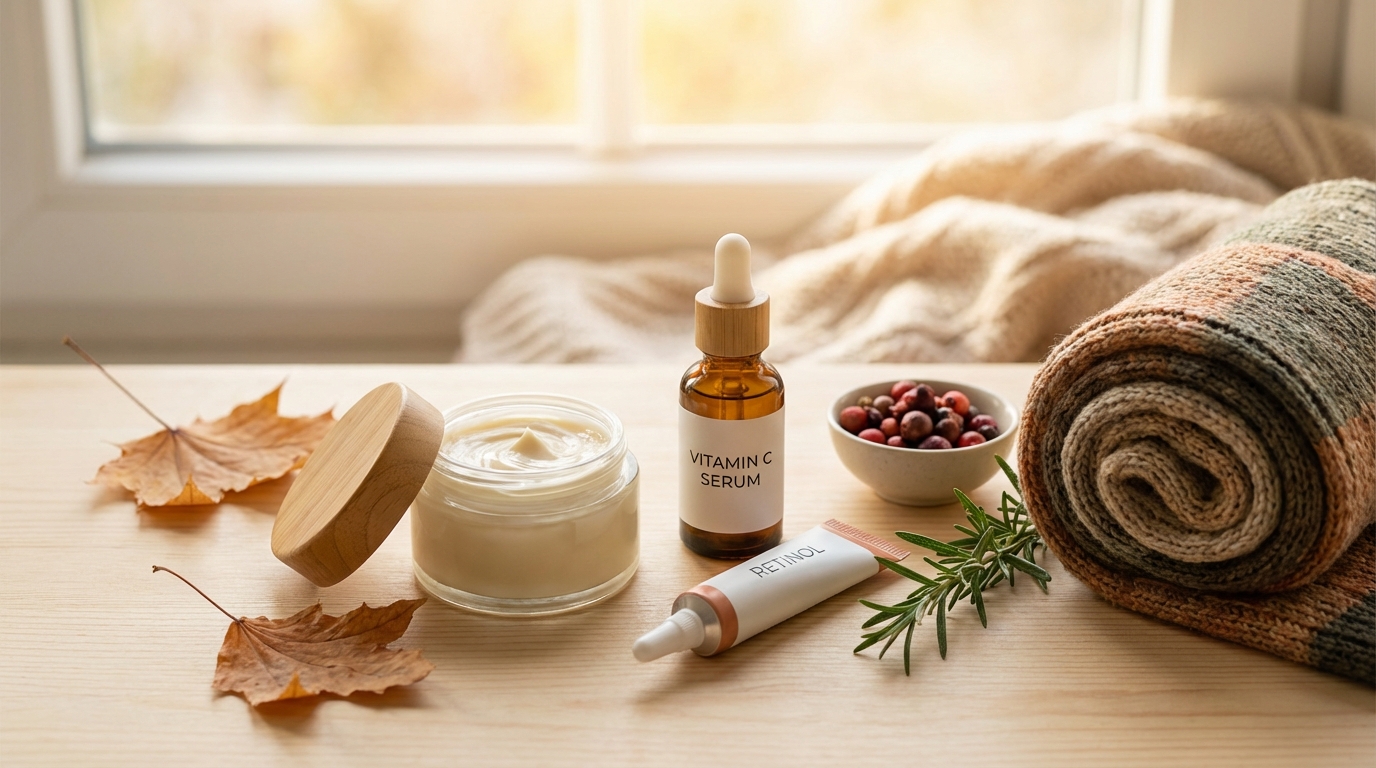
Summer is over. Your tan is fading. And your skin? It’s probably sending you some signals you’ve been ignoring.
That lightweight gel moisturizer that worked perfectly in July? It’s not cutting it anymore. The gentle cleanser you loved? Your skin is asking for something more substantial. Fall is transition time, and your routine needs to catch up.
Here’s what actually needs to change and why.
Your Summer Skin Took a Hit
Let’s be honest about what happened over the past few months. Even if you wore sunscreen daily (and I hope you did), your skin dealt with a lot. UV exposure, chlorine, salt water, humidity, and probably some sweaty late nights.
The result? You might be seeing uneven skin tone, rough texture, or some fine lines that weren’t there in May. Maybe your skin looks dull. Maybe you’re noticing some hyperpigmentation you’d like to address.
This isn’t permanent damage for most people. But it does mean your skin needs some recovery time and the right products to bounce back.
Now is when you assess the situation. Look at your skin in natural light. What’s changed? Where do you need support? This honest evaluation guides your fall routine updates.
Don’t just keep doing what you did all summer and hope for the best. Your skin is different now. Treat it that way.
Time for Richer Moisturizers
Here’s the thing about fall. The air gets drier. Indoor heating kicks in. Humidity drops. Your skin’s moisture barrier, which was doing fine in summer’s humidity, suddenly has to work much harder.
That water-based gel moisturizer needs to be retired, at least until spring. You need something with more occlusive ingredients to actually lock moisture into your skin.
Look for products with ceramides, which help repair your skin barrier. Hyaluronic acid is great, but it needs something on top to seal it in. Squalane and shea butter become your friends. Even if you have oily skin, fall is when you can handle slightly richer formulas without breaking out.
According to dermatologists at the American Academy of Dermatology, switching to a cream-based moisturizer when temperatures drop helps prevent the dry, flaky skin that winter brings.
Start the switch now. Don’t wait until your skin is already parched and irritated. Prevention is easier than repair.
One practical approach: use your lighter moisturizer in the morning under sunscreen, and bring out the richer cream at night. This gives you the best of both worlds during the transition weeks.
Bring Back the Stronger Actives
Summer is not the time for aggressive exfoliation or potent actives. Sun exposure plus strong acids or retinoids equals irritation and hyperpigmentation risk.
But fall? Fall is when you can safely reintroduce the products that really move the needle on skin concerns.
If you took a break from retinol, now’s the time to bring it back. Start slowly, maybe two nights a week, and build up. Your skin might have lost some of its tolerance over summer, so don’t jump back in at full strength.
Chemical exfoliants like glycolic acid or lactic acid can help address that summer texture. The cells damaged by sun exposure are sitting on the surface, making your skin look dull. Gentle exfoliation speeds up the turnover process and reveals fresher skin underneath.
Research from PubMed studies shows that alpha hydroxy acids are particularly effective at improving photodamaged skin, which is exactly what you’re dealing with post-summer.
Vitamin C is another winner for fall. It helps with hyperpigmentation, boosts your sunscreen’s effectiveness, and supports collagen production. Morning application under sunscreen is the classic approach.
Just don’t add everything back at once. Pick your priority concern, address it for a few weeks, then layer in the next active. Overwhelming your skin is counterproductive.
Preparing for Winter Now
Think of fall as your preparation period. What you do in September and October determines how your skin handles December and January.
Building up your skin barrier now means it’ll be stronger when real winter hits. Using retinol now means your skin will be acclimated when cold weather makes it more sensitive. Addressing hyperpigmentation now means you’ll start winter with more even skin tone.
Here are the specific updates to make:
Switch your cleanser if needed. If you were using a foaming cleanser all summer, consider something more hydrating. A milky or cream cleanser removes makeup and sunscreen without stripping your skin’s natural oils.
Add a hydrating serum layer. Hyaluronic acid serums applied to damp skin, then sealed with moisturizer, give you extra hydration without heaviness. This step becomes essential as humidity drops.
Consider a facial oil. Even oily skin types can benefit from a few drops of squalane or rosehip oil mixed into night cream. It creates that occlusive seal that prevents overnight moisture loss.
The National Institutes of Health research indicates that maintaining skin barrier function becomes increasingly important as environmental conditions become harsher.
Don’t forget your lips and hands. These areas show seasonal changes first. Start using a heavier lip balm and a richer hand cream before you actually need them.
What Not to Do
A few things to avoid during fall transition:
Don’t ditch sunscreen. Yes, the sun feels weaker. But UV exposure still happens, and you’re potentially using photosensitizing ingredients like retinol. Keep wearing SPF 30 or higher daily.
Don’t panic about seasonal breakouts. Changing routines and changing weather can temporarily mess with your skin. For more details, check out why your morning and night routines should differ and winter routine adjustments. Give things two to three weeks before declaring something isn’t working.
Don’t make all the changes at once. Switching your entire routine in one week makes it impossible to identify what’s helping or hurting. Make one change, give it time, then make the next.
Don’t assume your summer products are useless now. Keep those gels and lightweight formulas for next summer. They’re not wrong products, just wrong timing.
The Bottom Line
Fall skin transition doesn’t require buying a whole new routine. It requires paying attention to what your skin needs right now and adjusting accordingly.
Repair summer damage with gentle exfoliation and hydration. Switch to richer moisturizers before your skin gets desperate. Reintroduce your stronger actives gradually. Prepare for winter by building up your barrier now.
The brands and price points don’t matter as much as the approach. Listen to your skin, make the switches it’s asking for, and you’ll head into winter looking good instead of playing catch-up.
Your skin changes with the seasons. Your routine should too.