
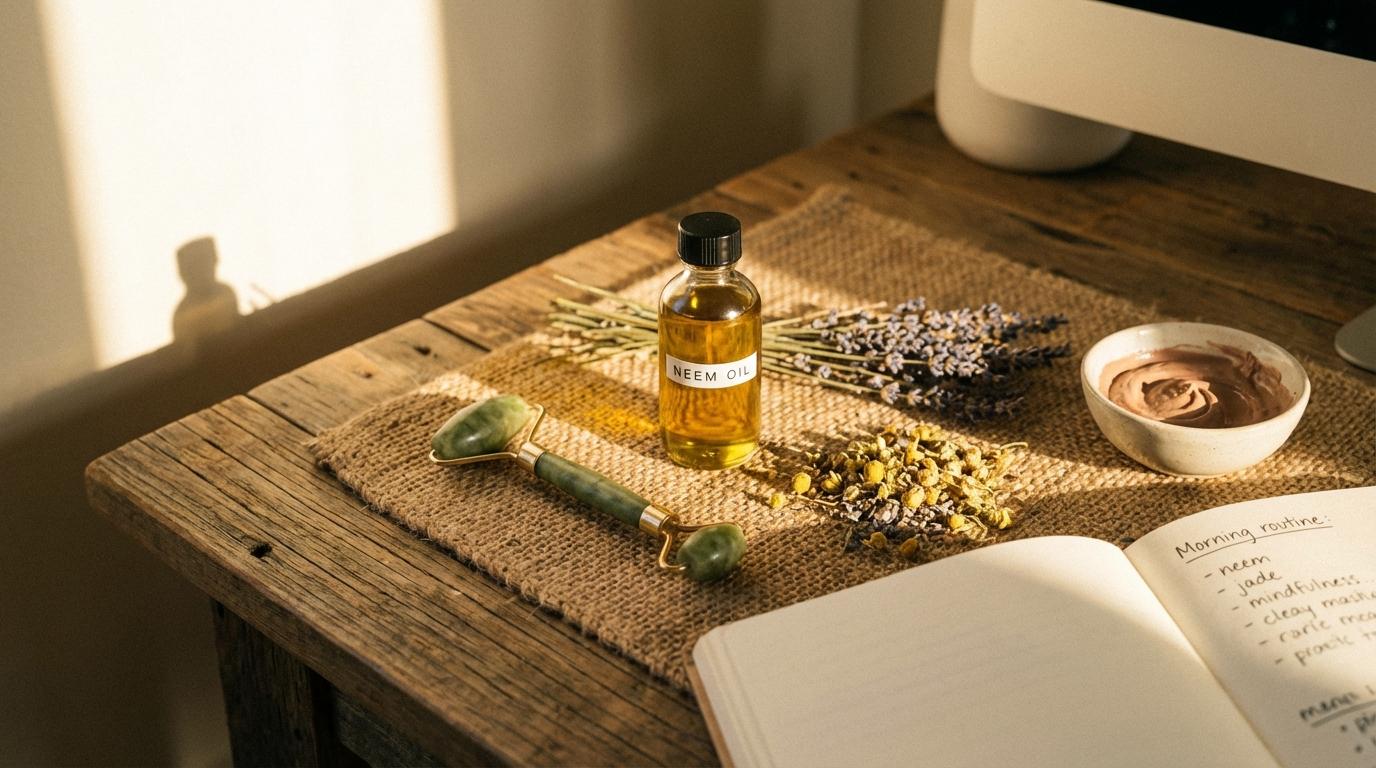
Natural ingredients are always gentler on acne-prone skin than synthetic treatments. Except when they’re not, and neem oil is the perfect example of why blanket statements about “natural” skincare rarely hold up. This traditional oil from the Indian subcontinent has been used for centuries as a medicinal remedy, and modern research actually backs up some of those ancient claims. But before you rush to add it to your cart, there are some real considerations you need to know about.
What Is Neem Oil and Why Should You Care?
Neem oil comes from the seeds and fruits of the neem tree (Azadirachta indica), which grows primarily in India, Southeast Asia, and parts of Africa. The tree has been called the “village pharmacy” in traditional Indian medicine because nearly every part of it has been used for some therapeutic purpose. The oil itself contains a mix of fatty acids, vitamin E, and several bioactive compounds that give it its distinctive properties.
For skincare purposes, the star player is a compound called azadirachtin, along with other components like nimbin and nimbidin. These are what researchers believe contribute to neem oil’s antibacterial and anti-inflammatory effects. According to research published in the Journal of Ethnopharmacology, neem extracts have demonstrated activity against several types of bacteria, including some strains associated with acne.
The Antibacterial Case for Neem
When we talk about acne treatments, we’re usually talking about targeting one main culprit: Cutibacterium acnes (formerly called Propionibacterium acnes). This is the bacteria that lives in your pores and contributes to inflammatory acne when it gets out of control. Traditional acne treatments like benzoyl peroxide work by killing this bacteria, and studies suggest neem has similar antibacterial activity.
A 2013 review of neem’s pharmacological properties found evidence of antibacterial effects against multiple bacterial strains. The oil also has anti-inflammatory properties, which matters because a lot of acne is really about inflammation, not just bacteria. Those red, angry pimples are your immune system’s response, and calming that inflammation can be just as important as killing bacteria.
Beyond the science, there’s practical evidence too. Neem-based skincare products have been used in Ayurvedic medicine for skin conditions for literally thousands of years. That doesn’t automatically mean it works for everyone, but it’s not nothing either.
Let’s Talk About That Smell
I’ll be honest with you: neem oil smells bad. Like, really bad. The scent has been described as a mix of garlic, peanuts, and sulfur. Some people say it smells like burnt coffee mixed with onions. Whatever comparison you choose, it’s not something you want to slather on your face before a date, or honestly before doing anything that involves being near other humans.
The good news is there are ways to manage this reality:
- Use it at night only: Apply neem oil as part of your evening routine so the smell can dissipate while you sleep. By morning, most of it will have absorbed or washed off.
- Dilute it properly: Pure neem oil is intense. Mix a few drops into a carrier oil like jojoba or rosehip to reduce the concentration and therefore the smell. A 10-20% dilution is a good starting point.
- Look for refined versions: Some neem oils are processed to reduce the odor while maintaining the beneficial compounds. These are sometimes labeled as “cosmetic grade” neem oil.
- Add essential oils: A drop of lavender or tea tree oil can help mask the smell, though it won’t eliminate it completely.
- Try neem-based products: Formulated serums and moisturizers containing neem extract often have the smell engineered out of them, though they may also have lower concentrations of active compounds.
If you’re someone who’s really sensitive to smells, this might be a dealbreaker. That’s okay. There are other options for treating acne that don’t require holding your breath. But if you can get past the olfactory challenge, you might find neem worth the temporary discomfort.
How to Actually Use Neem Oil for Acne
Assuming you’ve decided to give neem a shot, here’s how to incorporate it without irritating your skin or overwhelming your senses:
Patch test first: Neem oil can cause reactions in some people, especially those with sensitive skin. Apply a diluted amount to your inner forearm and wait 24 hours to check for any redness, itching, or irritation.
Start with spot treatment: Instead of applying it all over your face, use a cotton swab to dab diluted neem oil directly on active breakouts. This minimizes exposure and helps you gauge how your skin responds.
Mix it smart: Combine 5-10 drops of neem oil with about a tablespoon of a non-comedogenic carrier oil. Jojoba is great because its composition is similar to human sebum. Sunflower oil and grapeseed oil also work well.
Apply after cleansing: Clean skin allows for better absorption. Apply your diluted neem mixture to damp skin, let it sit for 10-20 minutes, then follow with the rest of your routine. Some people prefer to leave it on overnight, while others rinse it off.
If you’re already using active ingredients like retinol or chemical exfoliants, be careful about adding neem on the same nights. Layering too many actives can lead to irritation, especially if your skin barrier is already compromised.
When Neem Might Work for You
Neem oil tends to be most helpful in specific situations. You might want to try it if:
- You have mild to moderate inflammatory acne with red, swollen pimples
- You’re looking for a more natural approach to complement your existing routine
- Your skin tolerates oils well (some people find oils clog their pores)
- You have the patience to deal with the smell and the learning curve
- You’ve tried conventional treatments and want to explore alternatives
Neem also has some antifungal properties, which means it might help if your breakouts are actually fungal acne (malassezia folliculitis) rather than traditional acne. These look similar but have different causes and treatments. If regular acne treatments haven’t worked for you, it’s worth asking a dermatologist whether fungal acne might be the culprit.
When to Skip the Neem and Try Something Else
Not every ingredient works for everyone, and neem is no exception. Consider skipping neem oil if:
- You have severe or cystic acne: Deep, painful cysts typically need prescription-strength treatments. Neem isn’t strong enough to address this level of acne, and relying on it might delay you getting effective help.
- You’re pregnant or nursing: There isn’t enough research on topical neem use during pregnancy, and oral neem consumption has been linked to complications. Play it safe and skip it for now.
- You have nut allergies: Neem is related to cashews and pistachios. If you have tree nut allergies, proceed with extreme caution or avoid it entirely.
- Your skin is reactive to oils: Some people break out from any facial oil, regardless of how non-comedogenic it’s supposed to be. If you know oils don’t work for you, neem probably won’t be the exception.
- You need fast results: Neem works gradually, if it works at all. If you need to clear up your skin quickly for an event or you’re struggling mentally with persistent acne, faster-acting treatments might be a better choice.
There’s no shame in deciding neem isn’t for you. Treating acne often involves some trial and error, and what works amazing for one person might do absolutely nothing for another. If you’ve given neem a fair shot (at least 4-6 weeks of consistent use) and aren’t seeing improvement, move on to something else.
Budget Considerations
One of neem oil’s biggest advantages is the price. A bottle of pure, cold-pressed neem oil typically costs between $8 and $15 and lasts for months since you only use a few drops at a time. Compare that to prescription acne treatments or even other over-the-counter options, and it’s genuinely affordable.
When shopping for neem oil, look for:
- Cold-pressed or virgin neem oil (heat processing can damage beneficial compounds)
- 100% pure neem oil without added ingredients
- Organic certification if possible (neem trees are often minimally treated anyway, but certification adds assurance)
- Dark glass bottles (neem oil degrades when exposed to light)
Store your neem oil in a cool, dark place. It solidifies at temperatures below about 65 degrees Fahrenheit, which is normal. Just warm it in your hands or run warm water over the bottle to liquify it again. If you’ve checked out our guide on budget-friendly skincare products, you know that effectiveness doesn’t have to mean expensive, and neem fits right into that philosophy.
The Realistic Verdict
Neem oil is worth trying if you’re curious about traditional acne remedies and don’t mind working around its significant smell. The antibacterial and anti-inflammatory evidence is legitimate, the price is right, and plenty of people swear by it. But it’s not a replacement for proven treatments if you have serious acne, and it requires more effort than slapping on a typical serum.
Think of neem oil like a useful tool in your skincare toolkit rather than a standalone solution. It might complement your existing routine nicely, or it might not work for your particular skin. The only way to know is to try it, give it time, and pay attention to how your skin responds.
If you’re dealing with stubborn breakouts and looking for something new to add to your rotation, neem could be worth a shot. At worst, you’re out $10 and some goodwill from anyone who gets too close to your face. At best, you’ve found an affordable, effective addition to your acne-fighting arsenal.