
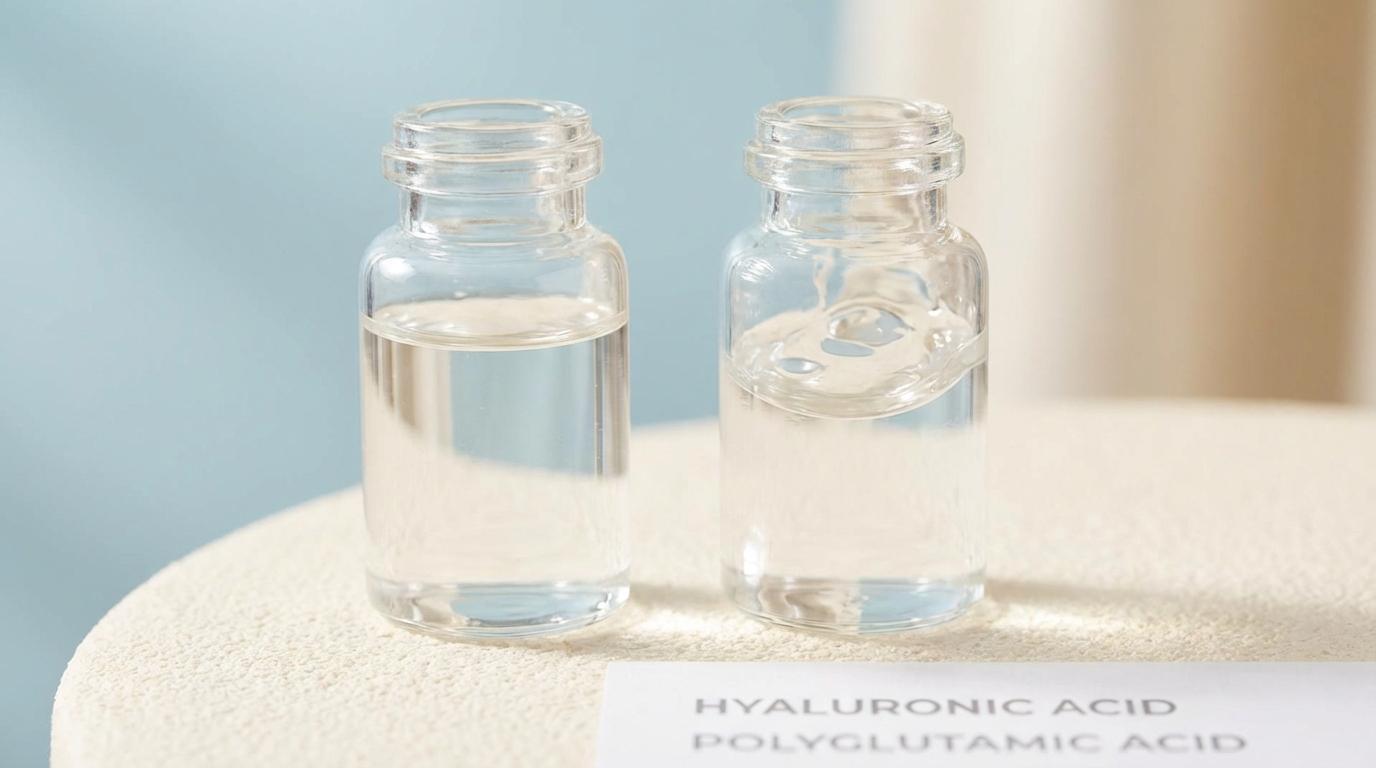
Polyglutamic acid can hold up to 4,000 times its weight in water, which is roughly four times more than hyaluronic acid. When I first came across this statistic while reading through cosmetic chemistry papers, I had to double-check the numbers. It seemed almost too good to be true. But the research keeps backing up these claims, and now this lesser-known ingredient is finally getting the attention it deserves.
If you’ve spent any time building a skincare routine, you’ve probably heard about hyaluronic acid about a thousand times. It’s been the go-to humectant for years, and for good reason. But polyglutamic acid, often shortened to PGA, brings something different to the table. Understanding how these two ingredients work, both separately and together, can help you make smarter choices about what goes on your face.
What Makes Polyglutamic Acid Different
Polyglutamic acid is a polymer made up of glutamic acid units, an amino acid that occurs naturally. It’s actually produced through bacterial fermentation, often from a traditional Japanese food called natto, which is made from fermented soybeans. The molecule itself is quite large compared to hyaluronic acid, and this size difference matters a lot for how it behaves on your skin.
Because PGA has a larger molecular weight, it doesn’t penetrate deeply into the skin the way some forms of hyaluronic acid can. Instead, it sits on the surface and forms a thin, breathable film. This film acts like a moisture barrier, preventing water from evaporating out of your skin. The technical term for this water loss is transepidermal water loss, or TEWL, and reducing it is one of the most effective ways to keep skin hydrated.
Think of it this way: hyaluronic acid pulls water into the skin, while polyglutamic acid locks that water in place. They approach the hydration problem from opposite directions, which is why they work so well when paired together.
The Water Retention Claims
The statistic that PGA holds 4,000 times its weight in water compared to HA’s 1,000 times comes up constantly in skincare marketing. But what does this actually mean for your skin?
In laboratory conditions, polyglutamic acid does demonstrate superior water-binding capacity. Some studies suggest it can hold up to 5,000 times its weight under optimal conditions. However, what happens in a test tube doesn’t always translate perfectly to what happens on living skin. The environment on your face is complex, with natural oils, varying humidity levels, and constant interaction with the outside world.
That said, the practical benefits are still real. People who’ve tried PGA products often report that their skin feels plumper and stays hydrated longer throughout the day. The film-forming quality means moisture doesn’t escape as quickly, especially in dry environments like air-conditioned offices or heated homes during winter.
The important thing to understand is that higher water retention doesn’t automatically mean better results for everyone. Your individual skin type, environment, and the rest of your routine all play a role in how effective any humectant will be.
How Polyglutamic Acid and Hyaluronic Acid Actually Differ
Beyond the water retention numbers, these two ingredients have distinct mechanisms that make them behave quite differently on your skin.
Hyaluronic acid comes in multiple molecular weights. Low molecular weight HA can penetrate into deeper skin layers, while high molecular weight HA stays closer to the surface. This flexibility makes HA versatile, and many serums now include multiple HA weights to address hydration at various skin depths. The trade-off is that without proper occlusion, the water HA draws in can evaporate right back out, especially in low-humidity environments.
Polyglutamic acid doesn’t have this penetration variability because it’s consistently large. Its strength lies entirely in that surface film. Recent research has also shown that PGA can inhibit hyaluronidase, the enzyme that breaks down hyaluronic acid in your skin. By slowing this enzyme’s activity, PGA may actually help your skin’s natural hyaluronic acid stick around longer. This is probably the most interesting aspect of PGA that doesn’t get talked about enough.
In terms of texture, polyglutamic acid tends to feel silkier and less tacky than hyaluronic acid. Some HA serums can feel sticky until they absorb, but PGA typically has a smoother finish. If you’ve ever found HA products uncomfortable, PGA might work better for you.
Using Them Together for Better Results
The most practical approach for many people is combining both ingredients rather than choosing one over the other. Since they work through different mechanisms, they don’t compete. Instead, they complement each other.
A straightforward way to layer them: apply your hyaluronic acid product to damp skin first. Give it a moment to absorb, then follow with a polyglutamic acid product. The HA pulls moisture in, and the PGA seals it there. Finish with your regular moisturizer to add another layer of protection. You can also find products that already contain both ingredients, which simplifies the process.
The order matters because you generally want to apply products from thinnest to thickest consistency. Most HA serums are quite watery, while PGA products tend to have a slightly more viscous, gel-like texture. Following this thin-to-thick rule helps each layer absorb properly without pilling or sitting awkwardly on your skin.
One thing to watch: if you’re using a lot of film-forming ingredients, make sure any active ingredients you apply are going on before the PGA layer. The film can potentially interfere with absorption of subsequent products, though this varies depending on the specific formulation.
Who Benefits Most From Polyglutamic Acid
If you live in a dry climate or spend a lot of time in air conditioning, PGA’s moisture-locking ability can make a noticeable difference. The same goes for anyone who finds that their skin feels dehydrated by midday despite applying moisturizer in the morning.
People with sensitive skin often tolerate PGA well because it’s generally non-irritating. Unlike some acids that exfoliate or have low pH levels, polyglutamic acid is gentle and unlikely to cause redness or stinging. It’s also typically fine to use during pregnancy, though you should always check with your healthcare provider about specific products.
Oily skin types sometimes worry about film-forming ingredients feeling heavy, but PGA films are usually quite lightweight. The silky texture means it plays well under makeup without causing excessive shine or breaking down foundation.
That said, if your skin is very dehydrated with compromised barrier function, you might need more than just surface-level hydration. In these cases, ceramides and fatty acids that help rebuild the barrier should be part of your routine alongside humectants. PGA alone won’t fix deep dehydration or barrier damage.
What the Formulation Looks Like
When shopping for polyglutamic acid products, you’ll typically find it in serums, essences, and sometimes moisturizers. Concentrations aren’t always listed on packaging, but most effective products use between 0.1% and 1%. Higher concentrations aren’t necessarily better, and some people find that lower amounts still deliver visible results.
Look for products where PGA is listed in the first half of the ingredient list if hydration is your main goal. Ingredients are listed in order of concentration, so if it’s way down at the bottom, there might not be enough to do much. That said, even small amounts can contribute to overall formula performance.
Some products combine PGA with niacinamide, peptides, or other hydrating ingredients like glycerin. These combinations can work well together. Niacinamide, for example, helps strengthen your skin barrier, which pairs nicely with PGA’s moisture-sealing effect.
Real Expectations for Results
Polyglutamic acid provides immediate hydrating effects that you can often feel after the first use. Skin typically looks dewier and feels softer. However, long-term changes like improved skin texture or elasticity take consistent use over weeks or months.
Don’t expect PGA to replace your entire hydration routine. It works best as one component of a well-rounded approach that includes good cleansing habits, appropriate moisturizers, and sun protection. No single ingredient solves all skin concerns, no matter what the marketing says.
The best way to know if polyglutamic acid works for you is to try it. Pay attention to how your skin feels throughout the day, whether makeup sits better, and whether you notice less dryness in environments that usually cause problems. These practical observations tell you more than any water retention statistic ever could.
Making the Choice
Polyglutamic acid isn’t necessarily better than hyaluronic acid. It’s different. If hyaluronic acid products have been working well for you, there’s no urgent need to switch. But if you’ve been curious about PGA or haven’t found HA to deliver the lasting hydration you want, it’s worth experimenting with this ingredient.
The skincare industry constantly introduces new ingredients with impressive statistics attached. Some turn out to be genuinely useful additions to our routines, while others fade into obscurity. Polyglutamic acid seems to fall into the first category based on both the science and the consistent positive feedback from people who’ve tried it. The research supports the hydration claims, and the practical experience of users backs them up.
Start with one PGA product and see how your skin responds before building a whole routine around it. Sometimes the simplest approach, adding just one new ingredient at a time, gives you the clearest picture of what actually helps your specific skin.