
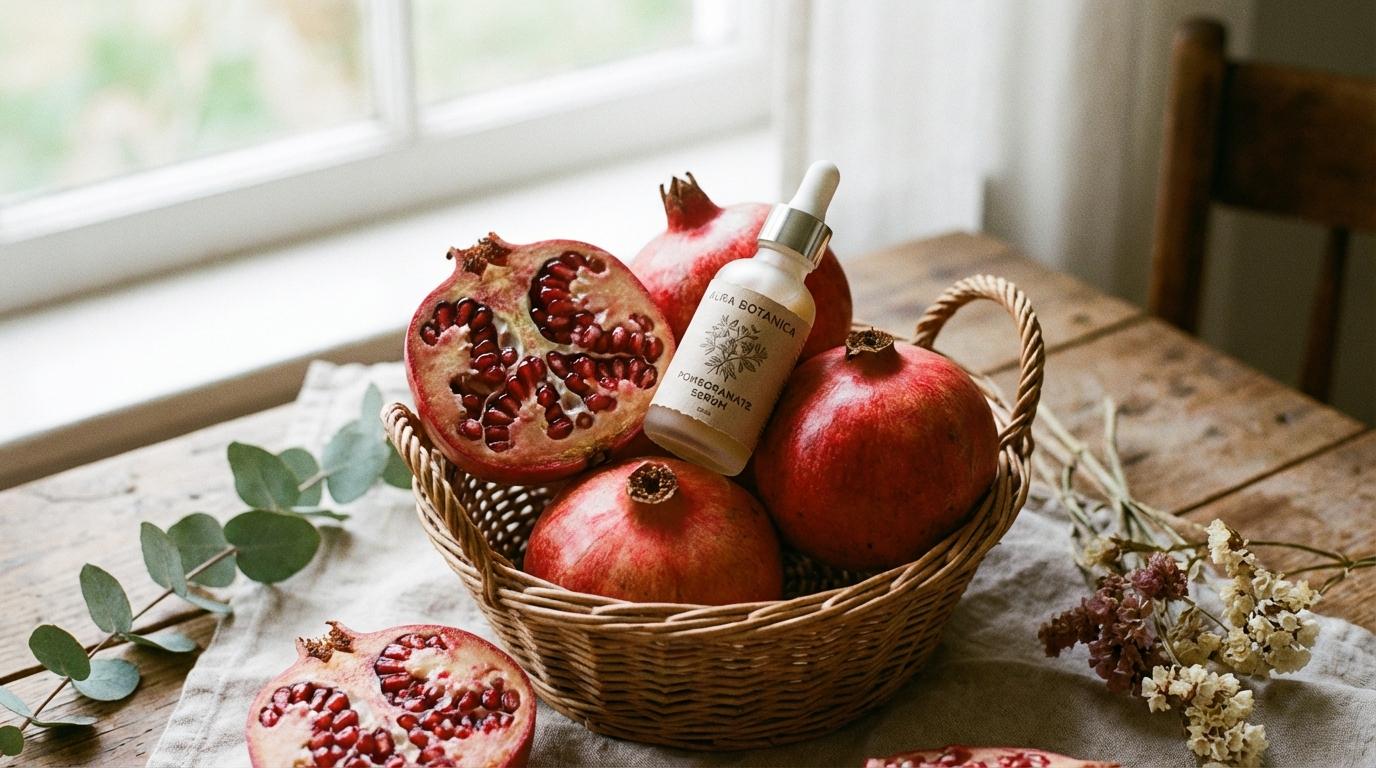
Pomegranate extract is the ultimate skin savior packed with more antioxidants than any other fruit. Except that claim falls apart pretty quickly when you start asking how much of that goodness actually survives the journey from pomegranate seed to your moisturizer (spoiler: it’s complicated).
I’ve been seeing pomegranate extract pop up everywhere lately. Serums, moisturizers, those fancy sheet masks that cost more than my lunch. And every single product makes it sound like rubbing pomegranate on your face is basically the skincare equivalent of finding a winning lottery ticket. But is it actually doing anything meaningful for your skin, or is this another case of a trendy ingredient getting way more credit than it deserves?
What Makes Pomegranate Extract Special (On Paper)
The main attraction here is a compound called ellagic acid. It’s a polyphenol antioxidant found in pomegranates, and it does have some genuinely impressive properties when researchers study it in controlled settings. Ellagic acid can help neutralize free radicals, which are those unstable molecules that contribute to premature aging when they accumulate in your skin.
Beyond the antioxidant angle, ellagic acid has been shown in lab studies to potentially inhibit tyrosinase, the enzyme responsible for melanin production. This has led to claims that pomegranate extract can help with dark spots and hyperpigmentation. Some research has suggested it may also have anti-inflammatory properties, which sounds pretty great if you’re dealing with irritated or reactive skin.
There’s also punicalagin, another antioxidant compound unique to pomegranates. It’s actually responsible for about half of the fruit’s total antioxidant capacity. Studies have found that punicalagin may support collagen production and help protect against UV-induced damage. Sounds amazing, right?
The Part Nobody Wants to Talk About
Here’s where things get real. Most of those promising studies? They’re done using pure, isolated compounds at concentrations way higher than what ends up in your average skincare product. And they’re often tested in petri dishes or on skin samples in a lab, not on actual human faces dealing with real-world conditions.
The concentration problem is a big one. Skincare companies aren’t required to tell you exactly how much pomegranate extract is in their products. That “pomegranate extract” listed somewhere in the middle of the ingredient list might be present at 0.1% or 3%, and you’d never know the difference. A product can technically contain pomegranate extract while having so little that it’s basically meaningless for your skin.
Then there’s the stability issue. Antioxidants, including those found in pomegranate, can degrade when exposed to light, air, and heat. If your pomegranate serum comes in a clear bottle that sits on a sunny bathroom shelf, some of those active compounds might be breaking down before they ever touch your face. Packaging matters more than most people realize (sorry, I know that cute see-through bottle looks aesthetic).
Absorption: Can Your Skin Actually Use This Stuff?
Your skin is designed to keep things out. That’s literally its job. So just because an ingredient has beneficial properties doesn’t mean those benefits automatically transfer to your skin when you apply a product containing it.
Ellagic acid molecules are relatively large, which can make penetration challenging. Some formulations use delivery systems or combine pomegranate extract with penetration enhancers to help, but again, you usually can’t tell from the label whether a brand has bothered with these extra steps. Research from dermatological journals suggests that topical ellagic acid can penetrate the outer skin layers, but the extent varies wildly based on formulation.
This doesn’t mean topical pomegranate extract is useless. Even surface-level antioxidant protection can help prevent some environmental damage. But if you’re expecting deep, transformative results from any single antioxidant ingredient, you might be setting yourself up for disappointment.
When Pomegranate Extract is Actually Worth It
Not trying to crush anyone’s pomegranate dreams here. There are situations where seeking out this ingredient makes sense:
- If you already love everything else about a product and pomegranate extract happens to be in there, consider it a nice bonus rather than the main event
- If you’re looking for gentle antioxidant support and your skin tends to react to stronger ingredients like vitamin C, pomegranate extract might be a more tolerable option
- If the product is well-formulated (opaque packaging, comes from a brand that’s transparent about concentrations), it could genuinely contribute to your routine
- If you’re using it alongside other proven ingredients rather than as a replacement for them
The key is realistic expectations. Pomegranate extract can be a supporting player in a good skincare routine, but it probably shouldn’t be the star unless you’ve got very specific reasons.
What to Look for on the Label
If you want to give pomegranate extract a fair shot, be a little strategic about it. Look for products where pomegranate extract, punica granatum seed extract, or punica granatum fruit extract appears in the first third of the ingredient list. That usually means it’s present in more meaningful amounts (though still no guarantees on exact percentages).
Opaque or amber packaging helps protect those sensitive antioxidant compounds from degradation. And if a brand actually tells you the concentration they’re using? That’s a good sign they’ve put some thought into formulation rather than just tossing in a trendy ingredient for marketing purposes.
You might also want to look for products that combine pomegranate with other antioxidants. Antioxidants often work better in teams, neutralizing different types of free radicals and potentially stabilizing each other. A formula with pomegranate extract plus vitamin E or niacinamide, for example, might deliver more comprehensive protection than pomegranate alone.
Better Alternatives if Antioxidants Are Your Goal
If you’re specifically hunting for antioxidant protection and don’t want to gamble on pomegranate’s variability, there are options with more consistent research behind them. Vitamin C (L-ascorbic acid) remains the gold standard for topical antioxidants, with decades of studies supporting its benefits for brightening, collagen support, and free radical defense. Yes, it can be tricky for sensitive skin, but stabilized forms have gotten much better.
Vitamin E is another workhorse antioxidant that pairs beautifully with other ingredients. Azelaic acid pulls double duty as both an antioxidant and an effective treatment for redness and uneven texture. Niacinamide offers antioxidant properties while also supporting your skin barrier and managing oil production.
This isn’t to say pomegranate extract can’t contribute. But if antioxidant power is your primary goal, ingredients with more robust clinical backing might give you more predictable results.
The Marketing Reality Check
Skincare marketing loves a good “superfruit” narrative. Pomegranate sounds exotic, natural, and powerful. It photographs beautifully for product campaigns. And those lab studies about ellagic acid give brands something scientific-sounding to reference, even when the connection between petri dish results and real-world skincare benefits is pretty tenuous.
None of this makes pomegranate extract inherently bad or scammy. It’s a legitimately interesting ingredient with real antioxidant properties. The problem is more about inflated expectations and the gap between marketing claims and formulation reality. When a brand charges a premium specifically because of their “revolutionary pomegranate complex,” that’s worth some skepticism.
A well-formulated product with pomegranate extract at effective concentrations, proper packaging, and thoughtful delivery systems? That could genuinely support your skin’s antioxidant defenses. A random moisturizer that sprinkles in a tiny bit of pomegranate extract to put it on the label? Probably not doing much beyond sounding nice.
My Actual Take
Pomegranate extract isn’t a scam, but it’s also not the antioxidant miracle that marketing often suggests. It’s somewhere in the middle: a decent ingredient that can contribute to a good formulation but rarely justifies being the hero ingredient you pay extra for.
If you find a product you love and pomegranate extract happens to be in there, great. If a brand is charging you a premium specifically for their pomegranate-focused formula without being transparent about concentrations and formulation quality, maybe keep looking. And if you’re building an antioxidant strategy from scratch, starting with better-researched options like vitamin C or niacinamide will probably serve you better than betting everything on pomegranate.
The real lesson here applies to most trendy skincare ingredients: impressive lab studies don’t automatically translate to impressive real-world results. What happens in a petri dish at controlled concentrations is very different from what happens on your face with a commercial product. Stay curious, stay a little skeptical, and remember that no single ingredient is going to revolutionize your skin (no matter how pretty and red it looks in the advertising).