
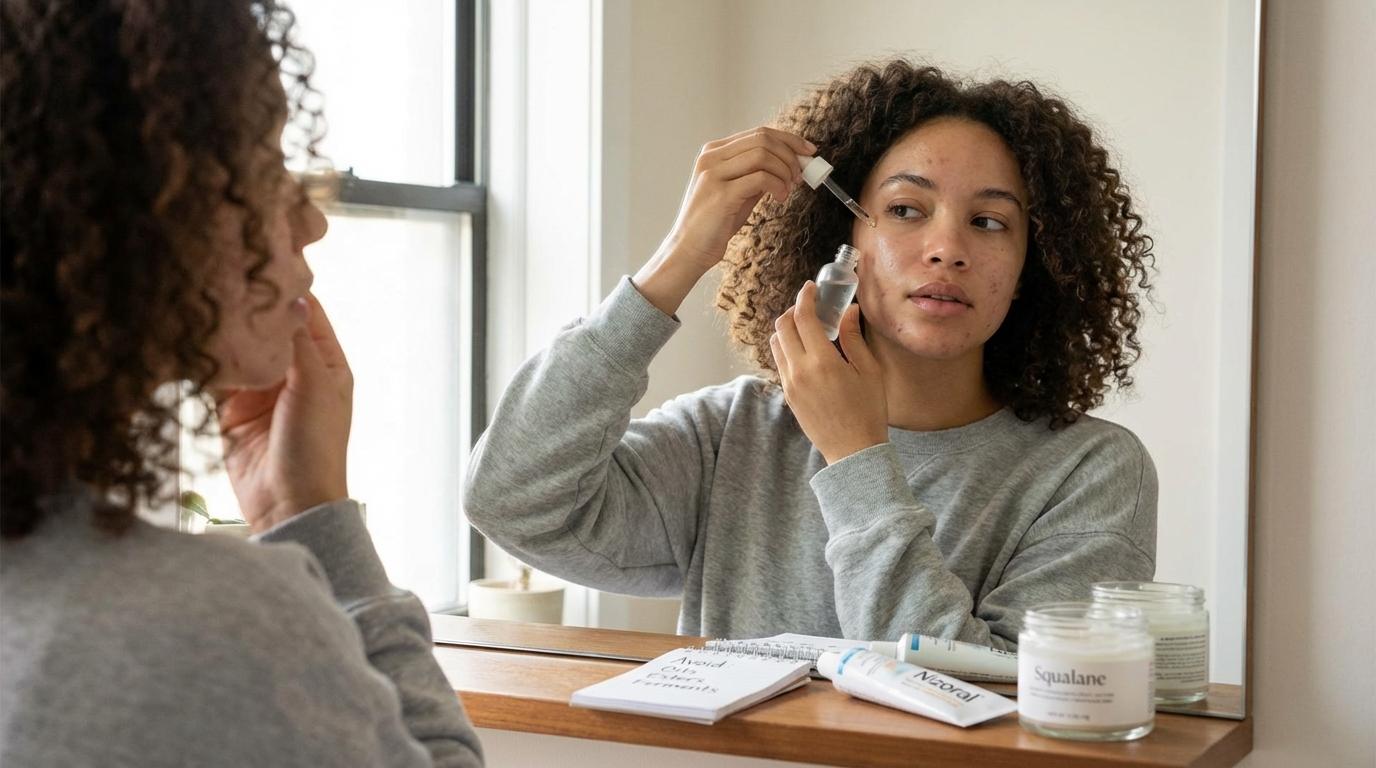
So your breakouts just will not go away. You have tried salicylic acid, benzoyl peroxide, maybe even a round of antibiotics from your derm. And somehow things got worse instead of better. If this sounds familiar, there is a good chance you are not dealing with regular acne at all. You might be dealing with fungal acne, technically called Malassezia folliculitis, and it requires a completely different approach.
I spent six months fighting “acne” that turned out to be fungal. The moment I switched my routine, my skin cleared up faster than I thought possible. Let me walk you through everything I learned about identifying fungal acne and building a routine that actually works.
Wait, Is It Actually Fungal Acne?
Before you overhaul your entire routine, you need to figure out what you are actually dealing with. Fungal acne and bacterial acne look similar at first glance, but there are some key differences that can help you identify which one you have.
Fungal acne shows up as clusters of small, uniform bumps that are usually all the same size. They tend to be itchy, which is a big tell. According to Healthline’s guide on fungal acne, these bumps commonly appear on your forehead, chest, back, and upper arms. They rarely come to a head like regular pimples do.
Regular bacterial acne, on the other hand, shows up as a mix of different sized pimples, blackheads, whiteheads, and sometimes deeper cysts. It is usually concentrated on the face and is not particularly itchy.
Here are some other signs that point toward fungal acne:
- Your breakouts appeared after starting antibiotics (antibiotics kill bacteria but leave yeast alone)
- Your skin gets worse in hot, humid weather or after sweating
- Traditional acne treatments have not worked or made things worse
- The bumps have been stubbornly persistent for months
- You notice the breakouts cluster in areas where you sweat a lot
If you are still unsure, a dermatologist can do a quick skin scraping to check for yeast under a microscope. It is painless and gives you a definitive answer.
Understanding Why Ingredient Choice Matters
Here is the science part that changed everything for me: Malassezia yeast feeds on certain fatty acids. Specifically, it loves fatty acids with carbon chain lengths between 11 and 24. When you put products containing these fatty acids on your skin, you are essentially providing a feast for the yeast that is causing your breakouts.
This is why so many “acne-fighting” products can make fungal acne worse. That nourishing moisturizer packed with oils? Yeast food. That gentle cleanser with fatty acid esters? Also yeast food. Even products labeled “non-comedogenic” are not necessarily fungal acne safe.
The only way to get fungal acne under control is to stop feeding the yeast while simultaneously treating it with antifungal ingredients. It sounds complicated, but once you know what to look for, it becomes second nature.
The Ingredient Avoidance List
This is probably the most important section of this entire article. Before you buy any skincare product, you need to check the ingredients against this list. I know it seems overwhelming at first, but tools like Sezia’s ingredient checker and Folliculitis Scout can analyze ingredient lists for you instantly.
Fatty acids to avoid: Oleic acid, lauric acid, palmitic acid, stearic acid, linoleic acid, and myristic acid. These are the direct food sources for Malassezia.
Oils that feed the yeast: Coconut oil (despite its “antimicrobial” reputation), olive oil, argan oil, marula oil, jojoba oil, avocado oil, and most plant-derived oils high in oleic acid.
Esters and emulsifiers: Isopropyl myristate, glyceryl stearate, PEG-100 stearate, polysorbate 20, polysorbate 60, and polysorbate 80. These break down into fatty acids that Malassezia can feed on.
Fermented ingredients: This one surprised me because fermented skincare is so popular. But ingredients like galactomyces ferment filtrate, saccharomyces ferment, and lactobacillus ferment can worsen fungal acne. The fermentation process creates byproducts that yeast loves.
Heavy occlusives: Shea butter, cocoa butter, and thick waxes like cetyl alcohol and cetearyl alcohol. While these do not directly feed the yeast, they create a warm, moist environment where Malassezia thrives.
Safe Ingredients You Can Actually Use
Now for the good news. There are plenty of effective skincare ingredients that will not feed Malassezia. Building a routine around these means you can still hydrate, protect, and treat your skin.
For hydration: Glycerin, hyaluronic acid, urea, and propanediol are all excellent humectants that draw moisture into your skin without feeding yeast. Squalane (not squalene, which is different) is one of the few oils that is safe because it is not a fatty acid.
For barrier support: Niacinamide, panthenol (vitamin B5), and beta-glucan help strengthen your skin barrier. Ceramides are tricky because some formulations include problematic fatty acids, so always check the full ingredient list.
For treating the fungal acne: Zinc pyrithione, ketoconazole, and selenium sulfide are your go-to antifungal actives. These are often found in dandruff shampoos, which is why you will see people recommending Nizoral as a face wash. Sulfur is another option that has both antifungal and antibacterial properties.
MCT oil deserves a special mention. It stands for medium chain triglycerides, and the specific types you want are caprylic acid (C8) and capric acid (C10). These have carbon chains too short for Malassezia to feed on, and research suggests they may actually have antifungal properties. As noted by Simple Skincare Science’s comprehensive guide, MCT oil is a standout moisturizing option for fungal acne prone skin.
Building Your Fungal Acne Safe Routine
Here is a basic framework you can customize based on your skin type and budget. The key is keeping it simple while making sure every product passes the ingredient check.
Morning routine:
- Gentle, fungal safe cleanser (or just water if your skin is not oily)
- Fungal safe moisturizer with hydrating ingredients like glycerin or hyaluronic acid
- Mineral sunscreen (most chemical sunscreens are fungal safe, but double check)
Evening routine:
- Gentle cleanser to remove sunscreen and daily buildup
- Antifungal treatment (see below for options)
- Fungal safe moisturizer
Treatment options (pick one to start):
The contact therapy method with ketoconazole (Nizoral) shampoo is popular because it is affordable and accessible. Apply a thin layer to affected areas, leave on for 5 to 10 minutes, then rinse off. Start with every other day and adjust based on how your skin responds.
Zinc pyrithione soap or wash is another option that some people prefer because it does not require a wait time. Use it as your regular cleanser once daily.
If you want something specifically formulated for the face, look for creams or serums containing urea combined with antifungal ingredients. Urea is a keratolytic that helps penetration while also providing hydration.
The Patience Factor
I wish I could tell you that fungal acne clears up overnight once you switch to a safe routine, but that is not how it works. You are essentially starving the yeast, and that takes time. Most people start seeing improvement within 2 to 4 weeks, with significant clearing by 6 to 8 weeks.
During this time, you might experience what feels like a purge as existing trapped sebum works its way out. This is normal. What is not normal is new clusters of itchy bumps appearing, which would suggest something in your routine is still feeding the yeast.
Keep a simple log of what products you use and how your skin looks. This makes it much easier to identify problems if things are not improving as expected.
Preventing Future Flare-ups
Once your fungal acne clears, the work is not completely over. Malassezia is a normal part of your skin’s microbiome, so the goal is not to eliminate it entirely but to keep it in balance.
Some practical habits that help:
- Change out of sweaty clothes promptly after working out
- Shower as soon as possible after activities that make you sweat
- Keep your bedding clean, especially pillowcases
- Continue checking ingredient lists before trying new products
- Consider using your antifungal treatment once or twice a week as maintenance
You do not necessarily have to avoid all problematic ingredients forever once your skin is clear. Some people can reintroduce certain products without issues. But if you are prone to fungal acne, it makes sense to keep your core routine (cleanser, moisturizer, sunscreen) fungal safe even when things are going well.
When to See a Dermatologist
Self-treating fungal acne is reasonable if you are fairly confident in your diagnosis and willing to be patient. But there are times when professional help makes sense:
- You are not seeing any improvement after 6 to 8 weeks of a strict fungal safe routine
- Your symptoms are severe or spreading rapidly
- You are not sure whether you have fungal acne, bacterial acne, or both (yes, you can have both simultaneously)
- Over-the-counter treatments are irritating your skin too much
A dermatologist can prescribe oral antifungals like fluconazole for stubborn cases, or help you figure out if something else is going on. According to Westchester Center for Dermatology, accurate diagnosis is critical because mistreating fungal acne with antibacterial products can actually make it worse.
Making It Work Long Term
The biggest challenge with managing fungal acne is not the routine itself. It is navigating a skincare world that is not designed with Malassezia in mind. New products are constantly launching, friends will recommend their favorites, and it can feel isolating to have such specific requirements.
The good news is that the fungal acne community has grown significantly, and resources like ingredient checkers and product lists make things much easier than they were even a few years ago. Bookmark the tools I mentioned earlier and use them before purchasing anything.
And remember that having fungal acne does not mean you cannot have good skin. It just means your path there looks a little different. Once you understand what your skin needs and does not need, building an effective routine becomes much more straightforward. Your skin can absolutely clear up and stay clear with the right approach.