
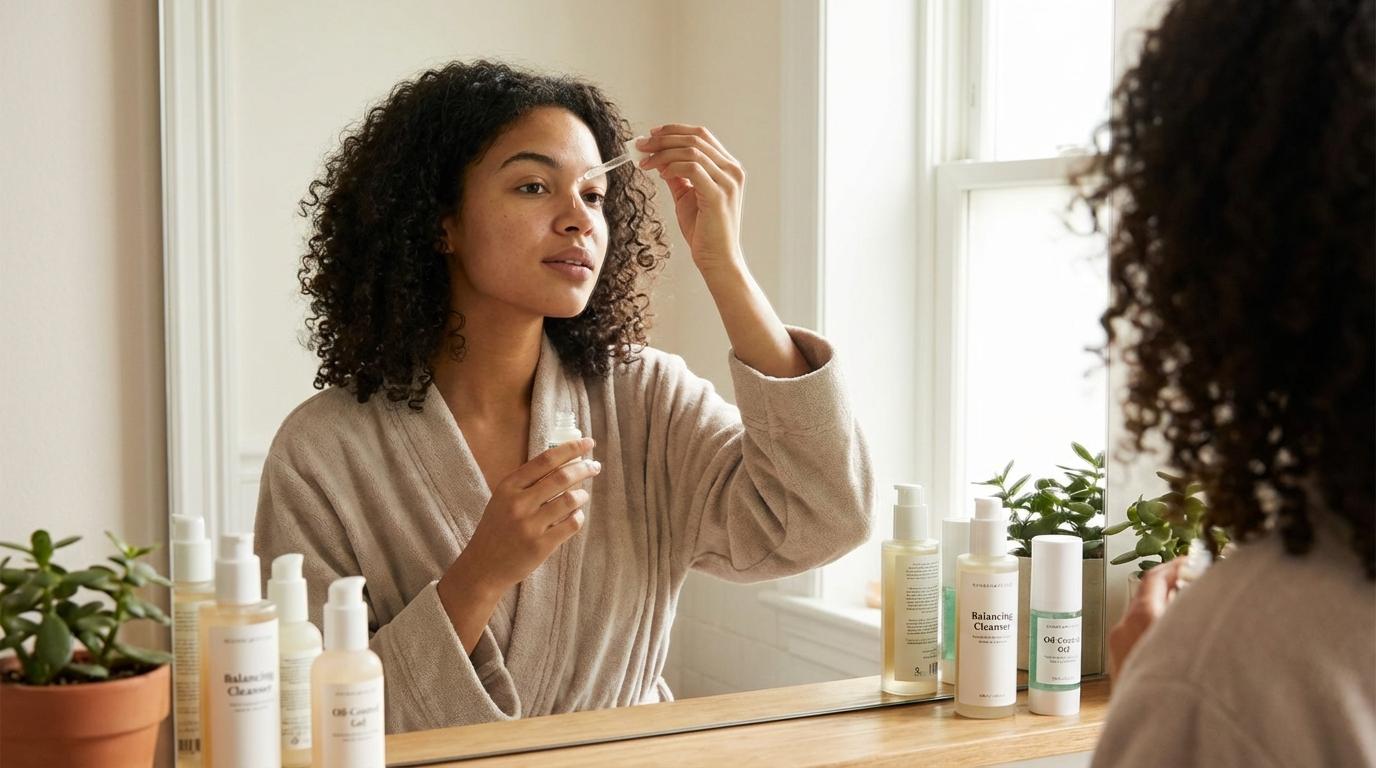
Every time you blot your face at 2pm or wake up looking like an oil slick, you can thank your sebaceous glands. These tiny structures live in your pores and pump out sebum all day long. Understanding how they work is the first step to managing oily skin without making things worse.
Where Sebum Actually Comes From
Sebaceous glands are attached to your hair follicles, sitting just below the skin surface. They produce sebum through a process called holocrine secretion, which basically means the cells fill up with oil, rupture, and release their contents into the pore. According to medical research, you have sebaceous glands nearly everywhere on your body except the palms of your hands and soles of your feet.
Sebum itself is a mix of triglycerides, wax esters, squalene, and fatty acids. It sounds gross, but this oily mixture actually serves important purposes: it waterproofs your skin, keeps it flexible, and provides some antibacterial protection. The problem starts when production goes into overdrive.
Why Hormones Run the Show
Your sebaceous glands are basically hormone receptors with an oil pump attached. Androgens like testosterone and DHT are the main drivers of sebum production. This is why:
- Teenagers often struggle with oily skin during puberty when androgen levels spike
- Many women notice oilier skin before their period when hormone levels shift
- Stress increases cortisol, which can indirectly boost oil production
- Some hormonal conditions like PCOS can cause persistently oily skin
According to the American Academy of Dermatology, hormonal fluctuations are one of the most common triggers for increased sebum production. This is also why birth control pills can sometimes help with oily skin, they regulate hormone levels.
Why Some Areas Get Oilier Than Others
Ever notice your forehead and nose are way oilier than your cheeks? That is not random. The T-zone (forehead, nose, and chin) has a much higher concentration of sebaceous glands than other parts of your face. Your forehead alone can have up to 400-900 sebaceous glands per square centimeter.
Your scalp is another oil factory, which is why your hair gets greasy. The chest and back also have high gland density, explaining why body acne tends to show up in those areas.
Meanwhile, your cheeks have fewer glands, which is why combination skin is so common. People often have an oily T-zone with normal or even dry cheeks.
What Makes Glands Go Into Overdrive
Beyond hormones, several factors can trigger excess sebum:
- Genetics: If your parents had oily skin, you probably will too
- Climate: Humidity and heat increase oil production
- Over-washing: Stripping your skin signals it to produce more oil to compensate
- Wrong products: Heavy, pore-clogging ingredients can make things worse
- Diet: Some research links high-glycemic foods to increased sebum
The over-washing trap is especially common. You see oil, you wash it away, your skin panics and produces more. It becomes a cycle that is hard to break.
Managing Overactive Glands
You cannot change your genetics or completely shut off sebum production (nor would you want to, your skin needs some oil). But you can manage it. If you struggle with skin that produces excess oil while also experiencing dry patches, a targeted routine for combination oily skin addresses both concerns simultaneously.
Gentle cleansing: Wash twice daily max with a gentle, non-stripping cleanser. Look for terms like gel cleanser or foaming cleanser designed for oily skin.
Niacinamide: This ingredient helps regulate sebum production without drying you out. A 2-5% concentration works for most people, though some formulations can actually help with acne-prone skin.
Salicylic acid: BHA penetrates into pores to help clear out excess sebum. Use it a few times a week, not every day. If you want to maximize results while minimizing irritation, learn how to use salicylic acid properly.
Lightweight moisturizer: Yes, oily skin still needs moisture. Skip heavy creams and use gel or water-based formulas.
Blotting papers: For midday shine, these absorb oil without disturbing your skincare or makeup.
What Not to Do
Some common oily skin mistakes that backfire:
- Skipping moisturizer entirely
- Using harsh alcohol-based toners
- Washing your face more than twice daily
- Piling on mattifying products that clog pores
- Picking at or squeezing clogged pores
Your sebaceous glands are doing their job. The goal is not to fight them completely, it is to find a balance where your skin stays healthy without looking like you dunked your face in cooking oil. Work with your skin biology, not against it, and you will have much better results.