
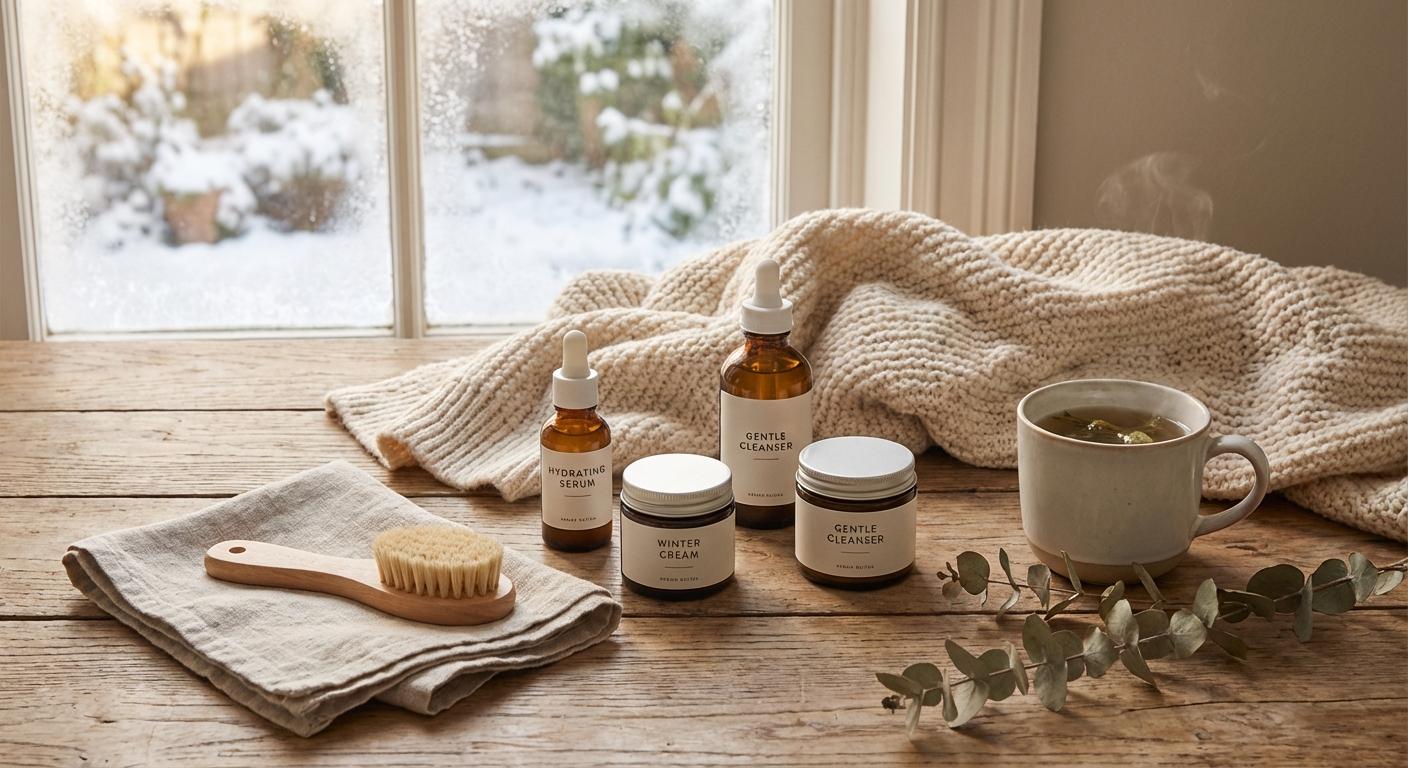
So you’re moving somewhere cold. Maybe it’s a job, maybe it’s school, maybe you just really wanted to experience a proper winter. Whatever the reason, your skin is about to go through it. I moved from San Diego to Chicago three years ago and spent my first winter looking like a flaky croissant. Don’t be me. Here’s what actually works when your skin has to adjust to cold, dry air.
Why Cold Climates Wreck Your Skin
Let’s get something straight: cold weather itself isn’t the main problem. It’s the combination of cold outdoor air (which holds less moisture) and indoor heating (which actively sucks moisture out of the air). You’re basically bouncing between two different environments that both want to dehydrate you.
Your skin barrier, that protective outer layer of lipids and dead skin cells, works harder in these conditions. When humidity drops below 30%, your skin starts losing water faster than it can hold onto it. Add in harsh winds and that barrier gets compromised even faster. According to the American Academy of Dermatology, this is why so many people develop dry skin issues specifically during winter months, even if they’ve never had problems before.
The Big Mindset Shift
If you’re coming from a humid or temperate climate, you need to rethink your entire approach. That gel cleanser that worked perfectly in Florida? Too stripping now. That lightweight moisturizer you loved? Not cutting it anymore.
The goal shifts from “balanced” to “protected.” Your routine needs to prioritize keeping moisture in and strengthening that barrier. This doesn’t mean buying entirely new products right away. Start by observing how your skin reacts in the first few weeks, then adjust.
Some people’s skin adapts surprisingly well. Others (like mine) start cracking within days. Give yourself a transition period before panicking and overhauling everything.
Cleanser Changes That Actually Matter
First thing to go: anything that makes your skin feel “squeaky clean.” That sensation means you’ve stripped your natural oils, and in a cold climate, those oils are your first line of defense.
Switch to cream or oil-based cleansers. If you’re double cleansing, keep the oil cleanser but maybe drop the foaming second step, or switch it to a gentle milky formula. CeraVe Hydrating Cleanser and Vanicream Gentle Facial Cleanser are solid drugstore options that won’t leave you tight and uncomfortable.
Also, lower your water temperature. Hot showers feel amazing when it’s freezing outside, but hot water damages your skin barrier. Lukewarm is the move, even if it’s less satisfying.
The Moisturizer Upgrade
This is where most people need the biggest change. Whatever moisturizer weight you used before, go up at least one level. Gel moisturizers become cream moisturizers. Light creams become rich creams. If you were already using a rich cream, you might need to layer or add an occlusive.
Look for these ingredients:
- Hyaluronic acid to pull moisture into skin (apply to damp skin)
- Ceramides to repair and strengthen the barrier
- Squalane for non-greasy moisture
- Glycerin as a humectant that actually works in low humidity
- Petrolatum or shea butter as occlusives to lock everything in
A note on hyaluronic acid: in very dry environments, it can actually pull water FROM your skin if there’s no moisture in the air to draw from. Always apply it to damp skin and layer something occlusive on top. Dr. Sam Ellis has a great explanation of this on her YouTube channel if you want the science breakdown.
Dealing With Indoor Heating
Here’s the thing nobody warns you about: your apartment or dorm will probably be heated with forced air, radiators, or space heaters. All of these absolutely tank indoor humidity. I’m talking 15-20% humidity in some heated spaces, which is drier than most deserts.
Get a humidifier. Seriously. This is the single most effective thing you can do for your skin (and your sinuses, and your hair, and your houseplants). Run it in your bedroom at night and aim for 40-50% humidity. The Mayo Clinic recommends keeping indoor humidity between 30-50% for optimal comfort and health.
If you can’t get a humidifier, place bowls of water near heat sources or hang damp towels in your room. Not as effective, but better than nothing.
Layer Your Products Strategically
In humid climates, you can get away with minimal layering. Cold and dry demands more strategic application. Here’s a basic order that works:
- Hydrating toner or essence on damp skin
- Hydrating serum (hyaluronic acid, niacinamide)
- Moisturizer (cream formula)
- Facial oil or occlusive (optional but helpful)
- SPF in the morning (yes, even when it’s cloudy and grey)
At night, you can skip SPF obviously, but consider slugging a few times a week. That’s when you seal everything with a thin layer of Vaseline or Aquaphor. Sounds gross, looks greasy, works incredibly well. Start with just your dry patches if full-face slugging freaks you out.
Adjust Your Actives
If you’re using retinoids, AHAs, BHAs, or vitamin C, you might need to scale back temporarily. These actives can be more irritating when your barrier is already stressed from climate changes.
This doesn’t mean quitting them entirely. Try:
- Reducing frequency (daily becomes every other day)
- Buffering (apply moisturizer first, then active)
- Switching to gentler formulations
- Taking a two-week break while your skin adjusts, then reintroducing slowly
Your barrier needs to stabilize before it can handle aggressive treatments. Pushing through irritation usually makes things worse, not better. The research on skin barrier function consistently shows that a compromised barrier leads to increased sensitivity and inflammation.
Don’t Forget Your Body
Your face gets all the attention, but your arms, legs, and hands are also suffering. Body skin tends to have fewer oil glands and gets neglected in skincare routines.
Switch to a cream body wash or shower oil. Apply body lotion immediately after showering while skin is still slightly damp. Pay extra attention to elbows, knees, and shins, which get dry fastest. Your hands need extra love too, especially if you’re washing them frequently. Keep a hand cream at your desk and by your bed.
Lips are another casualty of cold weather. A simple lip balm with petrolatum, lanolin, or shea butter works fine. Avoid anything with fragrance, menthol, or camphor, as these can actually make chapping worse.
Timeline Expectations
Realistically, your skin needs about 4-6 weeks to fully adjust to a new climate. You might go through an awkward period where nothing seems right: too oily here, too dry there, random breakouts from product changes.
Don’t panic-buy seventeen new products. Give each change about two weeks before deciding if it’s working. Your skin cell turnover cycle is roughly 28 days, so true results take time to show.
If you’re still struggling after two months with a solid routine, that’s when it makes sense to see a dermatologist. Some people develop eczema or other conditions specifically triggered by climate changes, and those need targeted treatment.
What Actually Worked For Me
After my first disastrous Chicago winter, here’s what I changed: I dropped my foaming cleanser for an oil-based one. I switched from a gel-cream moisturizer to a rich cream with ceramides. I started slugging my nose and chin (my driest spots) every night. I bought a $30 humidifier from Target.
That was it. No expensive overhaul, no elaborate new routine. Just strategic switches and accepting that my skin needed different support in a different environment.
The adjustment sucks, I won’t lie. But once you figure out what your skin specifically needs in cold weather, it becomes second nature. You’ll probably even find yourself giving advice to other transplants going through the same confused, flaky phase you did.