
I need to say something that might ruffle some feathers: that $300 serum sitting on your bathroom counter? It’s probably not doing anything your $12 drugstore version can’t do. I’ve spent years testing products at every price point, and I’m here to tell you that a genuinely effective skincare routine can cost you less than a single fancy dinner.
The skincare industry loves making you feel like you need to spend more to get results. But here’s the truth: the ingredients that actually work for your skin don’t care about fancy packaging or celebrity endorsements. Ceramides are ceramides. Niacinamide is niacinamide. And your skin can’t tell the difference between a molecule that cost $200 to put in a jar versus one that cost $8.
Why Price Tags Lie
Before we break down the routine, let’s talk about why expensive skincare isn’t automatically better. When you pay $150 for a moisturizer, you’re often paying for marketing campaigns, luxury packaging, and retail markup. The actual formula inside? Frequently comparable to drugstore options.
Dermatologists have been saying this for years. Dr. Ranella Hirsch, a board-certified dermatologist, has pointed out that many drugstore brands use the same active ingredients at the same concentrations as their luxury counterparts. CeraVe, Cetaphil, and La Roche-Posay weren’t built on hype. They were built on solid formulations that actually deliver results.
The real markers of an effective product are the ingredient list, concentration of actives, and formulation stability. None of these require a premium price tag.
The Cleanser: $6-8
Your cleanser’s job is simple: remove dirt, oil, and makeup without stripping your skin. You don’t need it to do more than that, which is why spending $40 on a cleanser makes zero sense.
Top Pick: CeraVe Hydrating Facial Cleanser ($14 for 16oz, works out to about $6-8 per typical usage period)
This cleanser contains ceramides and hyaluronic acid to maintain your skin’s moisture barrier while you wash. It’s fragrance-free, non-comedogenic, and dermatologist-recommended. The formula is gentle enough for sensitive skin but effective enough to actually clean your face.
Alternative options in this price range include:
- Cetaphil Gentle Skin Cleanser ($7-9)
- Vanicream Gentle Facial Cleanser ($8)
- La Roche-Posay Toleriane Hydrating Gentle Cleanser ($10-15)
If you have oily or acne-prone skin, consider the CeraVe Foaming Facial Cleanser or PanOxyl 4% Benzoyl Peroxide wash. Both under $15, both extremely effective.
The Moisturizer: $8-12
This is where the budget beauty magic really happens. Luxury moisturizers love to brag about their “proprietary complexes” and “rare botanical extracts,” but the ingredients that actually hydrate and protect your skin are available in products that cost a fraction of the price.
Top Pick: CeraVe Moisturizing Cream ($16 for 19oz tub, lasts months)
The big tub of CeraVe is arguably the best value in skincare. It contains three essential ceramides, hyaluronic acid, and MVE technology for time-released hydration. This formula has been compared favorably to moisturizers costing 10 times as much in blind tests.
Other excellent budget moisturizers:
- Cetaphil Moisturizing Cream ($12-15 for 16oz)
- Vanicream Moisturizing Cream ($12)
- e.l.f. Holy Hydration! Face Cream ($12)
- Neutrogena Hydro Boost Water Gel ($15-19)
For oily skin types, gel-based moisturizers like the Neutrogena Hydro Boost or Versed Dew Point Moisturizing Gel ($18) provide hydration without heaviness.
The Sunscreen: $8-15
Sunscreen is non-negotiable, and thankfully, you don’t need to drop $50 on it. The FDA regulates sunscreen claims, which means a drugstore SPF 30 provides the same protection as a luxury SPF 30. Period.
Top Pick: La Roche-Posay Anthelios Clear Skin SPF 60 ($20) or CeraVe AM Facial Moisturizing Lotion SPF 30 ($15)
If you want to combine your moisturizer and SPF step (totally valid for morning routines), the CeraVe AM is excellent. It’s lightweight, doesn’t leave a white cast, and includes niacinamide and hyaluronic acid.
More budget SPF options that actually work:
- Neutrogena Ultra Sheer Dry-Touch SPF 55 ($10-12)
- Cetaphil Healthy Renew Moisturizing Day Cream SPF 30 ($18)
- Black Girl Sunscreen ($16)
- Olay Super Cream with SPF 30 ($15)
The Olay option is particularly impressive because it combines SPF with niacinamide, vitamin C, and hyaluronic acid. That’s an entire morning routine in one step if you’re short on time.
The Complete $20 Routine
Here’s how to build your routine for around $20 total (based on per-month cost when buying standard sizes):
Morning:
- Rinse face with water (or gentle cleanse if you prefer)
- CeraVe AM Moisturizing Lotion SPF 30 ($15, lasts 2-3 months = $5-7/month)
Evening:
- CeraVe Hydrating Cleanser ($14 for 16oz, lasts 3-4 months = $3-5/month)
- CeraVe Moisturizing Cream ($16 for 19oz, lasts 4-6 months = $3-4/month)
Monthly cost: approximately $11-16
That leaves room in your $20 budget for occasional treatment products like The Ordinary Niacinamide 10% + Zinc 1% ($6) or Differin Gel ($13-15) if you’re dealing with acne.
Treatments That Punch Above Their Weight
Once your basics are covered, you might want to add targeted treatments. Good news: the best ones are still affordable.
For acne: Differin Gel (adapalene 0.1%) is available over the counter for about $13-15. This is the same retinoid that used to require a prescription. It increases cell turnover, unclogs pores, and fades dark spots. Most dermatologists consider it just as effective as many prescription options for mild to moderate acne.
For dark spots and texture: The Ordinary’s lineup offers genuinely effective treatments at prices that seem almost too low. Their Niacinamide 10% + Zinc 1% serum ($6) helps with pore appearance and oil control. Their Alpha Arbutin 2% + HA ($9) targets hyperpigmentation.
For hydration boost: The Ordinary Hyaluronic Acid 2% + B5 ($9) or CeraVe Hydrating Serum ($15) add extra moisture without breaking the bank.
What Luxury Brands Get Right (And Wrong)
I’m not saying all expensive skincare is a scam. Some luxury brands do offer elegant formulations, beautiful textures, and innovative delivery systems. If using a $100 serum brings you joy and fits your budget, that’s valid.
But here’s what they get wrong: the implication that you need to spend more to see results. Study after study shows that the most effective skincare ingredients, including retinoids, vitamin C, niacinamide, hyaluronic acid, and ceramides, work regardless of the product’s price point.
According to the American Academy of Dermatology, you don’t need expensive products for healthy skin. Consistency with basics matters far more than occasional use of expensive treatments.
How to Evaluate Any Skincare Product
Before you buy anything, expensive or cheap, ask these questions:
- What are the active ingredients? Check if they’re listed in the first half of the ingredients list (higher concentration) and research whether they have evidence supporting their claims.
- What’s the pH and concentration? For acids especially, this matters. A cheap AHA at the right pH will outperform an expensive one that’s poorly formulated.
- Is the packaging appropriate? Vitamin C and retinol degrade with light and air exposure. They should come in opaque, airtight containers regardless of price.
- Are the claims realistic? Any product promising to “erase wrinkles overnight” or “completely eliminate pores” is lying to you, whether it costs $5 or $500.
Resources like INCIDecoder let you analyze ingredient lists for free. Use them before making any purchase.
The Bottom Line
A complete, effective skincare routine doesn’t require a second mortgage. The products I’ve listed here contain the same proven ingredients as their luxury counterparts, often in comparable or identical concentrations.
CeraVe, Cetaphil, La Roche-Posay, The Ordinary, and other drugstore brands have made high-quality skincare accessible to everyone. Take advantage of that.
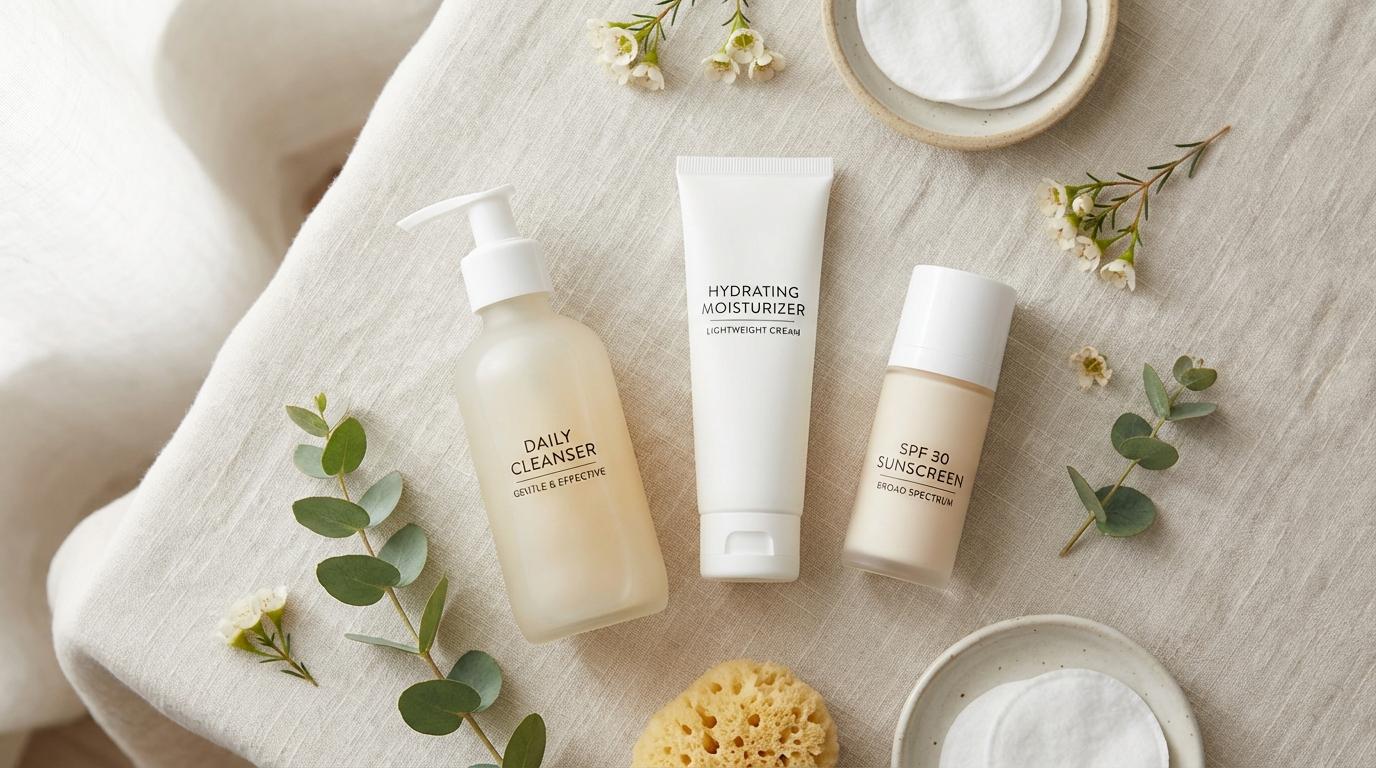
Your $20 routine of cleanser, moisturizer, and sunscreen covers the fundamentals. These three steps, done consistently, will do more for your skin than a cabinet full of expensive products used sporadically.
Start simple. Stay consistent. And keep your money for things that actually require it.