
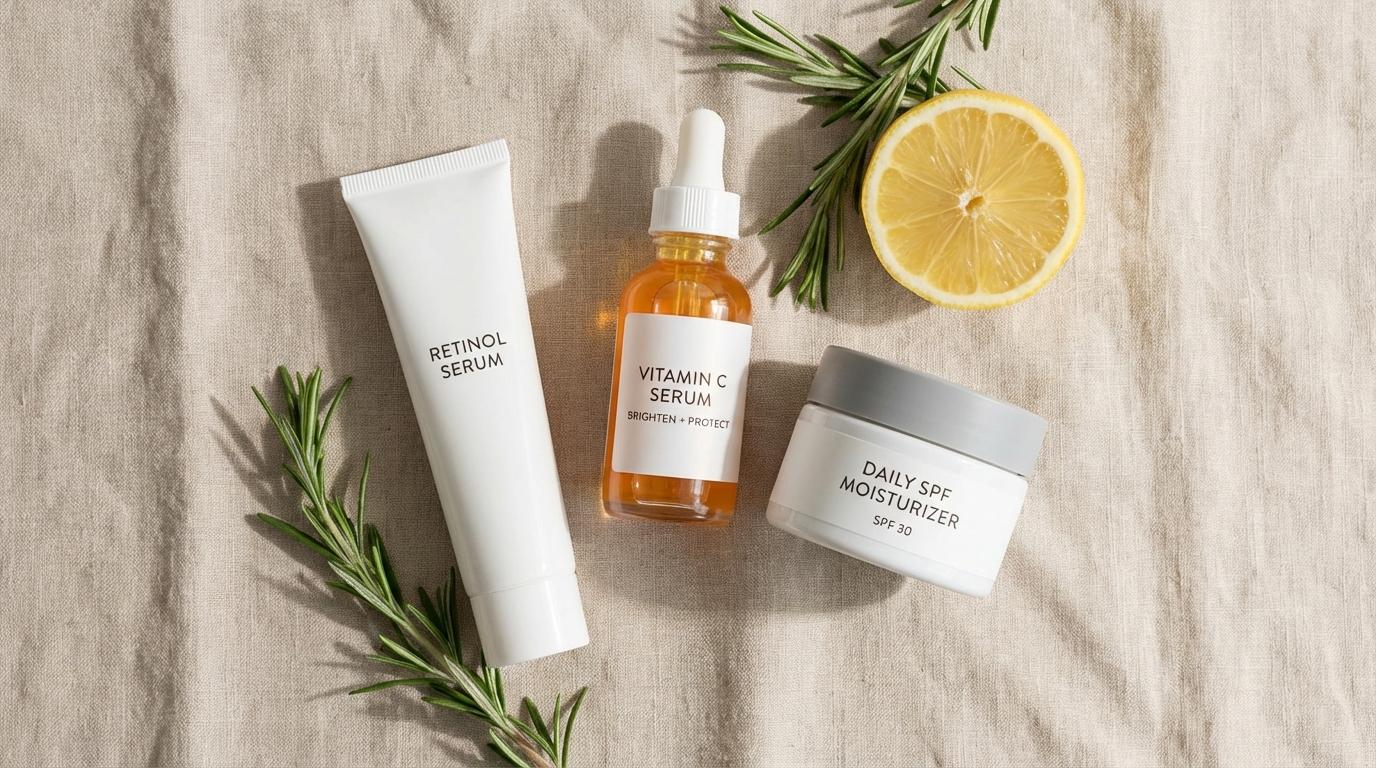
I used to think anti-aging skincare was something I could ignore until my thirties. Turns out, the best time to start is actually in your early twenties, and here’s the kicker: you absolutely do not need to spend a fortune to get real results. As a college student who’s been subsisting on ramen and determination, I’ve spent way too many hours researching which products actually work without draining my bank account. Spoiler alert: the expensive stuff isn’t always better, and some of the most effective anti-aging ingredients come in bottles that cost less than a large pizza.
Sunscreen Is Doing the Heavy Lifting
Before we talk about any fancy serums or creams, let’s address the single most important anti-aging product you can own: sunscreen. I know, I know. It’s not glamorous. But dermatologists have been saying this for years, and the research backs them up completely. Up to 90% of visible skin aging comes from UV exposure, which means that $12 bottle of SPF is protecting you from wrinkles, dark spots, and loss of elasticity better than any $200 cream ever could.
The good news? Drugstore sunscreens work just as well as expensive ones. Dr. Anna Chacon, a board-certified dermatologist, points out that you don’t need to overspend to get the same UV-blocking benefits. The formulations and ingredients are similar, if not identical. My go-to picks include:
- CeraVe AM Facial Moisturizing Lotion SPF 30 (around $15): This combines moisturizer and sunscreen in one step, plus it has ceramides and niacinamide. Two birds, one stone, one product to buy.
- Neutrogena Hydro Boost Water Gel Lotion SPF 50 (around $14): Lightweight, hydrating, and it doesn’t leave that weird white cast that makes you look like a ghost in photos.
- La Roche-Posay Toleriane Double Repair SPF 30 (around $20): A little pricier for drugstore, but still way cheaper than department store options, and it has ceramides for bonus skin barrier support.
The key is using it every single day, even when it’s cloudy, even when you’re just sitting by a window. UV rays don’t care about your schedule. Apply about a nickel-sized amount to your face and reapply every two hours if you’re outside. This one habit will do more for preventing wrinkles than any anti-aging product on the market.
Budget Retinol That Actually Delivers
Retinol is the gold standard of anti-aging ingredients, and for good reason. It speeds up cell turnover, boosts collagen production, and helps fade dark spots and fine lines. The problem? Prescription retinoids and fancy serums can cost upward of $100. The solution? Drugstore retinol products that dermatologists actually recommend.
Dr. Susan Massick, a board-certified dermatologist, recommends OTC retinols to her patients every day because they’re proven effective and available at reasonable prices. Here are the budget options worth trying:
- Differin Gel (Adapalene) (around $13): This used to be prescription-only and is now available over the counter. It’s gentler than some other retinoids but still incredibly effective. Dr. Ranella Hirsch, a Boston-based dermatologist, calls it “an easy, affordable solution.”
- CeraVe Resurfacing Retinol Serum (under $20): This contains encapsulated retinol for slower, gentler delivery, plus ceramides and niacinamide to buffer potential irritation. It’s won multiple awards for best budget anti-aging serum.
- The Ordinary Retinol 0.2% in Squalane (around $6): Perfect for beginners. The squalane base adds hydration while the low concentration lets your skin adjust without freaking out.
- L’Oreal Paris Revitalift Pro-Retinol Cream (around $25): Uses pro-retinol, a stable derivative that’s gentler on sensitive skin but still delivers results.
Start slow. I cannot stress this enough. Use retinol two to three times a week at first, and always apply it at night since it makes your skin more sensitive to sunlight. If you’re not experiencing redness or peeling, you can gradually increase how often you use it. And yes, this is another reason why that daily sunscreen habit matters so much.
Antioxidants Without the Designer Price Tag
Vitamin C is the antioxidant superstar of skincare. It fights free radical damage, brightens your skin, helps fade dark spots, and can even boost the effectiveness of your sunscreen. The catch? High-quality vitamin C serums like SkinCeuticals C E Ferulic run about $185 for one ounce. That’s more than my weekly grocery budget.
Fortunately, there are affordable alternatives that deliver similar results. Dermatologists recommend looking for serums with a concentration between 10% and 20% to get the full antioxidant benefits. Here’s what won’t break your budget:
- The Ordinary Ascorbic Acid 8% + Alpha Arbutin 2% (around $10): Combines pure vitamin C with alpha arbutin for brightening. At this price point, you really can’t go wrong.
- CeraVe Vitamin C Serum (around $20): What sets this apart is the ceramides. Most budget serums skip these skin-barrier-supporting ingredients, but CeraVe includes them. Great for sensitive skin.
- Olay Vitamin C Serum (around $19): Packs vitamin C, peptides, niacinamide, and lactic acid into one bottle. It’s like getting multiple treatments for the price of one.
Quick tip: vitamin C can be unstable and oxidize quickly, especially in cheaper formulations. Store your serum in a cool, dark place and use it within about three months of opening. If it turns brown or orange, it’s gone bad and won’t work anymore. That’s why buying a smaller, affordable bottle and replacing it regularly is actually smarter than investing in one expensive bottle that might oxidize before you finish it.
Why You Can Skip Expensive Eye Creams
This might be controversial, but hear me out: dedicated eye creams are largely a marketing invention. The skin around your eyes is thinner and more delicate, yes, but it still responds to the same ingredients that work on the rest of your face. Most dermatologists agree that your regular moisturizer or serum can do the job just fine.
What actually helps the under-eye area? The same things that help the rest of your face: retinol for fine lines, vitamin C for brightness, and consistent hydration. You can gently apply your regular products around your eyes, just be careful not to get them directly in your eyes.
If you’re dealing with puffiness, that’s often about sleep, hydration, and sometimes genetics. No cream is going to fix chronic sleep deprivation. If you’re seeing dark circles, those can be hereditary, or caused by thin skin showing the blood vessels underneath. Again, expensive eye cream isn’t the solution. A gentle vitamin C serum might help with discoloration over time, but realistic expectations are important here.
The one exception: if you have extremely sensitive skin around your eyes and your regular products cause irritation, then a gentle, fragrance-free eye cream might make sense. But that’s about tolerance, not magic anti-aging properties. Look for something basic with ceramides and hyaluronic acid, like the CeraVe Eye Repair Cream (around $15).
Building Your Budget Anti-Aging Routine
Let’s put this all together into an actual routine that won’t require selling your textbooks:
Morning:
- Gentle cleanser (CeraVe or Cetaphil, around $10-15)
- Vitamin C serum (optional but helpful)
- Moisturizer with SPF 30 or higher (non-negotiable)
Evening:
- Cleanser to remove sunscreen and makeup
- Retinol (2-3 times per week to start)
- Moisturizer
Total cost? Under $60 for products that will last you months. Compare that to a single “luxury” anti-aging cream, and the math is clear.
Consistency Beats Price Every Time
Here’s what nobody wants to tell you: a $15 serum used daily for three months will give you better results than a $100 serum used sporadically. Anti-aging skincare is a long game. You’re not going to see dramatic results overnight, no matter how much you spend. The ingredients need time to work, your skin needs time to respond, and consistency is what actually moves the needle.
The research supports affordable options. The dermatologists recommend affordable options. And your wallet will definitely thank you for choosing affordable options. You don’t need to wait until you’re making serious money to start taking care of your skin. Start now, start cheap, and trust the process.
Your future self, looking at smooth, healthy skin without a mountain of debt, will be very grateful you figured this out early. Now if you’ll excuse me, I have a $13 tube of Differin calling my name.