
You just crushed a two-hour training session. Your muscles are screaming, your heart rate is finally coming down, and your face looks like you dunked it in a bucket of water. Sound familiar? If you are an athlete, your skin has a very different life than someone who sits at a desk all day. And that means your skincare routine needs to actually work for your schedule, not against it.
Most skincare advice assumes you wash your face twice a day, morning and night, like a normal person. But athletes? We might be washing our faces three, four, sometimes five times a day depending on training schedules. That changes everything.
Why Athlete Skin Is Different
When you exercise, your body does some interesting things. Blood flow increases to the skin to help regulate temperature. Pores dilate. And sweat production kicks into overdrive. All of this is completely normal and healthy for your body, but it creates specific challenges for your skin.
Sweat itself is not the enemy. It is mostly water and salt, and it is doing exactly what it is supposed to do: cooling you down. The problems start when sweat sits on your skin for too long. It mixes with oil, dead skin cells, and whatever else is on your face (hello, gym equipment germs). That mixture can clog pores and create the perfect environment for bacteria to thrive.
Then there is the friction factor. Headbands, helmets, sports bras, and tight gear can trap sweat against skin and create irritation. Ever gotten those little bumps along your hairline or across your back after a workout? That is often folliculitis or heat rash, both related to trapped sweat and friction.
Building Your Training Day Routine
Let us be real about what actually works when you are training regularly. You need a routine that is fast, effective, and does not destroy your skin with over-cleansing.
Before your workout: Skip the full routine. Seriously. If you are about to sweat for an hour, there is no point in applying a bunch of products. A quick splash of water or a gentle micellar water wipe is enough to remove any excess oil or product from your morning routine. If you are exercising outdoors, apply a lightweight, sweat-resistant sunscreen. Look for formulas labeled sport or active since they are designed to stay put during physical activity.
Immediately after your workout: This is the most important step. Do not let sweat dry on your face. Wash with a gentle, pH-balanced cleanser as soon as possible. You do not need anything fancy. A simple gel or foam cleanser with no harsh sulfates works perfectly. The goal is removing sweat, oil, and bacteria without stripping your skin.
Post-shower skincare: Now you can do your actual routine. Lightweight moisturizer, maybe a serum if you are into that, and sunscreen if you are heading outside. Keep it minimal. Your skin has been through enough today.
The Over-Washing Trap
Here is where a lot of athletes mess up: they wash their face too often and too aggressively. It makes sense on paper. You sweat, so you wash. You sweat again, so you wash again. But skin does not work that way.
Every time you cleanse, you are removing some of your skin natural oils. These oils (called sebum) form a protective barrier that keeps moisture in and irritants out. Wash too frequently or with harsh products, and you strip that barrier. Your skin responds by either becoming dry and irritated, or overcorrecting by producing even more oil. Either way, you are worse off than when you started.
The fix? Limit cleansing to a maximum of three times per day, even on double training days. For mid-day sweat sessions, a quick rinse with just water is often enough. Save the actual cleanser for morning and your final workout of the day. And choose gentle formulas. If your face feels tight or squeaky after washing, your cleanser is too harsh.
Dealing With Breakouts in High-Friction Zones
Athletes often get breakouts in specific areas related to their sport. Swimmers might notice issues along the hairline where caps sit. Cyclists deal with forehead acne from helmets. Runners get chin breakouts from sports bra straps or headphone cords. Understanding the pattern helps you address it.
First, keep your gear clean. Wash headbands, helmet liners, and any fabric that touches your face regularly. Wipe down helmet interiors with a gentle disinfectant. This alone can make a huge difference.
Second, look for products with salicylic acid for these problem areas. A 2 percent BHA treatment applied to clean skin can help keep pores clear. Use it at night after your final cleanse, focusing on areas prone to breakouts. Do not apply it right before exercise, as it can make your skin more sensitive to sweat irritation.
For body breakouts, consider a body wash with benzoyl peroxide. Shower as soon as possible after training. Sitting around in sweaty clothes is one of the fastest ways to develop back and chest acne.
Hydration From the Inside Out
You already know you need to drink water for athletic performance. But hydration also directly affects your skin. Dehydrated skin is more prone to irritation, slower to heal, and more likely to look dull and tired.
The general recommendation of eight glasses a day is a starting point, but athletes need more. A good rule of thumb is to drink an additional 16-20 ounces for every hour of moderate to intense exercise. Some research suggests that adequate hydration supports skin elasticity and overall appearance, though dramatic claims about water curing all skin problems are overblown.
What you eat matters too. Anti-inflammatory foods like fatty fish, leafy greens, and berries can support skin health alongside your training. Processed foods high in sugar and refined carbs? They have been linked to increased acne in some studies, though individual responses vary.
Sport-Specific Considerations
Different sports create different skin challenges. Here is a quick breakdown:
- Swimming: Chlorine and salt water are both drying and can irritate skin. Rinse off immediately after getting out of the pool or ocean. Apply a heavier moisturizer than you might normally use. Consider a pre-swim barrier cream if you are training multiple times daily.
- Outdoor sports: Sun exposure is your biggest concern. Use broad-spectrum SPF 30 or higher, reapplying every two hours during extended training. Do not forget your ears, neck, and the tops of your hands. The American Academy of Dermatology has solid guidelines on choosing the right sunscreen.
- Contact sports: You are dealing with equipment friction plus potential skin-to-skin contact. Keep any open cuts or abrasions covered and clean. Showering immediately after practice is not just about acne prevention; it is basic hygiene for avoiding skin infections.
- Gym workouts: Wipe down equipment before and after use. Do not touch your face during your workout (easier said than done, I know). Bring a clean towel for your face specifically, separate from your body towel.
Rest Days Are Skin Recovery Days Too
Your muscles need rest days to repair and grow stronger. Your skin benefits from the same principle. On rest days, you can scale back to a simpler routine. Just one cleanse per day might be enough if you are not sweating significantly.
This is also a good time to use any treatments you skip on training days. A gentle exfoliating acid, a hydrating mask, or a retinol product work better when you are not about to stress your skin with sweat and friction. Think of rest days as an opportunity to give your skin some extra care without worrying about how it will interact with your workout.
Product Picks That Actually Work
You do not need a fifteen-step routine. Here is what actually matters:
Cleanser: Look for gentle, pH-balanced, or for sensitive skin on the label. Avoid anything with sodium lauryl sulfate if your skin feels stripped after washing. CeraVe, Vanicream, and La Roche-Posay all make solid options under fifteen dollars.
Moisturizer: Lightweight gel formulas work well for oily or acne-prone skin. Something with hyaluronic acid provides hydration without heaviness. If you are prone to dryness, look for ceramides. CeraVe PM moisturizer is a popular choice because it absorbs fast and does not leave residue.
Sunscreen: For athletic use, water and sweat resistance matter more than cosmetic elegance. Accept that sport sunscreens might feel a bit heavier than your everyday SPF. Neutrogena Ultra Sheer Dry-Touch and Supergoop Play both hold up well during workouts. Since some sunscreen formulas can cause breakouts, you may need to try a few options to find one that does not clog your pores during intense training.
Spot treatment: Keep a benzoyl peroxide gel or salicylic acid treatment on hand for breakouts. Apply at night to clean, dry skin. Start with lower concentrations (2.5 percent benzoyl peroxide or 0.5 percent salicylic acid) and increase only if needed.
When to See a Dermatologist
Most athlete skin concerns can be managed with consistent basics. But some situations warrant professional help:
- Acne that does not respond to over-the-counter treatments after 8-12 weeks
- Painful, cystic breakouts that leave scars
- Recurring skin infections despite good hygiene practices
- Unusual rashes, persistent redness, or signs of allergic reactions
- Any concerning changes in moles or skin spots (especially important for outdoor athletes with significant sun exposure)
Making It Sustainable
The best skincare routine is one you will actually follow. If you are constantly rushing between training sessions, work, and life, you need something efficient. Three products that you use consistently will always beat ten products collecting dust on your bathroom shelf.
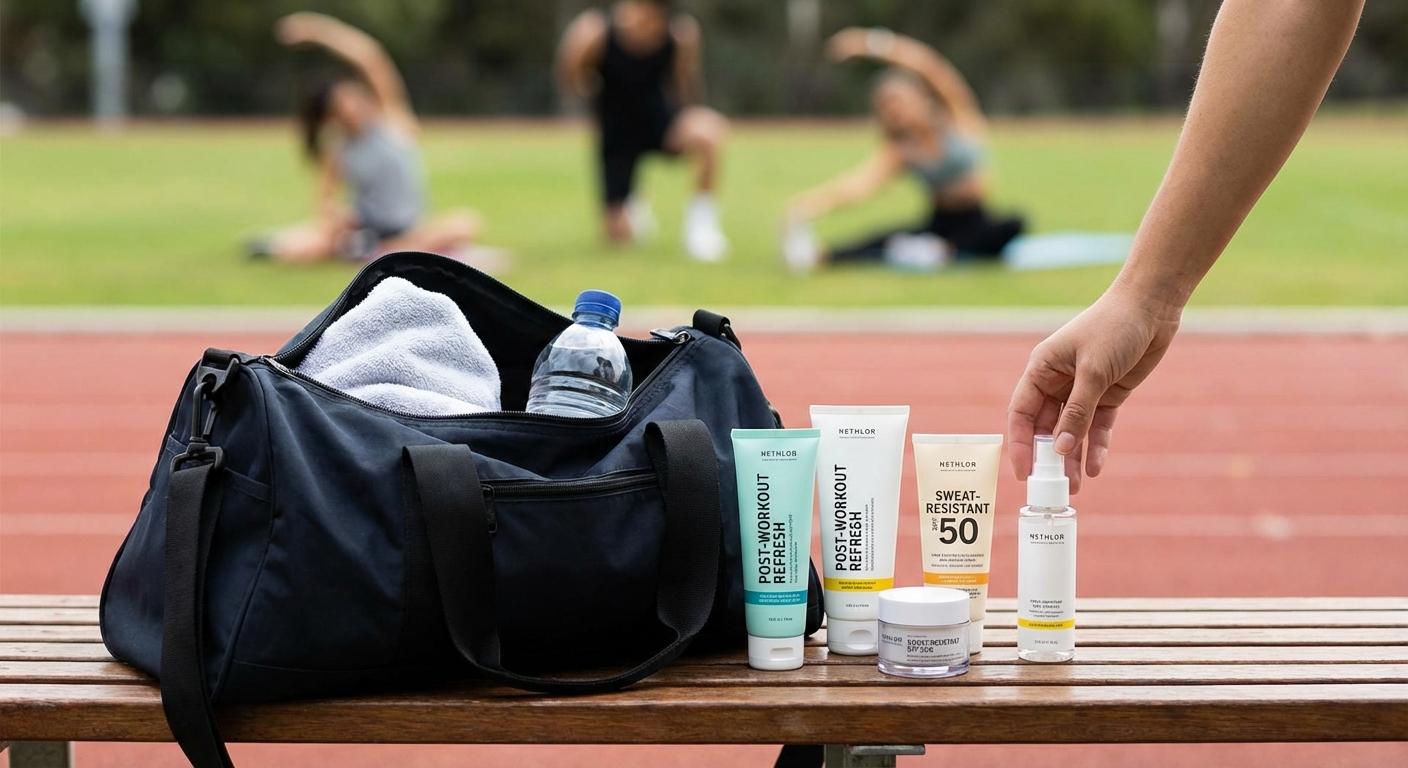
Keep travel sizes of your essentials in your gym bag. That way you are never stuck without a cleanser after a workout. Consider keeping a second set of basics at your training facility if you have a locker.
Track what works and what does not. Your skin needs might change with the seasons, training intensity, or competition schedule. What works during off-season might need adjustment during heavy training blocks. Pay attention and adjust accordingly.
Your skin is part of your athletic equipment. Take care of it like you take care of the rest of your body, and it will perform for you when it matters.