
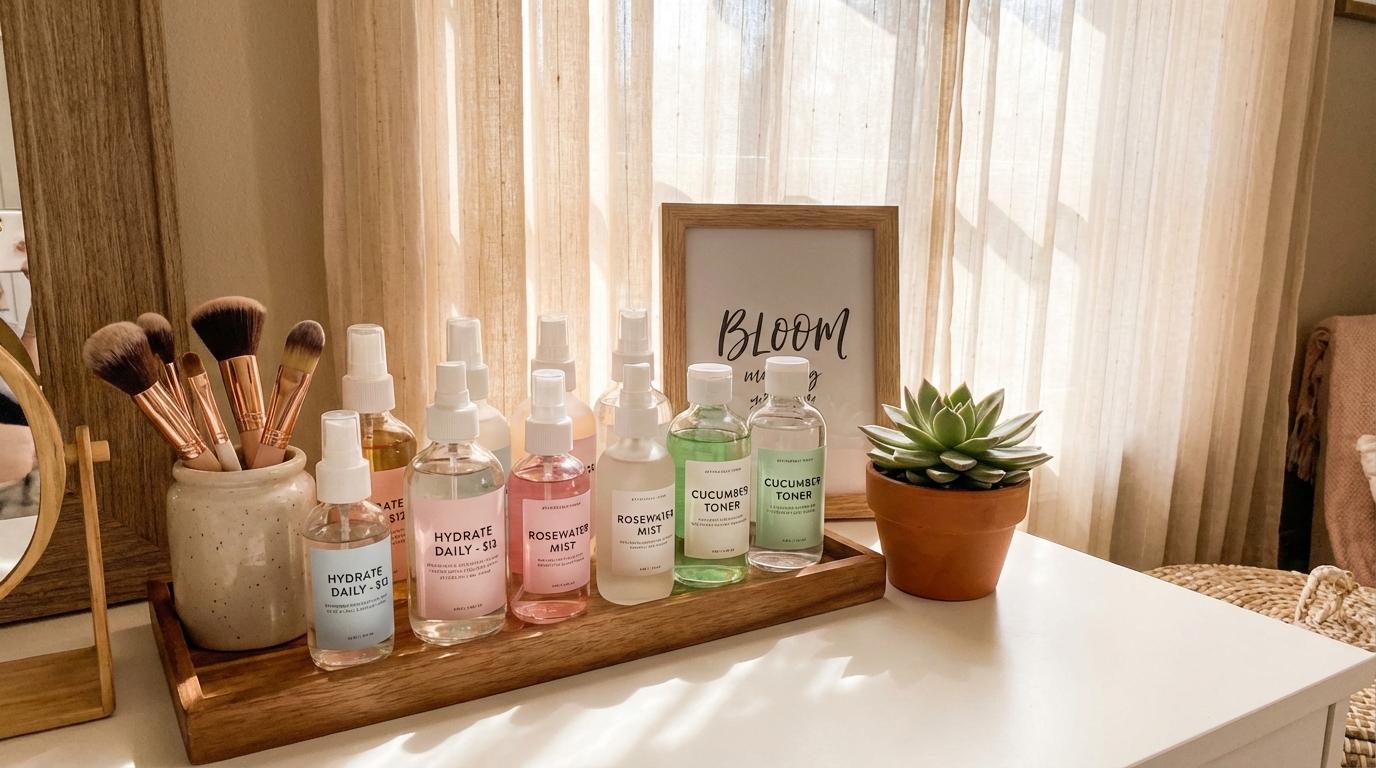
Finding a good hydrating toner on a budget feels like trying to find a decent apartment in a college town, because everyone wants the same thing and the options range from overpriced to suspiciously cheap. I’ve tried more toners than I’d like to admit over the past two years, and most of the expensive ones didn’t do anything my $8 bottle couldn’t handle.
Hydrating toners are one of the easiest steps to save money on. The ingredient technology behind them is straightforward, and the markup on “luxury” versions is genuinely absurd. A basic formula with humectants and maybe some soothing extras does the job. You don’t need a $40 bottle with gold-flecked packaging to pull moisture into your skin.
I’m going to walk through the options I’ve actually used, what worked, what was overhyped, and how to apply them for the best results.
Hada Labo: The Gold Standard Under $15
If there’s one brand that dominates the affordable hydrating toner conversation, it’s Hada Labo. Their Gokujyun line has been a staple in Japanese skincare for years, and for good reason.
The Gokujyun Premium Lotion (the gold bottle) contains five types of hyaluronic acid at different molecular weights. That sounds like marketing fluff, but it actually matters. Smaller molecules penetrate deeper, while larger molecules sit on the surface and hold moisture there. You get hydration at multiple levels of your skin for around $12-14.
Their regular Gokujyun Lotion (the white bottle) is even cheaper, usually around $9-11, and uses three types of hyaluronic acid. For most people, this one does the job perfectly. I used the white bottle for six months before trying the premium version, and honestly, the difference was minimal.
One thing to know about Hada Labo: these are Japanese-style “lotions,” which are really watery toners. The texture is slightly thicker than water but much thinner than Western toners. Apply it to damp skin. Hyaluronic acid needs water to work with, and applying it to dry skin in a dry environment can actually pull moisture out of your skin instead of adding it.
The Thayers Witch Hazel Situation
Thayers Witch Hazel Toner is everywhere, and I need to be honest about it. It’s cheap (around $8-10), widely available, and has a devoted following. But calling it a “hydrating toner” is a stretch.
Witch hazel is an astringent. Even the alcohol-free version that Thayers uses has natural tannins that can be mildly drying over time. It’s better described as a gentle, slightly astringent prep toner. If you have oily skin and want something to swipe on after cleansing before your moisturizer, it’s fine. If you’re looking for actual hydration, it’s not delivering much.
The rose water and aloe in the formula add some soothing properties, but they’re not powerhouse hydrators. I used Thayers for about four months thinking it was hydrating my skin. When I switched to an actual humectant-based toner, the difference in my skin’s moisture levels was immediately noticeable. My dry patches cleared up within a week.
I’m not saying Thayers is bad. It has its place. But if hydration is your primary goal, spend your $8-10 on something that actually contains humectants as the main ingredients. That’s the same lesson behind products that seem too simple to work but actually do: sometimes the unglamorous option with the right ingredients beats the popular pick.
Paula’s Choice Level Results Without Paula’s Choice Prices
Paula’s Choice makes solid products. Their Enriched Calming Toner runs about $23 for 6.7 oz. It’s good, but you’re paying a premium for the brand name and a clean formulation you can get elsewhere.
Here’s what makes that toner work: a combination of glycerin, hyaluronic acid, and soothing plant extracts. That’s not a proprietary formula. You can find those same ingredients in products costing half as much.
The Pyunkang Yul Essence Toner ($12-15 for 6.7 oz) delivers a similar experience with a minimal ingredient list. Its primary ingredient after water is astragalus membranaceus root extract, which is anti-inflammatory and hydrating. Add glycerin and butylene glycol, and you have a simple, effective hydrating toner.
The Cosrx Full Fit Propolis Synergy Toner ($15-18) is another alternative that provides hydration plus soothing benefits from propolis extract. If your skin tends toward irritation alongside dryness, this one does double duty.
Naturie Hatomugi Skin Conditioner deserves a mention here too. It’s roughly $8-10 for a massive 500ml bottle. The formula is basic (water, butylene glycol, glycerin, coix seed extract), but basic works. I used this as my daily toner for three months during a particularly broke semester and my skin was perfectly happy.
Application Methods That Actually Make a Difference
How you apply a hydrating toner matters as much as which one you buy. I learned this the hard way after wasting product for months.
The cotton pad method looks elegant, but it wastes about 50% of the product. The cotton absorbs most of the toner before it ever reaches your skin. When you’re on a budget, that’s money going straight into the trash.
The better approach: pour a small amount (about the size of a quarter) into your palms, press your hands together to distribute it evenly, then press and pat it into damp skin. Start with your cheeks (usually the driest area), then move to your forehead and chin.
The “seven skin method” from Korean skincare involves applying thin layers of hydrating toner multiple times (you don’t actually need seven, three to four works). Each layer adds hydration that gets locked in by the next. This technique works brilliantly with inexpensive toners because you’re building moisture without needing a single expensive product.
If you’re dealing with skin that feels tight and dehydrated despite moisturizing, layering a hydrating toner underneath can transform how your moisturizer performs. The toner provides water-based hydration, and the moisturizer seals it in. It’s the same principle that makes understanding your cleansing step so important: getting the foundation right makes everything after it work better.
Ingredients to Look For (and Avoid) on a Budget
When scanning ingredient lists on cheap toners, here’s your cheat sheet:
Look for these hydrating ingredients:
- Hyaluronic acid (sodium hyaluronate on the label): holds up to 1000x its weight in water
- Glycerin: one of the most effective and cheapest humectants available
- Butylene glycol: lightweight humectant that also helps other ingredients absorb
- Panthenol (provitamin B5): hydrates and supports barrier repair
- Beta-glucan: soothing and moisture-binding, often found in affordable K-beauty toners
Skip products heavy in these:
- Alcohol denat or SD alcohol near the top of the ingredient list
- Heavy fragrance (listed as “parfum” or “fragrance” in the first half of ingredients)
- Menthol or camphor, which create a cooling sensation but can dry and irritate skin
A simple formula with glycerin and hyaluronic acid in the first five ingredients will outperform a fancy toner loaded with fragrance and marketing ingredients every time.
My Current Rotation and What I Spend
Right now I alternate between the Hada Labo Gokujyun Regular (white bottle) and the Naturie Hatomugi, depending on the season. In winter when my skin is drier, the Hada Labo’s hyaluronic acid pulls in more moisture. In summer when I want something lighter, the Naturie works perfectly and the giant bottle lasts forever.
My total toner budget for a year is around $30-35. That covers roughly four bottles between the two products. Compare that to a single bottle of a prestige brand toner and the math speaks for itself.
If you want to support your skin’s barrier while keeping things affordable, pairing any of these toners with a routine appropriate for your age and needs gives you a solid foundation without the luxury price tag.
Worth Trying vs. Not Worth the Hype
To save you some trial and error, here’s my honest breakdown:
Worth trying:
- Hada Labo Gokujyun Lotion (either version): consistent, effective, affordable
- Naturie Hatomugi Skin Conditioner: best value per ml, solid basic formula
- Pyunkang Yul Essence Toner: minimal ingredients, great for sensitive skin
- Cosrx Propolis Synergy Toner: good if you need hydration plus calming
Overhyped for the price:
- Any “essence toner” over $25 that lists glycerin and HA as main actives
- Toners marketed as “brightening” or “anti-aging” with hydrating ingredients as their main function
- Multi-step toner sets from prestige brands
Your skin doesn’t care about the bottle design or the brand story. It cares about whether the formula contains ingredients that actually attract and hold moisture. At the drugstore and K-beauty price point, you have more than enough excellent options to keep your skin hydrated without touching your rent money.