
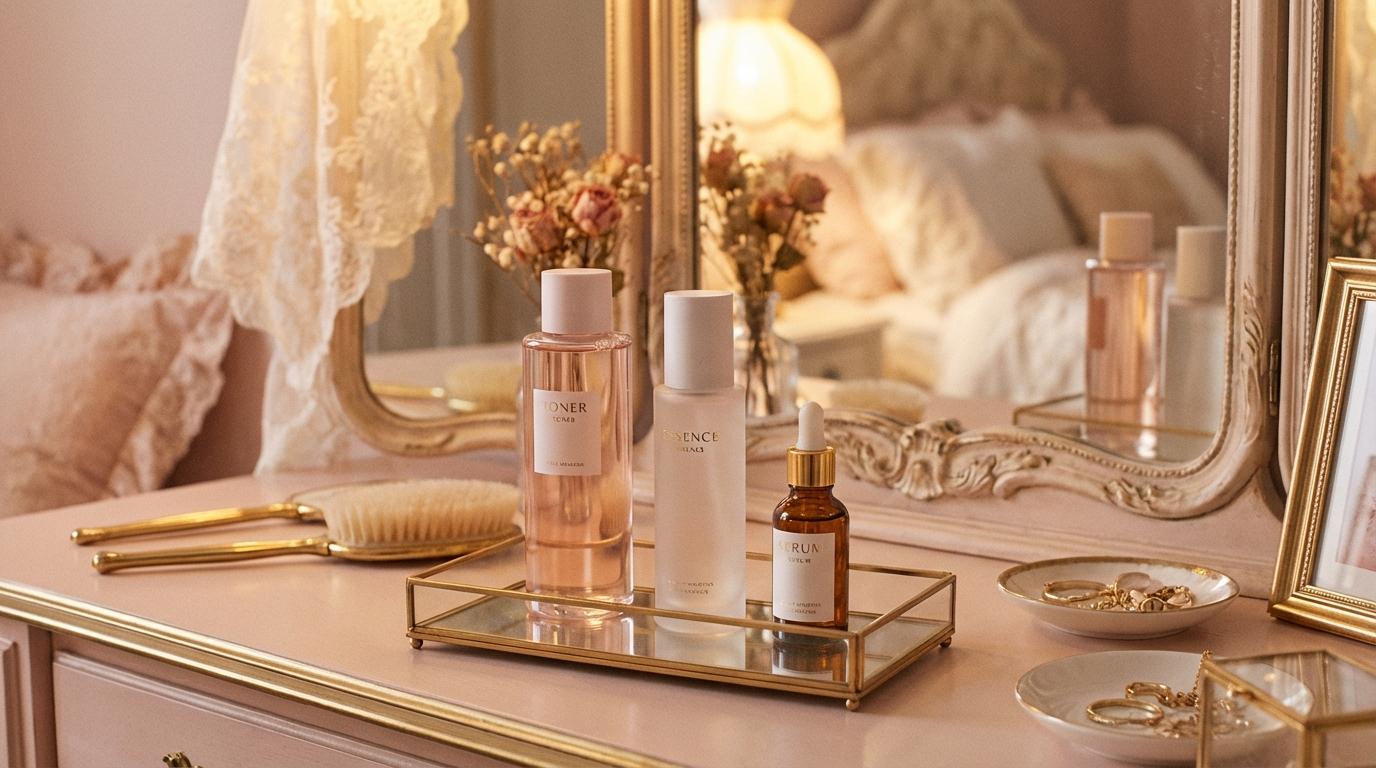
These three confuse everyone. Toner, essence, serum. They all come in similar bottles, they all go on after cleansing, and half the time the product descriptions sound interchangeable. I’ve stood in a store aisle holding two nearly identical-looking products wondering what exactly makes one an “essence” and the other a “serum,” and honestly? The skincare industry doesn’t always make the distinction clear.
But there are real differences, and understanding them helps you figure out which ones you actually need (spoiler: probably not all three) and how to layer them without turning your routine into a seven-step production.
Toner: The Prep Step
Toners are the lightest of the three. They have the thinnest consistency, usually watery like, well, water. The original purpose of toner was to remove leftover cleanser residue and restore the skin’s pH after washing. Old-school toners were basically astringents loaded with alcohol that stripped your face dry.
Modern toners have evolved significantly. Most good ones skip the alcohol and instead focus on hydration and pH balancing. They contain ingredients like glycerin, hyaluronic acid, or botanical extracts that add a light layer of moisture while prepping your skin to absorb whatever comes next.
Think of toner as the primer for your skincare. It’s the last step of cleansing and the first step of treatment. When your skin is slightly damp from toner, it absorbs serums and moisturizers more efficiently. A damp surface pulls products in better than a completely dry one.
Some toners also contain active ingredients like salicylic acid, glycolic acid, or niacinamide. These are treatment toners, and they blur the line between toner and the other categories a bit. But generally, if it’s watery and meant to go on first after cleansing, it’s a toner.
Essence: The Hydration Boost
Essences come from Korean skincare (K-beauty), and they sit in the routine right after toner. They’re slightly thicker than toner but thinner than serum. The texture is often described as “slippery water” or a very light gel-water hybrid.
The primary job of an essence is hydration. While toners prep the skin, essences flood it with moisture and lightweight beneficial ingredients. They’re not trying to target specific concerns the way serums do. Instead, they create a hydrated base layer that helps everything applied afterward work better.
Popular essence ingredients include fermented extracts (like the famous SK-II Pitera), snail mucin (don’t knock it until you’ve tried it), and niacinamide. These ingredients support overall skin health rather than attacking one particular problem.
Do you need an essence? Honestly, it depends. If your skin leans dry or dehydrated and you feel like your moisturizer isn’t cutting it alone, an essence adds hydration without heaviness. If your skin is already well-hydrated or you prefer a minimal routine, you can absolutely skip this step and be fine. Essences are the most optional of the three for most people.
Serum: The Targeted Treatment
Serums are the heavy hitters. They have the highest concentration of active ingredients and are formulated to target specific skin concerns. Hyperpigmentation, fine lines, acne, dullness, redness: there’s a serum for basically everything.
Texture-wise, serums are thicker than essences and toners. They can be gel-like, oil-based, or have a slightly viscous liquid consistency. They usually come in small bottles with droppers because a little goes a long way (and because the concentrated ingredients make them more expensive per ounce).
Common serum ingredients include:
- Vitamin C: For brightening and antioxidant protection
- Retinol: For anti-aging and cell turnover
- Hyaluronic acid: For deep hydration (yes, it shows up in serums too)
- Niacinamide: For pore minimizing and oil control
- Alpha arbutin: For dark spots and uneven tone
The key difference between a serum and the other two is concentration. Serums are designed to deliver active ingredients at meaningful percentages. A vitamin C serum might contain 10-20% ascorbic acid. A hydrating toner with vitamin C might have it at 1-2%. That concentration gap is the whole point.
Concentration and Consistency: The Real Differences
If you’re still confused (fair), here’s the simplest way to think about it:
- Toner: Thinnest. Lowest active concentration. Preps and lightly hydrates.
- Essence: Slightly thicker. Moderate actives. Hydrates and nourishes.
- Serum: Thickest of the three. Highest active concentration. Targets specific concerns.
The general rule is: thinner products go on first, thicker products go on after. This is why the layering order is toner, then essence, then serum. Each layer goes from watery to more concentrated, allowing each product to absorb before the next one goes on.
One thing that makes this confusing is that brands don’t always label products consistently. I’ve seen “essences” that are clearly serums in disguise, and “toners” that are essentially essences. The name on the bottle matters less than the actual consistency and ingredient concentration. If it’s watery, it goes first. If it’s thick and concentrated, it goes later. Let the texture guide you.
When You Need Each One (and When You Don’t)
You probably don’t need all three. There, I said it. Unless you genuinely enjoy a multi-step routine and your skin responds well to layering, streamlining is completely valid.
If you’re a minimalist: A good serum and a moisturizer are all you need after cleansing. The serum delivers your actives, the moisturizer seals everything in. Done.
If your skin is dry or dehydrated: Adding a hydrating toner or essence before your serum can make a noticeable difference. The extra hydration layer helps your skin hold onto moisture better throughout the day.
If you have oily skin: A lightweight toner with niacinamide or salicylic acid, followed by a targeted serum, works well without feeling heavy. You might not need an essence at all.
If you love K-beauty layering: Go for all three. Apply toner, pat in an essence, follow with your serum of choice, then moisturizer. It’s more steps, but each layer adds something different.
Layering Order Cheat Sheet
For the visual learners (and the people who just want someone to tell them what to do), here’s the order:
- Cleanser
- Toner (pat or press into skin while still damp)
- Essence (pat gently, let absorb for 30 seconds)
- Serum (apply to face and neck, let absorb for a minute)
- Moisturizer (seal everything in)
- Sunscreen (morning only, obviously)
If you’re skipping the essence, just go straight from toner to serum. If you’re skipping toner too, apply serum to clean, slightly damp skin for best absorption.
The important thing is that you’re not applying them out of order. A serum under a toner doesn’t make sense because the watery toner can’t penetrate through the thicker serum layer. Thin to thick, always. If you want more on picking toners specifically, this roundup covers affordable options worth trying.
At the end of the day, the “right” number of products is whatever your skin needs and whatever you’ll actually do consistently. A two-step routine you follow every single day beats a six-step routine you abandon after a week. Pick the products that make sense for your skin concerns, layer them thin to thick, and stop worrying about whether you technically own an essence or not.