
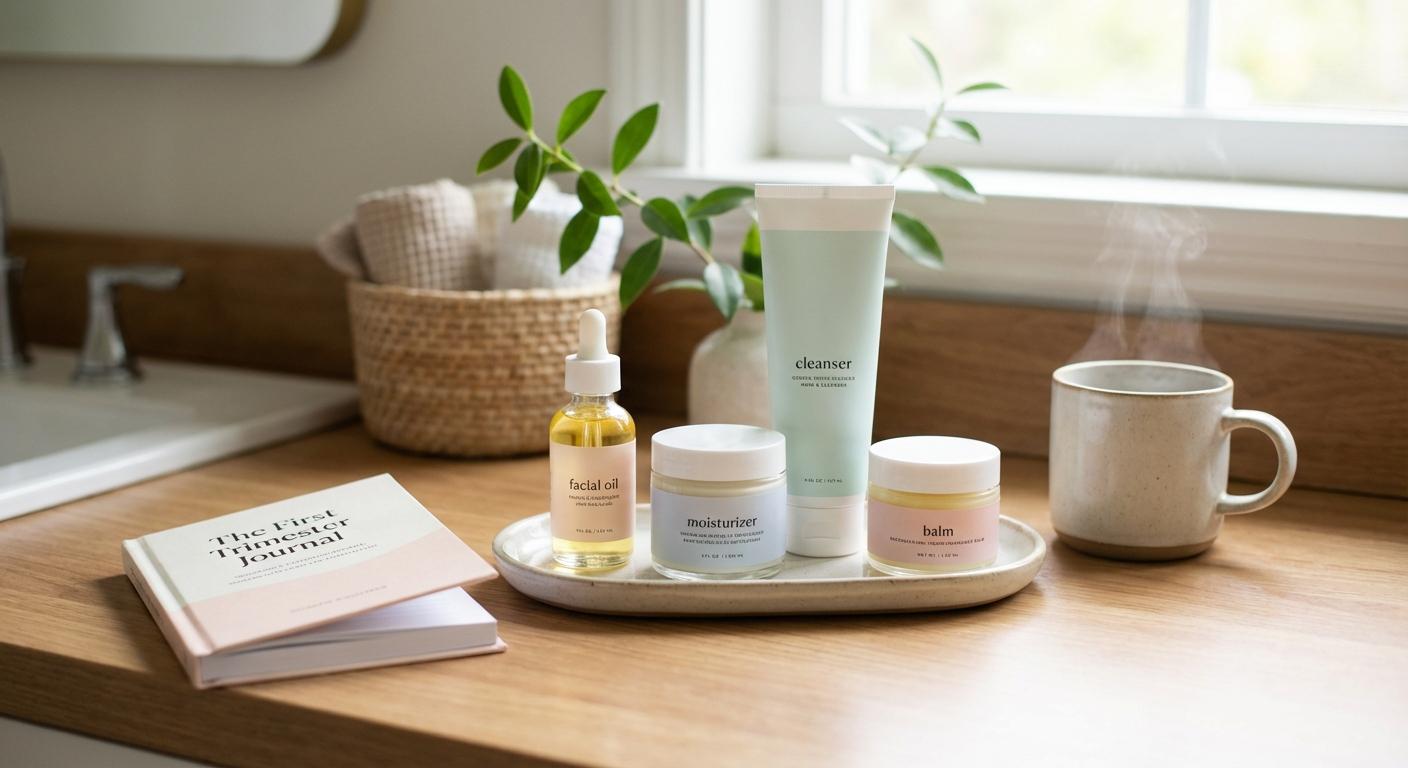
Finding out you are pregnant changes everything, including what you can put on your face. If you have spent years perfecting your skincare routine, the first trimester can feel like starting from scratch. But here is the thing: simplifying your routine is not just about safety. It can actually be a relief during those exhausting early weeks.
I am going to walk you through exactly what needs to change, what can stay, and how to handle skincare when even the smell of your favorite moisturizer makes you want to run to the bathroom.
The Ingredients That Need to Go Immediately
Some ingredients are clearly off-limits during pregnancy, and you should stop using them as soon as you find out you are expecting. This is not about being overly cautious. These are ingredients with documented risks.
Retinoids (vitamin A derivatives)
This includes retinol, tretinoin, adapalene, tazarotene, and anything else in the retinoid family. Oral retinoids like isotretinoin are known teratogens, meaning they cause birth defects. While topical retinoids have not been definitively linked to the same risks, most dermatologists recommend avoiding them entirely. According to the American College of Obstetricians and Gynecologists, it is best to err on the side of caution.
High-dose salicylic acid
Low concentrations (under 2%) in face washes that you rinse off are generally considered fine by most OBGYNs. However, high-dose salicylic acid peels and leave-on treatments should be avoided. The concern is systemic absorption, especially with products covering large areas of skin.
Hydroquinone
This skin-lightening ingredient has a high absorption rate, and there is not enough safety data for pregnancy. If you are treating melasma or dark spots, you will need to pause and switch to pregnancy-safe alternatives like vitamin C or azelaic acid.
Chemical sunscreen filters
Oxybenzone and other chemical filters are under scrutiny for potential hormone disruption. While the evidence is not conclusive, switching to mineral sunscreen with zinc oxide or titanium dioxide is an easy swap that eliminates the concern entirely.
What You Can Keep Using
The good news is that plenty of effective ingredients remain on the table:
- Hyaluronic acid: Completely safe and helpful for the dehydration many women experience in early pregnancy
- Niacinamide: Great for oil control, redness, and maintaining your skin barrier
- Vitamin C: A solid antioxidant that can help with pregnancy-related hyperpigmentation
- Azelaic acid: Safe during pregnancy and effective for acne and uneven skin tone
- Glycolic acid: In moderate concentrations, topical AHAs are generally considered safe
- Centella asiatica: Soothing and safe for sensitive pregnancy skin
The American Academy of Dermatology notes that most topical skincare ingredients are poorly absorbed and pose minimal risk, but checking with your healthcare provider about your specific routine is always wise.
When Nausea Takes Over Your Routine
Here is something nobody warns you about: first trimester nausea can make skincare nearly impossible. Suddenly your favorite serum smells unbearable. The texture of your moisturizer triggers your gag reflex. Even opening your skincare drawer becomes an ordeal.
This is completely normal, and the solution is radical simplification.
The survival routine:
- Rinse with water in the morning if cleansing feels like too much
- Apply an unscented moisturizer (CeraVe and Vanicream are good fragrance-free options)
- Use mineral sunscreen if you can tolerate it
- At night, use a gentle micellar water if you wore makeup or sunscreen
- Moisturize again and go to bed
That is it. This is a perfectly acceptable routine for the weeks when you are just trying to survive. Your skin will not fall apart from a simplified routine for a few weeks.
Dealing With First Trimester Skin Changes
Hormones start shifting almost immediately after conception, and your skin often shows it. Here is what you might experience and how to handle it:
Breakouts: Pregnancy acne is common, especially if you dealt with hormonal acne before. Azelaic acid is your best friend here since it is pregnancy-safe and effective for acne. Benzoyl peroxide in spot treatments (not all-over) is also generally considered acceptable.
Oiliness: Increased oil production is normal. Niacinamide helps regulate sebum without being harsh or risky.
Dryness and sensitivity: Some women experience the opposite, with skin becoming dry and reactive. Focus on barrier repair with ceramides, squalane, and gentle hydrators.
Early melasma: Pregnancy mask can start appearing early. Vitamin C, azelaic acid, and diligent sun protection are your tools here. Do not expect to clear it completely during pregnancy, but you can slow its progression.
Products to Look For
When shopping for pregnancy-safe products, look for:
- Fragrance-free formulas (especially helpful if nausea is an issue)
- Simple ingredient lists with fewer actives
- Mineral sunscreens with zinc oxide as the active
- Products labeled for sensitive skin, which tend to avoid problematic ingredients
Brands like La Roche-Posay, CeraVe, Vanicream, and Paula’s Choice have many pregnancy-compatible options. Always double-check ingredients rather than trusting marketing claims about being “safe for pregnancy.”
Talk to Your Doctor
I want to emphasize that this article is general guidance, not medical advice. Every pregnancy is different, and your healthcare provider knows your specific situation. If you are unsure about any product or ingredient, ask your OBGYN or midwife. They can review your routine and give you personalized recommendations.
Some dermatologists specialize in pregnancy skincare and can be a great resource if you have complex skin concerns or are using prescription products.
The Permission to Do Less
First trimester exhaustion is real. If your skincare routine goes from ten steps to two, that is perfectly fine. If you skip your routine entirely some nights because you are too tired or nauseous, the world will not end. Your skin is resilient, and a few weeks of minimal care will not undo years of good habits.
The most important things are: avoid the known problematic ingredients, stay hydrated, wear sunscreen when you can, and be gentle with yourself. Everything else is optional.
Your skin might actually appreciate the break from actives and complicated routines. Many women find that pregnancy hormones eventually give them that famous “pregnancy glow,” though it might take until the second trimester to show up. Until then, keep it simple and focus on what really matters: growing that tiny human.