If you’ve noticed that your breakouts seem to follow a pattern, clustering along your jawline and chin like clockwork each month, you’re probably dealing with hormonal acne. And here’s the thing: hormonal acne plays by different rules than regular breakouts. Understanding why this happens is the first step toward managing it effectively.
What Makes Hormonal Acne Different
Hormonal acne is driven primarily by androgens, a group of hormones that includes testosterone. Both men and women produce androgens, but fluctuations during the menstrual cycle, stress periods, or hormonal changes can trigger increased sebum production.
Here’s the science: androgens stimulate the sebaceous glands to produce more oil. This excess sebum mixes with dead skin cells inside your pores, creating the perfect environment for Cutibacterium acnes (formerly known as Propionibacterium acnes) to thrive. The bacteria trigger an inflammatory response, resulting in those deep, painful cysts that characterize hormonal acne.
The reason hormonal breakouts concentrate along the lower face is that this area has a higher density of androgen receptors. Your jawline, chin, and neck are essentially more sensitive to hormonal fluctuations than your forehead or cheeks.
The Gentle Approach: Why It Works Better
I know it’s tempting to attack hormonal acne with the strongest actives you can find. But here’s what the research tells us: aggressive treatments often backfire with hormonal acne.
When you strip your skin with harsh cleansers or pile on multiple exfoliating acids, you damage your skin barrier. A compromised barrier leads to increased transepidermal water loss (TEWL), inflammation, and ironically, more oil production as your skin tries to compensate. Studies have shown that barrier-impaired skin has higher rates of bacterial colonization, which can worsen acne.
Instead, a gentle approach focuses on:
- Maintaining barrier integrity while treating acne
- Reducing inflammation (a key driver of hormonal acne)
- Using targeted ingredients that address hormonal pathways
- Supporting your skin’s natural healing processes
Building Your Hormonal Acne Routine
Morning Routine
Cleanser: Use a gentle, pH-balanced cleanser (around pH 5.5). Look for non-stripping formulas that cleanse without that “squeaky clean” feeling. Your skin’s acid mantle functions best at a slightly acidic pH, and maintaining this helps keep acne-causing bacteria in check.
Treatment: Niacinamide (vitamin B3) at 4-5% concentration is excellent for hormonal acne. It regulates sebum production, reduces inflammation, and strengthens the skin barrier. A 2013 study in the Journal of Cosmetic Dermatology found that 4% niacinamide significantly reduced sebum excretion rate over 8 weeks.
Moisturizer: Yes, even oily, acne-prone skin needs moisturizer. Look for lightweight, non-comedogenic options with ceramides or hyaluronic acid. Proper hydration signals to your sebaceous glands that they don’t need to overproduce oil.
Sunscreen: Non-negotiable. Many acne treatments increase photosensitivity, and UV exposure can lead to post-inflammatory hyperpigmentation (those dark marks left after breakouts heal). Choose mineral sunscreens with zinc oxide if chemical filters irritate your skin.
Evening Routine
Cleanser: If you wear makeup or sunscreen, double cleanse. Start with an oil-based cleanser to dissolve makeup and sebum, followed by your gentle water-based cleanser. Oil cleansers won’t cause breakouts. They actually help remove excess sebum more effectively than harsh cleansers.
Treatment (Retinoid): This is where the real work happens. Retinoids are backed by decades of research for acne treatment. They increase cell turnover, prevent dead skin cells from clogging pores, and have anti-inflammatory properties.
Start with a low concentration (0.025% tretinoin or adapalene 0.1%) and use it every other night initially. Your skin needs time to adjust, and the “retinoid uglies” (initial purging and irritation) are temporary. After 4-6 weeks, you can increase to nightly use.
Moisturizer: Apply a richer moisturizer at night. If you’re using retinoids, this step is crucial for managing potential dryness and irritation. Some people prefer applying moisturizer before their retinoid (the “sandwich” method) to buffer irritation during the adjustment period.
Cycle-Syncing Your Routine
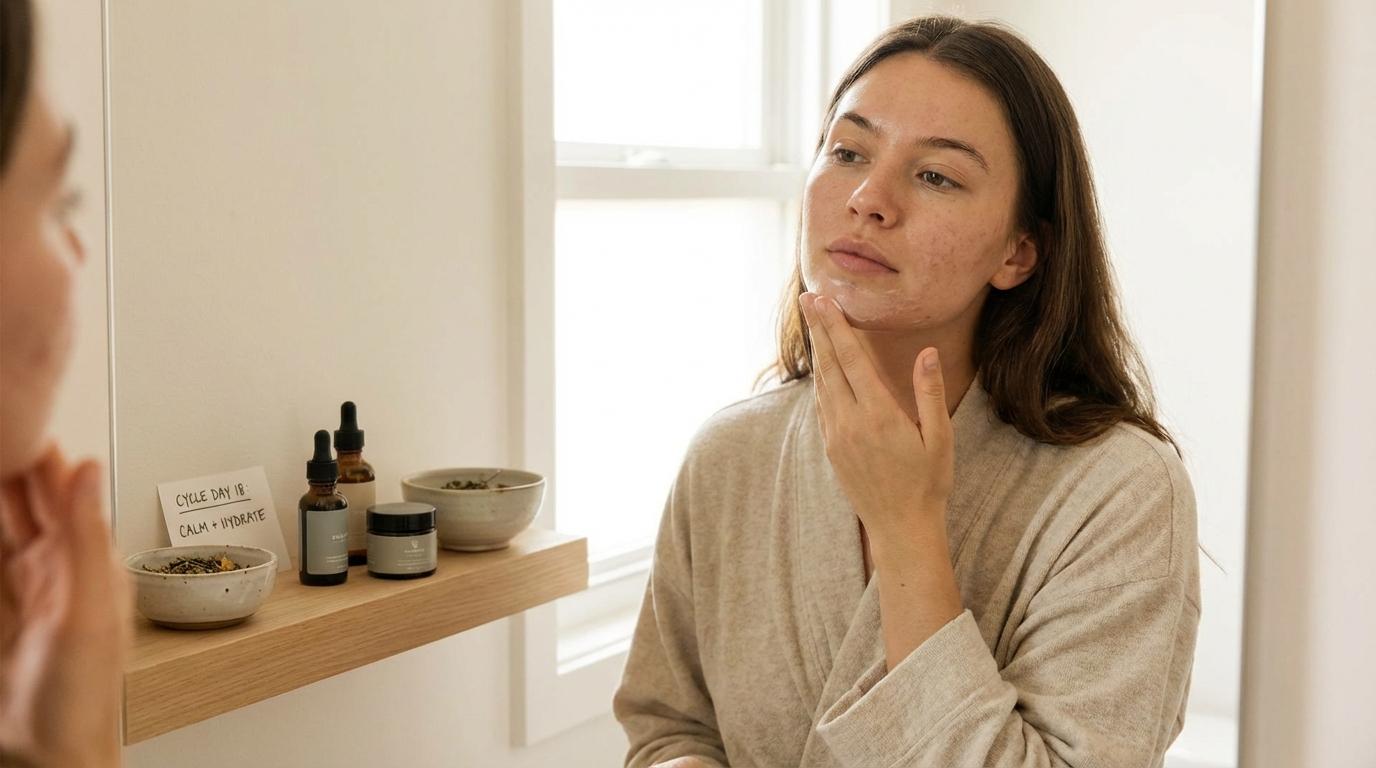
Since hormonal acne follows your menstrual cycle, it makes sense to adjust your routine accordingly. Here’s a framework based on typical hormonal patterns:
Week 1-2 (Follicular phase): Estrogen is rising, skin tends to be calmer. This is a good time for any intensive treatments like chemical exfoliants or higher-strength retinoids.
Week 3-4 (Luteal phase): Progesterone rises and then drops before your period. Sebum production increases. Focus on oil control with niacinamide, use gentle clay masks, and resist the urge to over-exfoliate. Keep your routine consistent and simple.
Tracking your breakouts alongside your cycle for a few months can reveal patterns specific to you. Apps like Clue or Flo can help you identify when you’re most vulnerable.
Ingredients That Target Hormonal Acne
Beyond the basics, these ingredients have specific benefits for hormonal acne:
Salicylic Acid (BHA): Oil-soluble, so it can penetrate into pores to dissolve sebum plugs. Use at 0.5-2% concentration. It’s gentler than benzoyl peroxide and less likely to cause irritation.
Azelaic Acid: This underrated ingredient is antimicrobial, anti-inflammatory, and helps fade post-inflammatory hyperpigmentation. It also inhibits 5-alpha reductase, an enzyme that converts testosterone to the more potent DHT. Use at 10-20% concentration.
Green Tea Extract: Contains EGCG, which has anti-androgenic properties. Studies have shown it can reduce sebum production when applied topically.
Spearmint Tea (internal): While not a topical, drinking spearmint tea has shown some promise for reducing androgen levels. A small study found that two cups daily for five days decreased free testosterone levels. It’s not a substitute for medical treatment, but it might provide mild support.
When Topicals Are Not Enough
Sometimes, the most well-crafted skincare routine cannot address hormonal acne alone. This is not a personal failure. It’s biology. If you’re experiencing:
- Deep, cystic breakouts that don’t respond to topical treatment
- Acne that severely impacts your quality of life or mental health
- Signs of hormonal imbalance (irregular periods, excess facial hair, unexplained weight changes)
- Acne that leaves persistent scarring
It’s time to see a dermatologist. They have access to treatments that address hormonal acne at its source:
Prescription retinoids: Tretinoin at higher concentrations than over-the-counter options.
Spironolactone: An anti-androgen medication that blocks androgen receptors in the skin. It’s been used off-label for acne for decades with good results.
Hormonal contraceptives: Certain birth control pills can help regulate hormones and reduce acne. Your dermatologist or gynecologist can discuss which formulations are best for acne.
Isotretinoin (Accutane): For severe, treatment-resistant acne. It’s a serious medication with significant side effects, but for some people, it’s transformative.
What to Expect
Managing hormonal acne is a long game. Even the most effective treatments take 8-12 weeks to show results because that’s how long your skin cell turnover cycle takes. You might experience initial purging with retinoids as deeper congestion rises to the surface.
Take photos in consistent lighting every few weeks to track progress. Our memories of how our skin looked are often unreliable, and having visual documentation helps you see improvements you might otherwise miss.
Hormonal acne is frustrating because it’s not entirely within your control. But understanding the mechanisms behind it and building a consistent, science-backed routine can make a real difference. And when it doesn’t, that’s what dermatologists are for.