
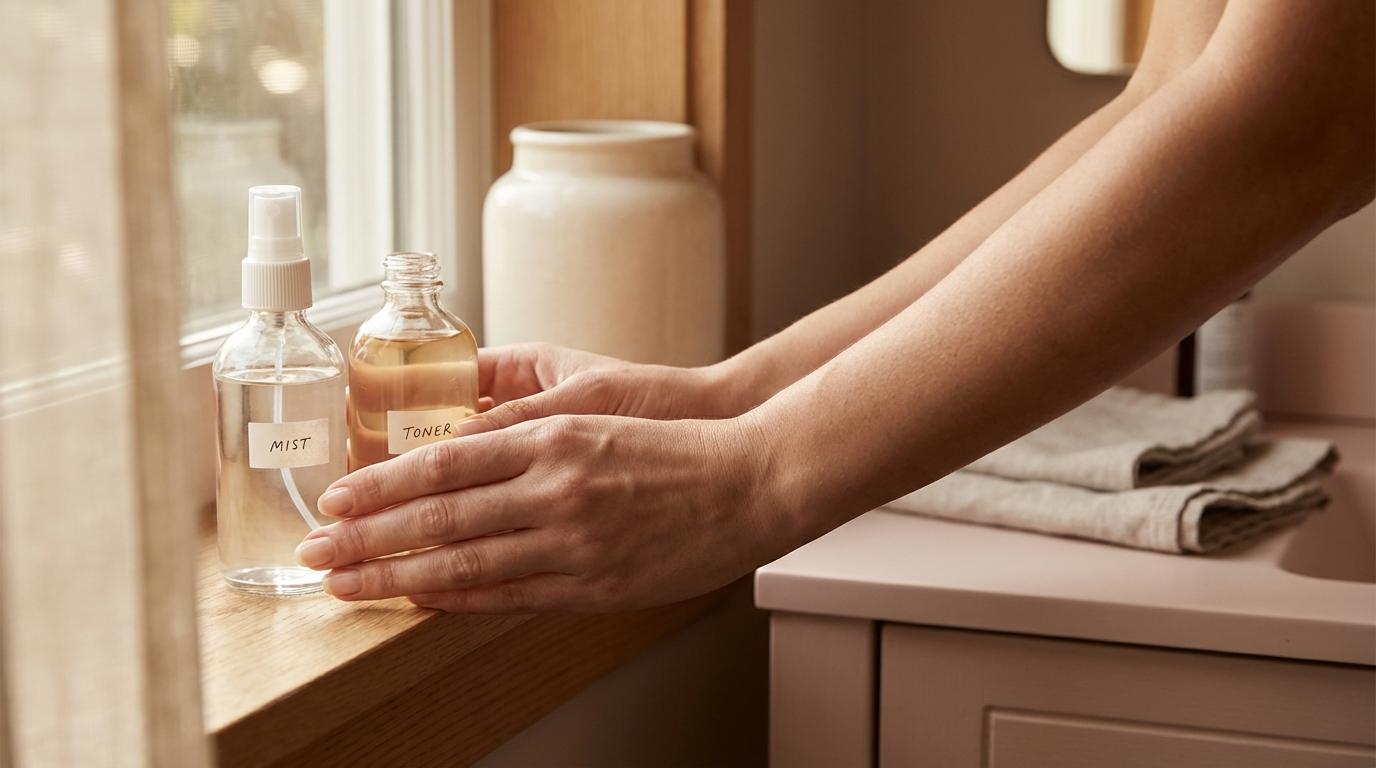
Mists and toners can be used interchangeably in your skincare routine. Except they really cannot, and understanding the distinction matters more than you might think. These two product categories look similar on the shelf, often come in similar bottles, and even smell comparable, but they serve fundamentally different purposes for your skin.
As someone who spent years assuming a quick spritz of rose water counted as toning, I understand the confusion. The skincare industry does not always help clarify things either, with some brands marketing hybrid products that blur the lines. But once you understand the science behind what each product actually does to your skin at a cellular level, choosing between them becomes much simpler.
The Fundamental Difference: Purpose and Function
Toners were originally formulated to restore the skin’s pH balance after cleansing and remove any leftover residue. Traditional cleansers, especially bar soaps, were quite alkaline and would disrupt the skin’s natural acidic mantle (which typically sits around pH 4.5 to 5.5). Toners helped bring things back to baseline.
Modern toners have evolved significantly. Today’s formulations often contain active ingredients like niacinamide, glycolic acid, salicylic acid, or hyaluronic acid. They function as treatment steps disguised in a watery texture. When you apply a toner, you typically saturate a cotton pad and sweep it across your entire face, or pat it in with your hands. The goal is full coverage and ingredient delivery.
Mists, in contrast, prioritize hydration refresh and sensory experience. They deliver a fine spray of water-based ingredients that sits on top of your skin. While mists can contain beneficial ingredients, their primary job is to boost hydration throughout the day, set makeup, or provide a refreshing sensation. The delivery method itself, that light spray pattern, means the product distributes differently than a saturated application would.
What Actually Happens When You Use a Toner
When you apply toner properly, you are doing several things at once. First, you are completing the cleansing process by picking up any remaining dirt, oil, or makeup your cleanser missed. Second, depending on the formula, you may be delivering active ingredients that can penetrate the upper layers of your epidermis.
According to dermatologists at the American Academy of Dermatology, toners work best when applied to clean, slightly damp skin. The active ingredients in toners, whether they are exfoliating acids or hydrating humectants, need direct contact with your skin to be effective. This is why the application method matters so much.
Some toners are formulated with chemical exfoliants. An AHA toner containing glycolic or lactic acid works by loosening the bonds between dead skin cells, promoting cell turnover over time. A BHA toner with salicylic acid can penetrate into pores and help clear congestion. These actions require the product to sit on your skin and do its job, not evaporate immediately after application.
Hydrating toners work differently but still benefit from thorough application. Products containing hyaluronic acid or glycerin draw moisture into the skin. When you pat these formulas in with your hands, you are giving the humectants time to bind with water molecules and plump up your skin cells.
The Science Behind Facial Mists
Mists deliver ingredients via aerosolized droplets. This sounds technical, but it simply means the product breaks into tiny particles that land lightly on your skin’s surface. The coverage tends to be less concentrated than a saturated cotton pad application, and the droplets often evaporate fairly quickly, especially in dry environments.
This is not necessarily a bad thing. The transepidermal water loss that occurs when mist droplets evaporate can actually leave skin feeling tighter if the product lacks proper humectants. This is why ingredient lists matter so much with mists. A mist containing only water and fragrance might feel refreshing momentarily but will not provide lasting hydration.
Quality mists typically include ingredients like glycerin, aloe vera, or hyaluronic acid to help lock in moisture rather than letting it escape. Thermal water mists from springs in France contain minerals that can help soothe reactive skin. Rose water mists offer mild anti-inflammatory benefits. But even the best mist formula cannot replace a proper toning step if your skin needs the active ingredients that toners provide.
When Toners Make More Sense
If you are dealing with specific skin concerns that require treatment ingredients, a toner is likely the better choice for your post-cleanse routine. Acne-prone skin often benefits from a toner containing salicylic acid or witch hazel. Dull, uneven skin tone responds well to AHA toners. Compromised skin barriers may need hydrating toners packed with ceramide precursors or centella asiatica.
Toners also make sense when you want to maximize the absorption of products that follow. By properly prepping your skin with a hydrating toner, you create a slightly damp environment that helps serums and moisturizers penetrate more effectively. Think of it as priming a canvas before painting.
Your morning and evening routines are the optimal times for toner application. After cleansing, while your skin is still clean and receptive, a toner can deliver its ingredients most effectively. This is not the moment for a quick mist. This is when you want deliberate, thorough product application.
When Mists Actually Shine
Mists excel in situations where toners simply cannot compete. Mid-day hydration refresh? A mist in your desk drawer is practical in a way that breaking out toner and cotton pads is not. Setting makeup without disturbing it? A fine mist spray does this beautifully. Post-workout refresh before you can properly wash your face? Mists handle this well.
Airplane travel is another scenario where mists prove their worth. The cabin air on planes typically sits around 10 to 20 percent humidity, which is significantly lower than the 30 to 60 percent most skin prefers. A well-formulated mist can help counteract that drying environment throughout your flight. According to beauty experts who study travel skincare, keeping a hydrating mist handy during flights can help maintain skin comfort.
The sensory experience matters too. There is something genuinely pleasant about spritzing a cool, fragrant mist on your face during a hot afternoon or when you need a mental reset. Skincare can and should include moments of enjoyment, and mists deliver that in a way toners typically do not.
Layering Considerations: Can You Use Both?
Absolutely. In fact, using both a toner and a mist in your routine can make a lot of sense, as long as you understand their roles. The toner comes after cleansing and before serums. The mist can come at various points: over moisturizer to add dewiness, throughout the day as a refresh, or as a finishing touch after makeup.
What you should not do is replace your toner step with a mist and expect the same results. If your toner contains niacinamide for pore refinement or an AHA for gentle exfoliation, spritzing a rose water mist will not accomplish the same thing. The active ingredients in your routine need proper application methods to work.
Some people layer a mist between every step of their routine, using the moisture to help blend products and boost hydration at each stage. This technique, popular in Korean and Japanese skincare, can work well for dehydrated skin types. However, it adds time and product expense that may not be necessary for everyone.
Choosing the Right Products for Each Category
When shopping for a toner, focus on the active ingredients that address your specific concerns. For oily or acne-prone skin, look for formulas with salicylic acid, tea tree, or niacinamide. For dry or sensitive skin, seek out toners with hyaluronic acid, centella, or ceramides. For dull or aging skin, AHA toners with glycolic or lactic acid can help with cell turnover.
Avoid toners with high alcohol content (listed as alcohol denat. or SD alcohol) unless you have very oily skin. These can strip your skin’s moisture balance and trigger rebound oil production. Fragrance-heavy toners can also irritate sensitive skin types.
For mists, ingredient simplicity often works better. A thermal water mist needs only the mineral-rich water to deliver its benefits. A hydrating mist should contain a humectant like glycerin or hyaluronic acid along with a soothing agent like aloe or cucumber. Rose water mists work well when they contain actual rose hydrosol rather than synthetic fragrance.
Avoid mists that list water as the only significant ingredient followed by fragrance. These will feel refreshing for about thirty seconds before leaving your skin drier than before. Also watch out for mists containing essential oils if you have sensitive or reactive skin, as these can trigger irritation even in diluted spray form.
Best Uses for Your Mist Collection
If you have been collecting mists (we have all done it), here are the most effective ways to use them. First, keep one at your desk for mid-afternoon refreshes. The ritual of spritzing your face can serve as a mini mental break while adding a touch of hydration. Second, store one in your gym bag for post-workout use when you need a quick refresh before heading home.
Mists work wonderfully as makeup setting sprays when you choose formulas without too much oil or heavy emollients. Hold the bottle about eight to ten inches from your face and spray in a T or X pattern for even coverage. Let the mist settle naturally without touching your face, and you will extend your makeup’s wear time.
During hot weather, storing your mist in the refrigerator adds an extra cooling effect that genuinely helps with heat flush and general discomfort. Some people also use mists to dampen their beauty blender or foundation brush, creating a dewier application. Just make sure the mist formula plays well with your makeup products.
Travel mists serve a different purpose than your everyday products. For flights and dry hotel rooms, look for mists with strong hydrating ingredients rather than just thermal water. The goal is to counteract environmental dryness, which requires ingredients that hold moisture, not just add it temporarily.
Making the Right Choice for Your Routine
Understanding the distinction between mists and toners helps you build a more effective skincare routine. Toners belong in your core lineup, doing the heavy lifting of pH balancing, residue removal, and active ingredient delivery. Mists serve as supportive players, offering convenience, sensory pleasure, and hydration boosts when full application is not practical.
If budget is a concern, invest in a good toner first. You can always add a mist later, or even make a simple DIY version with distilled water and a few drops of glycerin. The toner step is harder to replicate with makeshift alternatives because the active ingredients genuinely matter.
Your skin will respond differently to each product type, and paying attention to those responses helps you refine your approach over time. A toner that works beautifully in winter might feel too heavy in summer. A mist you adore at your desk might not deliver enough hydration for airplane travel. Flexibility and observation remain your best tools for any skincare decisions.