
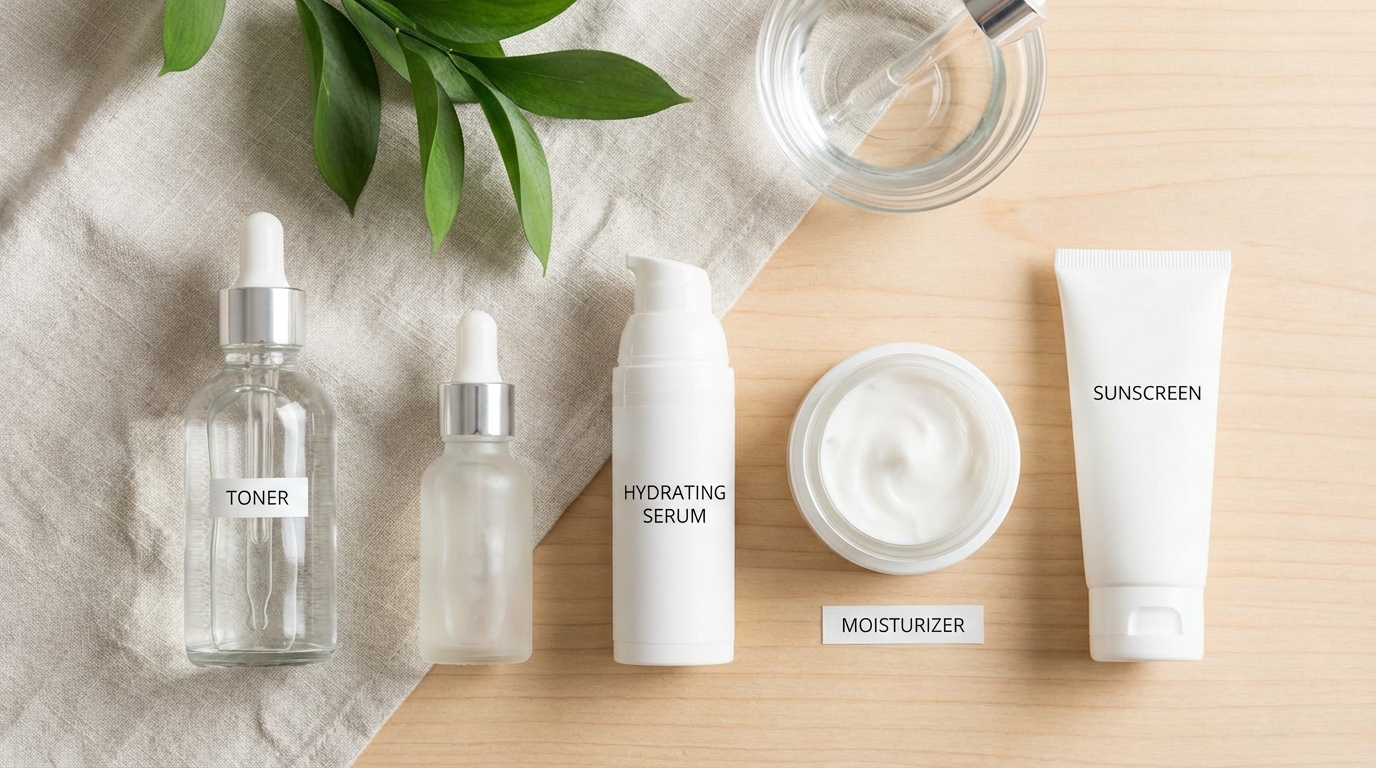
There is a certain peace that comes with simplifying your skincare routine. Fewer products, less time, more intention. But even with a minimal approach, the order in which you apply your products makes a real difference in whether they can actually do their job. Getting this right does not require complexity. It just requires understanding a few basic principles.
The Thin to Thick Principle
The simplest rule to remember is this: apply products from thinnest consistency to thickest. Watery formulas go first, creamy ones go last. This is not about being precise or perfect. It is about giving each product the best chance to absorb into your skin before you layer something heavier on top.
Think of it like watering a plant. If you put a thick layer of mulch on top of dry soil and then try to water it, most of the water just runs off. But if you water first and then add the mulch, everything gets where it needs to go.
In practice, this usually looks like:
- Cleanser (rinse off)
- Toner or essence (if you use one)
- Serum
- Moisturizer
- Sunscreen (morning only)
That is really all there is to it. You do not need ten steps or a complicated chart. Just thin to thick, and you are most of the way there.
Understanding Water-Based and Oil-Based Products
Beyond consistency, there is another layer to consider: whether a product is water-based or oil-based. This matters because oil and water do not mix well, and applying them in the wrong order can prevent proper absorption.
Water-based products include most toners, essences, and serums. They feel light, absorb quickly, and usually have water listed as the first ingredient. These should generally go on first after cleansing.
Oil-based products include facial oils, oil cleansers, and some heavier balms. They feel richer and create more of a barrier on the skin. These work best as the last step before sunscreen, or at night as your final layer.
If you apply an oil-based product first, it creates a barrier that can prevent your water-based products from penetrating effectively. The general rule is: water first, oil second.
One exception: if you use an oil cleanser as part of a double cleansing method, that goes first because its purpose is to break down makeup and sunscreen, not to stay on your skin. You rinse it off before moving on.
Where Serums Fit In
Serums tend to cause the most confusion, partly because there are so many types with different purposes. But the placement is usually straightforward: serums go after cleansing (and toning, if you use a toner) but before moisturizer.
Why? Most serums are formulated with smaller molecules and higher concentrations of active ingredients. They are designed to penetrate deeper into the skin. If you apply moisturizer first, you are creating a barrier that can block those active ingredients from reaching where they need to go.
If you use multiple serums (though I would gently suggest considering whether you really need more than one), the thin to thick rule still applies. A watery vitamin C serum goes before a slightly thicker hyaluronic acid serum. But honestly, using one well-chosen serum is often enough. More is not always better.
For some guidance on choosing a serum that fits your needs, check out our ingredient guides.
The Special Case of Active Ingredients
Some active ingredients have specific requirements that override the general rules. It is worth knowing these if you use products containing:
Retinol/Retinoids: These work best applied to completely dry skin. Wait a few minutes after cleansing before applying, and follow with moisturizer to reduce potential irritation. Dermatologists recommend using retinoids at night since they can make skin more sensitive to sunlight.
Vitamin C: Most vitamin C serums are water-based and should go on after cleansing while skin is still slightly damp. Some people find vitamin C more effective in the morning since it provides antioxidant protection against environmental damage throughout the day.
AHAs and BHAs: Exfoliating acids need direct contact with skin to work, so they should go on right after cleansing. Wait a few minutes before applying other products to let them do their job.
If this feels overwhelming, remember: you do not need to use all of these. A simple routine with fewer actives is often more effective than a complicated one where ingredients compete with each other.
Why Sunscreen Is Always the Final Step
Sunscreen is the one product where placement is not negotiable. It always goes last in your morning routine (after moisturizer, before makeup if you wear it). The reason is simple: sunscreen needs to form an even film on your skin to protect you properly.
When you apply other products on top of sunscreen, you risk disrupting that protective layer. You might also dilute the sunscreen or move it around unevenly on your face. Neither is ideal when you are relying on it to protect your skin from UV damage.
The Skin Cancer Foundation recommends applying sunscreen as the last step in your skincare routine, waiting a minute or two for it to set, and then applying makeup if desired. Some makeup products contain SPF, but this should be considered supplementary, not a replacement for actual sunscreen.
One more note: if you are using a mineral sunscreen (zinc oxide or titanium dioxide), it sits on top of the skin rather than absorbing in. This makes the order even more important, as applying moisturizer over mineral sunscreen would definitely disrupt its coverage.
A Simple Morning and Evening Framework
Rather than memorizing complicated rules, here is a gentle framework that works for most people:
Morning:
- Cleanse (or just rinse with water if your skin is not oily)
- One treatment product if desired (vitamin C, niacinamide, etc.)
- Moisturizer
- Sunscreen
Evening:
- Cleanse (double cleanse if wearing makeup or sunscreen)
- One treatment product if desired (retinol, exfoliating acid, etc.)
- Moisturizer or facial oil
Notice how simple this is. Four steps maximum. You do not need a twelve-step routine to have healthy skin. In fact, using too many products can sometimes cause more problems than it solves, either through irritation or simply because certain ingredients do not play well together.
When Order Matters Less
I want to be honest with you: while product order does matter, it is not worth stressing over. If you accidentally apply your serum after your moisturizer one night, your skin is not going to fall off. The guidelines exist to help your products work optimally, but they are not rigid rules that must be followed perfectly every time.
What matters more is consistency. Using a few well-chosen products regularly will always beat an elaborate routine you only do sometimes. If simplifying the order of things helps you actually stick with your routine, that is what counts.
Your skin care practice should feel sustainable, even enjoyable. Take a breath. Apply your products with intention. And trust that doing something imperfectly is better than doing nothing at all.