
Double cleansing gets talked about like it is some essential step everyone needs. It is not. Some people benefit from it. Others are wasting their time and money.
Let me be direct about who actually needs this method and who can skip it entirely.
What Double Cleansing Actually Is
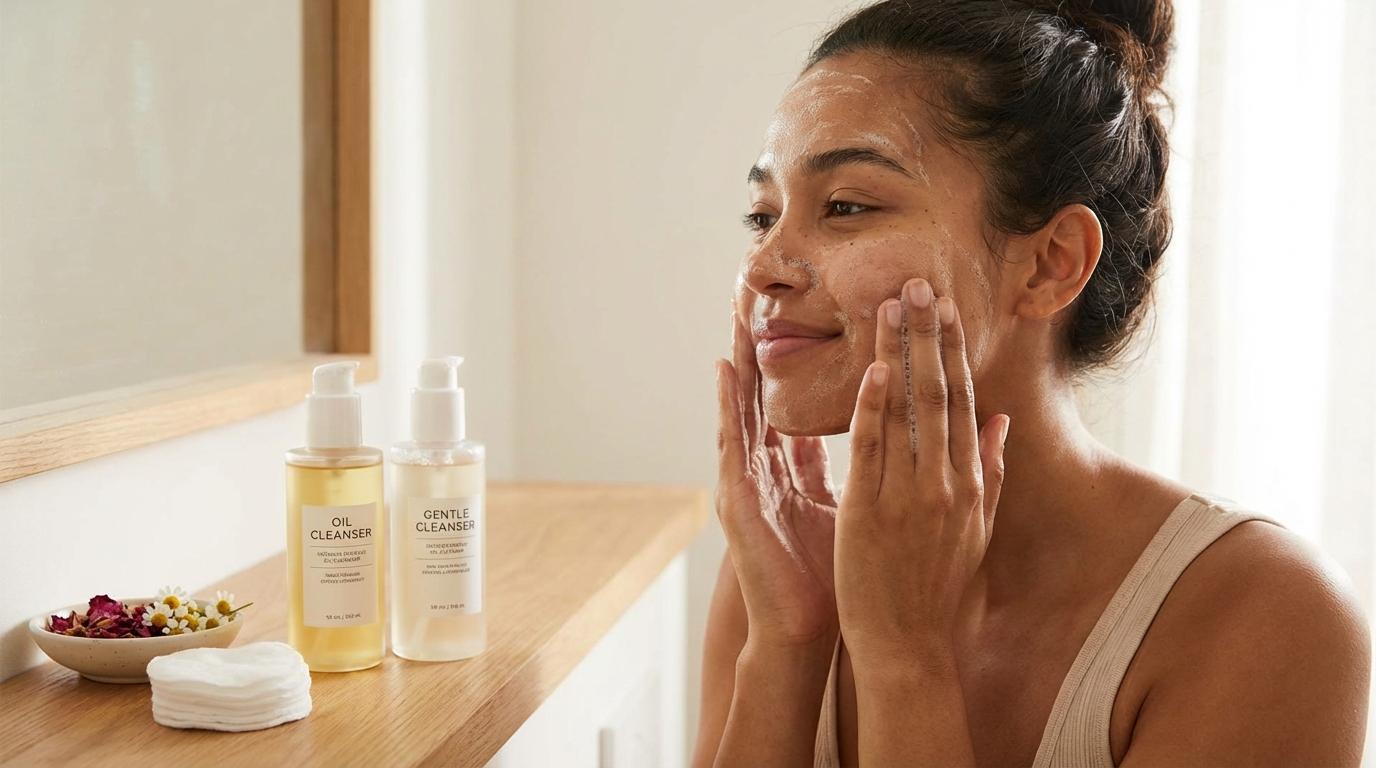
First cleanse: oil-based product to dissolve oil-based stuff on your face (makeup, sunscreen, sebum). Second cleanse: water-based cleanser to clean your actual skin.
That is it. Two washes instead of one.
The method comes from Korean skincare routines. It works well for certain situations. But it got marketed as something everyone should do, which is not accurate.
You Need Double Cleansing If:
You wear makeup. Foundation, concealer, and especially waterproof products do not come off with a regular cleanser alone. You are fooling yourself if you think otherwise. That residue stays on your skin and clogs pores over time.
You wear sunscreen daily. Most sunscreens, particularly mineral formulas and water-resistant types, are designed to stick to skin. A water-based cleanser struggles to remove them completely. The American Academy of Dermatology recommends proper cleansing after sunscreen use.
You have oily skin that feels congested. If your pores are consistently clogged despite using a good cleanser, adding an oil cleanse might help dissolve the excess sebum your regular cleanser is missing.
You live somewhere with high pollution. Particulate matter sticks to the oils on your face. An oil cleanser helps lift these particles more effectively than a foam cleanser alone.
You Do Not Need Double Cleansing If:
You do not wear makeup. Obvious but worth stating. If you are just washing off the day’s natural oil and dust, a single good cleanser handles that fine.
Your sunscreen is lightweight and rinses easily. Some chemical sunscreens wash off with a standard cleanser without issue. Test it: if your skin feels clean after one wash and your morning skincare absorbs properly, you are good.
You have dry or sensitive skin that hates being over-washed. Every cleanse strips some natural oils. Two cleanses can leave compromised skin barriers feeling raw and irritated. For some people, less washing is better.
Your single cleanser already removes everything. Some cleansers, especially balms and milky formulas, do both jobs reasonably well. If it works, do not complicate things.
Oil Cleanser Options That Actually Work
If you decide double cleansing makes sense for you, here is what to look for in the first step.
Cleansing oils: Lightweight, rinse clean, work for most people. Look for formulas that emulsify (turn milky) when you add water. Good options exist at every price point from drugstore to prestige brands.
Cleansing balms: Solid at room temperature, melt into oil on skin. Slightly richer than liquid oils. Great for heavy makeup removal. They require more rinsing to avoid residue.
Micellar water: Not technically an oil cleanser but serves as a first cleanse for light makeup. Less effective on heavy or waterproof products. Good for minimal makeup days.
Avoid: Pure cooking oils (coconut, olive) as cleansers. They do not emulsify properly and leave residue. Some people swear by them. Those people are spending a lot of time rinsing.
The Technique Matters
Double cleansing incorrectly defeats the purpose.
Apply oil cleanser to DRY skin. This is important. Oil and water do not mix, so applying to wet skin reduces effectiveness. Massage for 60 seconds minimum to actually dissolve everything.
Add water to emulsify. The product should turn milky. Rinse.
Then use your regular cleanser. This step removes any remaining oil cleanser residue plus whatever is left on your skin. Do not scrub hard. Gentle circular motions are enough.
According to research on facial cleansing, technique and product choice matter more than the number of products you use.
Single Cleansing Done Right
If double cleansing is not for you, make your single cleanse count.
Use enough product. Most people use too little cleanser. You need enough to actually cover your face and create some slip for gentle massage.
Take your time. A 10-second wash does not remove much of anything. Spend at least 30 seconds actually working the cleanser into your skin.
Choose the right formula. Gel cleansers work well for oily skin. Cream or milk cleansers suit dry skin better. Micellar water is fine for mornings or minimal product days.
Rinse thoroughly. Leftover cleanser residue irritates skin and defeats the purpose of cleansing.
The Bottom Line
Double cleansing is a tool, not a rule. Use it when your face has stuff on it that a single wash cannot handle. Skip it when your skin is already clean or when an extra wash would cause more problems than it solves.
Pay attention to what your skin needs instead of following routines blindly. That approach serves you better than copying anyone else’s 10-step regimen.