
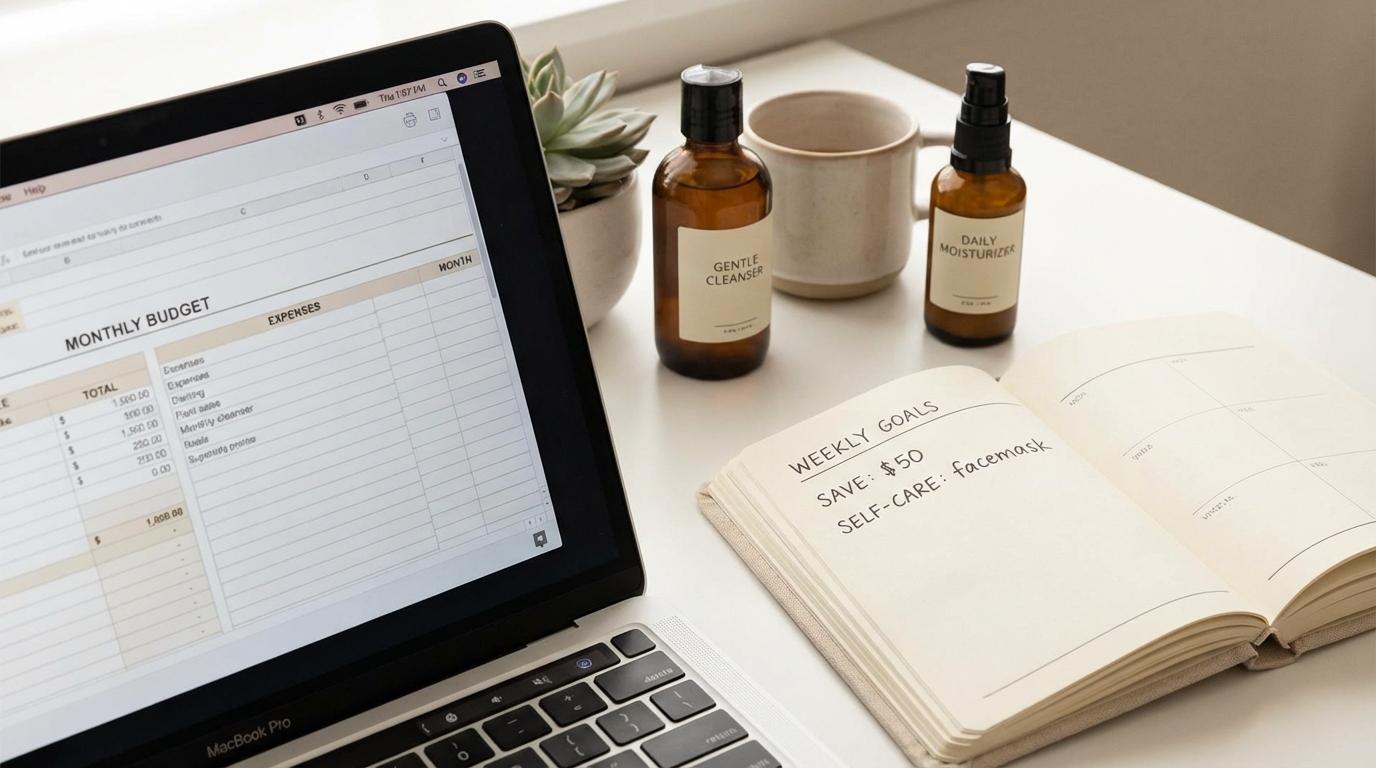
Generic skincare works. I know, I know, that feels like a betrayal of everything the beauty industry has taught us. But after years of testing products (and emptying my bank account in the process), I’ve learned that sometimes the $4 bottle does exactly what the $40 version does. The trick is knowing when to go generic and when the fancy stuff actually matters.
Cleansers: Go Generic Almost Every Time
This is probably the easiest swap you can make. Your cleanser is on your face for maybe 60 seconds before you rinse it off. All those expensive “brightening” and “anti-aging” ingredients? They’re washing down the drain before they can do anything meaningful.
The job of a cleanser is simple: remove dirt, oil, makeup, and sunscreen without stripping your skin barrier. A basic drugstore cleanser can absolutely do this. Look for something with a gentle surfactant (like sodium lauroyl methyl isethionate or cocamidopropyl betaine) and skip the versions loaded with actives that won’t have time to work anyway.
CeraVe, Vanicream, and store-brand gentle cleansers are literally formulated the same way as their expensive counterparts. Dermatologists on social media recommend these all the time. Your cleanser doesn’t need to be fancy (it just needs to clean).
Basic Moisturizers: Another Easy Win
If you’re looking for simple hydration, generic moisturizers are your friend. The core ingredients that make a moisturizer work are glycerin, hyaluronic acid, ceramides, and petrolatum. These aren’t proprietary secrets. They’re widely available, well-studied, and cheap to formulate.
A basic moisturizer from a drugstore brand contains the same humectants and occlusives as the fancy department store version. The difference? Marketing, packaging, and that “luxurious experience” the fancy brands sell you. If you’re building a complete routine under $30, this is where you save the most money.
Now, if you want a moisturizer with specific actives like retinol, niacinamide, or peptides, that’s different territory. The formulation stability and concentration of those actives can vary wildly. But for straight-up hydration? Generic all the way.
Simple SPF Formulas: Sun Protection Without the Markup
Sunscreen is non-negotiable (you already know this). But here’s the thing about mineral sunscreens with just zinc oxide or titanium dioxide: the formulation isn’t rocket science. These filters have been around forever, they’re super stable, and generic versions work just as well as expensive ones.
The FDA regulates sunscreen as an over-the-counter drug in the US, which means every SPF product has to meet specific standards. A $7 mineral sunscreen from your grocery store skincare aisle provides the same UV protection as a $45 “clean beauty” version.
Where expensive sunscreens might be worth it: elegant formulations that layer well under makeup, tinted versions for deeper skin tones, or newer filters not yet available in cheaper brands. But for basic, everyday protection? Generic handles it fine.
When Formulation Actually Matters
Okay, here’s where I have to be honest with you. Not everything should be generic. Some products genuinely benefit from higher-quality formulations, better delivery systems, or more stable packaging.
Vitamin C serums are a perfect example. L-ascorbic acid (the most effective form) is notoriously unstable. It oxidizes quickly when exposed to light and air. Cheap vitamin C serums often turn brown in the bottle, which means they’re basically useless. Higher-end brands invest in airless packaging, proper pH levels, and stabilizing ingredients. According to research published in dermatology journals, the stability of vitamin C significantly impacts its effectiveness.
Retinoids also fall into this category. The delivery system matters. Encapsulated retinol, time-release formulas, and buffered versions can make a huge difference in both effectiveness and how much irritation you experience. A generic retinol might be too harsh or too weak, while a well-formulated version gives you that sweet spot.
Chemical exfoliants (AHAs and BHAs) need proper pH levels to work. Too high, and they’re basically expensive water. Too low, and you’re risking chemical burns. Reputable brands with good formulations invest in getting this right. If you want reliable exfoliation, The Ordinary products offer great value without breaking the bank.
The Ingredient List Test
Want to know if a generic version is worth trying? Compare ingredient lists. Seriously, just pull up both products on your phone and look at them side by side.
Ingredients are listed in order of concentration. If the first five to ten ingredients are nearly identical between a generic and an expensive product, you’re probably fine with the cheaper option. The “hero ingredients” that brands market are often so far down the list they’re barely present anyway.
This is especially true for basic products like cleansers, simple moisturizers, and body lotions. The formula differences are minimal. What you’re paying for with luxury brands is often the experience: the pretty packaging, the nice scent, the ritual of it all. That stuff has value (I’m not here to yuck your yum), but it’s worth knowing that’s what you’re paying for.
My Personal Generic Swaps
I rotate between generic and name-brand products depending on what I need. Here’s my current lineup:
- Cleanser: Generic CeraVe dupe from Target’s store brand. Identical formula, cheaper price.
- Basic moisturizer: Vanicream. Not technically generic, but priced like it and recommended by dermatologists.
- Morning SPF: Whatever drugstore mineral sunscreen is on sale. I stock up.
- Vitamin C: This is where I splurge a little. The cheap ones kept oxidizing on me.
- Retinol: I use a mid-range option with encapsulated delivery. Worth the extra few dollars.
The key is being strategic. Save money where formulation doesn’t really matter so you can spend a little more where it does.
Red Flags for Cheap Products
Not all generic products are created equal. Watch out for these warning signs:
Fragrances in everything. Cheap products sometimes load up on fragrance to mask lower-quality base ingredients. If you’re sensitive, this can be a problem. Check for “fragrance” or “parfum” on the ingredient list.
Weird textures. If a product separates, pills, or has a strange consistency, the formulation might not be stable. This is more common in super cheap products that cut corners.
Too-good-to-be-true claims. A $3 “vitamin C serum with retinol and hyaluronic acid and niacinamide and peptides” is probably not going to have effective concentrations of any of those things. When products try to be everything, they often end up being nothing.
No expiration date. Reputable products have expiration dates or PAO (period after opening) symbols. If a product has no indication of shelf life, I get suspicious about quality control.
What Works For Your Budget
At the end of the day, the best skincare routine is one you’ll actually stick with. If buying all generic makes skincare accessible for you, do it. Your skin will benefit more from consistent use of simple products than sporadic use of expensive ones.
And if you love your fancy products and they bring you joy? That’s valid too. Skincare isn’t just about results. It’s also about the ritual, the self-care moment, the little treat. I just want you to make those choices intentionally, not because marketing convinced you that expensive automatically means better.
Because it doesn’t. Sometimes generic is exactly what you need.