
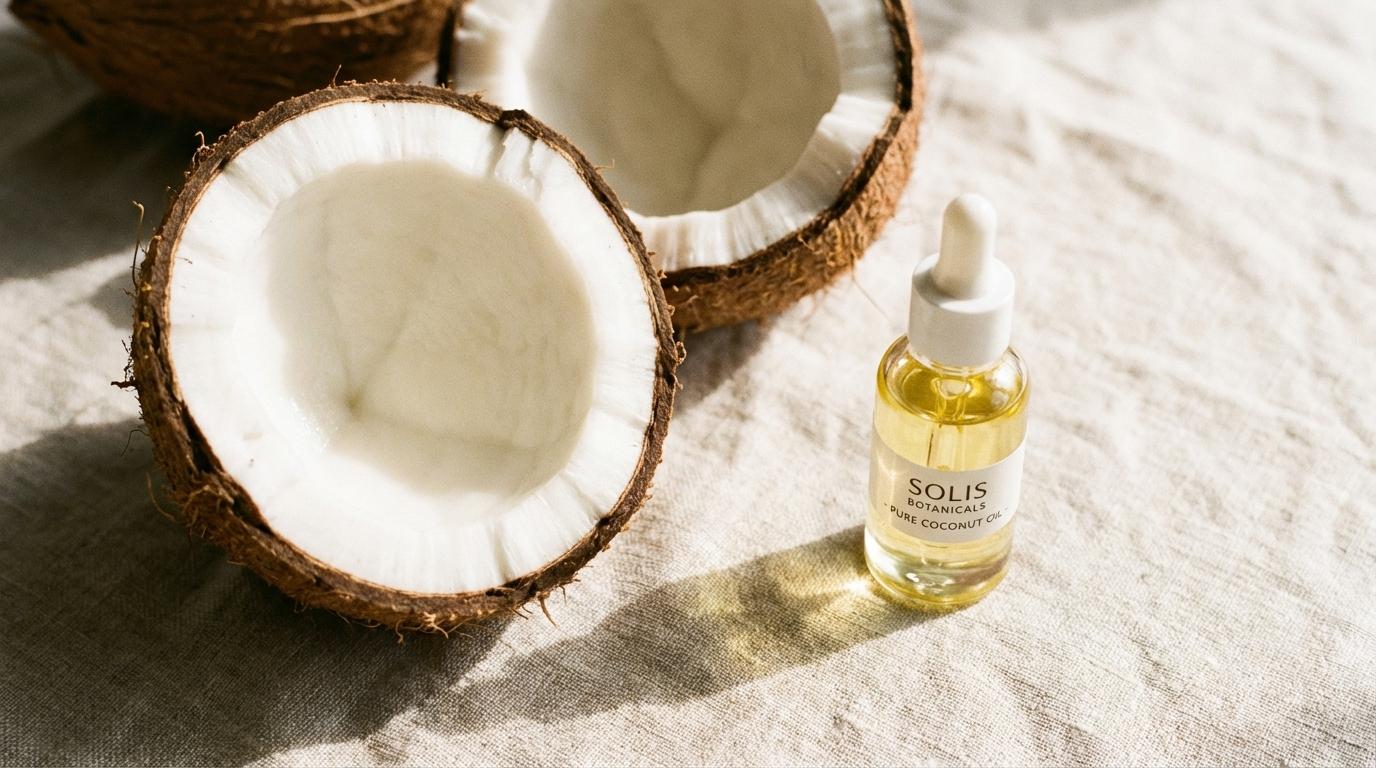
Have you ever wanted the moisturizing benefits of coconut oil without the guaranteed breakout that follows? I spent years assuming my skin just hated all oils, avoiding anything that even mentioned coconut on the label. Turns out I was avoiding the wrong thing this whole time.
Tricaprylin is derived from coconut oil, but it behaves completely differently on your skin. Understanding this distinction could open up a whole category of products you have been unnecessarily skipping.
What Tricaprylin Actually Is
Tricaprylin forms when glycerin bonds with three molecules of caprylic acid, a fatty acid that naturally occurs in coconut and palm kernel oils. The process essentially extracts specific components from coconut oil while leaving behind the stuff that clogs pores.
The result is a lightweight oil that stays fluid, resists oxidation, and tends to sit on your skin surface rather than hardening inside pores. Skincare databases give tricaprylin a comedogenic rating of 1 out of 5, which is about as low as oils get. Compare that to whole coconut oil, which sits at a 4 and clogs pores like it is getting paid for it.
The small, lightweight molecules make all the difference. They provide slip and moisture without the heavy, sitting-on-your-face feeling that makes oily products uncomfortable for people with acne-prone skin.
Why Regular Coconut Oil Breaks You Out
Coconut oil contains a mix of fatty acids with different molecular sizes. The larger ones cannot penetrate your pores easily, so they just sit on top and create a barrier. Sounds good in theory. In practice, this barrier traps sebum, dead skin cells, and bacteria inside your pores. Breakout city.
The beauty industry spent years telling us coconut oil was a skincare solution because it works great for hair and body. But facial skin plays by different rules, especially if you are already acne-prone. Those rules got ignored because coconut oil was cheap and trendy.
Tricaprylin and similar fractionated coconut derivatives solve the problem by removing the larger fatty acid molecules. What remains are the medium-chain triglycerides that your skin can actually use without reacting badly.
The Emollient Benefits Without the Drama
As an emollient, tricaprylin creates a thin smoothing layer on your skin that helps retain moisture. It fills in the tiny gaps between your skin cells, making everything feel softer and look smoother. This is what people wanted coconut oil to do, except tricaprylin actually delivers.
The texture is silky without being greasy, similar to how squalane provides lightweight moisture. Products containing tricaprylin spread easily, absorb reasonably fast, and do not leave that film you feel with heavier oils. If you have tried oil-based products and hated how they sat on your skin, tricaprylin-based formulas might work better for you.
It also works well as a carrier for other ingredients. Brands use it in facial moisturizers, serums, cleansing oils, and even setting sprays. The fact that it appears in so many product types tells you something about its versatility.
Who Should Look for This Ingredient
If coconut oil on your face has ended badly before, tricaprylin gives you another option. You do not have to avoid every product that mentions coconut in any form. You just have to know which forms work for facial skin and which do not.
Oily and combination skin types often do well with tricaprylin because it moisturizes without adding to the oil slick. Your skin still needs hydration even when it produces excess sebum. Using lightweight emollients like tricaprylin helps balance things out instead of either stripping your skin or overloading it.
Sensitive skin folks can usually tolerate tricaprylin well. Research and long-term market use show low risk for irritation or sensitization. Obviously patch test if you react to everything, but the odds are better than with many other oil-based ingredients.
Tricaprylin Versus Other Coconut Derivatives
You will see several coconut-derived ingredients on skincare labels. Here is how they compare.
Caprylic/capric triglyceride is the most common one and very similar to tricaprylin. Same deal: lightweight, non-comedogenic, excellent emollient properties. If you cannot find tricaprylin specifically, caprylic/capric triglyceride is basically interchangeable for practical purposes.
Coco-caprylate spreads even faster and feels similar to silicones without actually being silicone. Brands use it as a dimethicone alternative when they want a silky finish from plant-based ingredients. Also non-comedogenic and suitable for breakout-prone skin.
Fractionated coconut oil is the general term for any of these processed versions. When you see this on a label, it usually means caprylic/capric triglyceride. The fractionation process removes the problematic fatty acids while keeping the skin-friendly ones.
Reading Labels for the Good Stuff
Ingredient lists can be confusing when multiple coconut derivatives exist. Here is what to look for and what to avoid.
Good signs: Tricaprylin, caprylic/capric triglyceride, coco-caprylate, fractionated coconut oil. These are processed to be skin-friendly and will not clog pores for most people.
Caution signs: Cocos nucifera (coconut) oil, virgin coconut oil, cold-pressed coconut oil. These are the whole, unprocessed versions that cause problems for acne-prone skin. They still work fine for body and hair products, just keep them away from your face.
Middle ground: Coconut alkanes and other highly processed derivatives also tend to be safe, but they are less common than the triglyceride versions.
Finding Affordable Products With Tricaprylin
Good news: tricaprylin and its relatives show up in drugstore products, not just expensive boutique brands. The ingredient itself is not costly to produce, so premium pricing usually comes from other factors in the formula.
Check the ingredient lists on lightweight moisturizers, cleansing balms, and oil-free hydrating products. Many budget-friendly brands include caprylic/capric triglyceride in their formulas. The Ordinary, CeraVe, and Neutrogena all have products featuring these ingredients without charging a premium.
When comparing products, look at where the coconut derivative falls on the ingredient list. Closer to the top means more of it in the formula. If it appears near the bottom after all the preservatives, it is probably not contributing much to the product’s performance.
Making Peace With Coconut in Skincare
I wasted years reading “coconut” on any label and immediately putting the product back. That blanket avoidance kept me from using some genuinely helpful formulas. Learning the difference between whole coconut oil and processed derivatives changed how I shop for skincare.
Tricaprylin and similar ingredients let you have the conditioning benefits of coconut without the consequences. Your skin gets moisture, slip, and smoothness. Your pores get left alone. Everyone wins except the companies still pushing raw coconut oil for facial use.
Check your current products. You might already be using tricaprylin or caprylic/capric triglyceride without realizing it. If those products have been working well for your skin, now you know one reason why.