
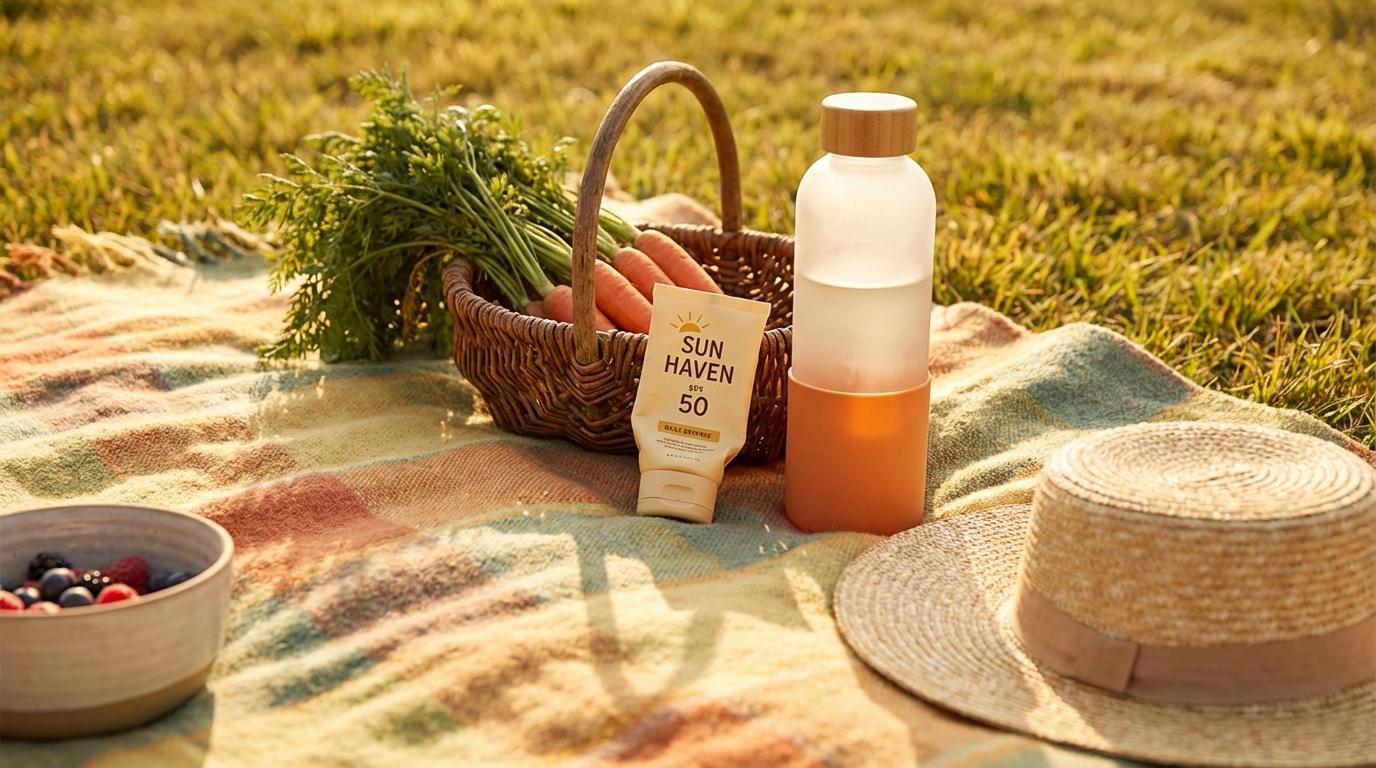
Pinterest boards and natural beauty blogs claim carrot seed oil has an SPF of 38 to 40, making it a natural sunscreen alternative. This claim is dangerously wrong, and using carrot seed oil instead of actual sunscreen will leave your skin completely unprotected from UV damage.
I get why the idea is appealing. Sunscreen can be expensive, it sometimes leaves white cast, and the ingredient lists look intimidating. Finding a natural oil that supposedly does the same job sounds perfect. But the SPF claims for carrot seed oil come from a single deeply flawed study that the skincare community has unfortunately repeated without questioning for years.
Where the SPF 40 Claim Came From
The number traces back to a 2009 study published in Pharmacognosy Magazine. Researchers tested various plant oils using an in-vitro spectrophotometric method, basically measuring how much UV light the oils absorbed when spread on a quartz plate. Carrot seed oil showed some UV absorption properties in this lab setup.
The massive problem is that this testing method does not translate to real-world sun protection. SPF testing for actual sunscreens involves applying products to human skin and measuring how long it takes for that skin to burn compared to unprotected skin. The in-vitro method used for the carrot seed oil study skipped this entirely. It just looked at whether the oil absorbed some light in a petri dish situation.
No dermatologist or cosmetic chemist considers that 2009 study valid evidence for carrot seed oil as sun protection. It has never been replicated. Real SPF testing has never been performed. The claim persists only because it got copy-pasted across the internet by people who did not read beyond the abstract.
Why Natural Oils Cannot Replace Sunscreen
Even if carrot seed oil did absorb some UV radiation, there is no way to apply enough of it evenly enough to provide meaningful protection. SPF ratings are based on applying 2 milligrams of product per square centimeter of skin. That is a lot. Most people apply about a quarter of that amount of regular sunscreen, which is why real-world protection is always lower than the bottle claims.
Imagine trying to apply that much oil to your face every two hours. Your skin would be completely saturated and greasy. The oil would not stay in place. It would migrate into your eyes. It would transfer onto everything you touch. And even then, you would not have anything close to even coverage because oils do not form the kind of uniform film that sunscreen actives do.
Sunscreens work because their active ingredients, whether mineral like zinc oxide or chemical like avobenzone, are specifically designed to either reflect or absorb UV radiation consistently across the applied area. They are formulated to stay on skin in a stable layer. Natural oils simply cannot do this regardless of whatever UV absorption properties they might technically have.
The Real Danger of This Misinformation
This is not just about suboptimal skincare. Using carrot seed oil instead of sunscreen can cause real harm. UV exposure causes DNA damage that accumulates over time, leading to premature aging and increasing skin cancer risk. People who believe they are protected when they are not will stay in the sun longer and expose themselves to more damage than if they knew they were unprotected.
I have seen posts from people who used natural oil “sunscreens” and got severe burns. They trusted the SPF claims they read online and paid for it with blistered, peeling skin. Some of them were in their teens or early twenties, adding to their lifetime UV exposure during years that matter most for cancer prevention.
This misinformation is especially frustrating because affordable, effective sunscreens exist. You do not need to spend a fortune on sun protection. Drugstore mineral sunscreens work just fine. The budget-friendly options for basic skin protection are accessible to most people if they know what actually works.
What Carrot Seed Oil Can Actually Do
Setting aside the bogus SPF claims, carrot seed oil does have legitimate uses in skincare. It contains beta-carotene, vitamin E, and various fatty acids that can benefit skin when used appropriately. The antioxidant content may help neutralize some free radical damage after UV exposure, which is not the same as preventing that exposure in the first place.
The oil has a slightly earthy, herbal scent and a yellow-orange color from its carotenoid content. It absorbs reasonably well for a facial oil and works fine as part of a nighttime moisturizing routine. Some people find it helpful for dry or mature skin that needs extra lipid support.
If you want to use carrot seed oil, use it at night after you have properly washed off your actual sunscreen. Think of it as a nourishing treatment, not protection. It belongs in the same category as rosehip oil or other botanical facial oils: nice to have, potentially beneficial, but absolutely not a substitute for proven sun protection.
Choosing Real Sunscreen Instead
The best sunscreen is one you will actually use every day. If you hate the texture of a particular formula, you will skip it. If it leaves white cast, you will avoid it. Find something you genuinely do not mind applying, even if it takes trying a few options. Your future skin will thank you for the effort.
For everyday use, SPF 30 to 50 with broad-spectrum UVA and UVB protection is plenty. Mineral sunscreens with zinc oxide tend to have less irritation potential if your skin is sensitive. Chemical sunscreens absorb better and disappear into skin more completely if white cast is your issue. Combination formulas exist that include both types of filters.
Reapplication matters more than initial SPF number. An SPF 30 reapplied every two hours protects better than SPF 50 applied once in the morning and forgotten. Keep a small bottle in your bag. Set a phone reminder if you need to. Make it easy enough that you actually do it.
What About Other Natural SPF Claims
Carrot seed oil is not the only natural product with fake SPF claims floating around. Coconut oil, raspberry seed oil, and wheat germ oil have all been hyped as natural sun protection at various points. None of them provide reliable SPF either. The same issues apply: inadequate testing, inability to form stable protective films, and no way to achieve proper coverage.
Some natural ingredients do have legitimate supporting roles in sun protection. Antioxidants like vitamin C and E can help reduce free radical damage from UV exposure. Green tea extract has been studied for its photoprotective properties when used alongside real sunscreen. But these are always supplements to actual sunscreen, never replacements for it.
If you see a product marketed as natural sunscreen without an FDA-approved active ingredient and proper SPF testing, it is not sunscreen. It does not matter how many plant extracts it contains or what claims the marketing makes. Without zinc oxide, titanium dioxide, or approved chemical UV filters, it cannot protect you from the sun in any meaningful way.
Why This Myth Persists
The carrot seed oil SPF myth keeps spreading because it tells people what they want to hear. Natural is better, chemicals are bad, ancient wisdom trumps modern science. These are appealing narratives even when they are not accurate. Add in some sketchy citations that look scientific enough if you do not actually read them, and the misinformation propagates.
Wellness influencers and natural beauty bloggers often repeat these claims without fact-checking because the claims fit their brand aesthetic. They may genuinely believe what they are sharing. That does not make it less dangerous. Intent does not protect skin from UV damage.
Question SPF claims that seem too good to be true. If an ingredient really provided SPF 40 sun protection, pharmaceutical companies would have already isolated it, standardized it, and sold it for billions of dollars. The fact that carrot seed oil remains a niche botanical oil rather than a sunscreen active ingredient tells you everything you need to know about those viral claims.
Using Carrot Seed Oil Safely
If you already bought carrot seed oil based on the SPF hype, you can still use it. Just use it correctly. Nighttime facial oil, mixed into moisturizer, or as a body oil when sun exposure is not a factor. Store it away from light and heat to prevent the antioxidants from degrading. It is a perfectly fine ingredient when you do not expect it to do things it cannot do.
Pair it with actual sun protection during the day. Apply your real sunscreen, let it set, then add whatever oils or serums you want on top if needed. Or skip the oil entirely during daytime and keep your routine simpler. Carrot seed oil is not essential. It is just one option among many botanical oils, and none of them replace sunscreen.