
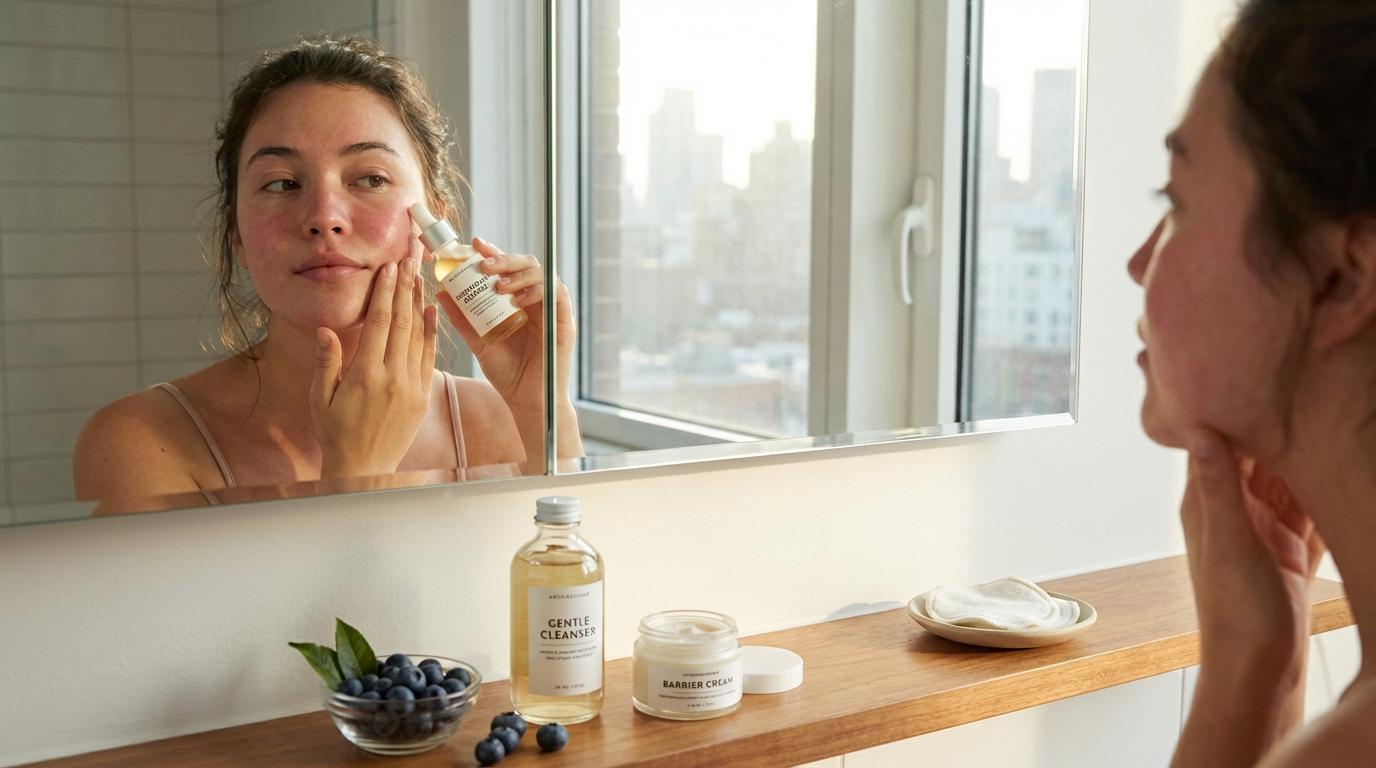
If you live in a city, your skin is dealing with more than just stress and late nights. Every time you step outside, tiny particles from car exhaust, industrial emissions, and even cigarette smoke are settling onto your face. These particles are small enough to penetrate your pores and cause real damage over time.
I know that sounds alarming, but here’s the good news: protecting your skin from pollution isn’t complicated. You don’t need a 12-step routine or expensive specialty products. What you need is a solid understanding of what pollution actually does to your skin and a simple strategy to counteract it.
What Pollution Actually Does to Your Skin
Let’s get a bit science-y here (I promise to keep it digestible). The main culprits in urban air are particulate matter (PM), polycyclic aromatic hydrocarbons (PAHs), and volatile organic compounds (VOCs). These pollutants create free radicals when they come into contact with your skin.
Free radicals are unstable molecules that damage your skin cells by stealing electrons from healthy molecules. This process, called oxidative stress, breaks down collagen, damages your skin barrier, and accelerates visible aging. Studies have shown that people living in high-pollution areas tend to have more dark spots, wrinkles, and uneven skin tone compared to those in cleaner environments.
The particles themselves are also an issue. PM2.5 particles (those smaller than 2.5 micrometers) can actually penetrate into your pores and cause inflammation. This shows up as dullness, clogged pores, and increased sensitivity.
Your First Line of Defense: Antioxidants
Here’s where it gets interesting. Antioxidants are molecules that neutralize free radicals by donating an electron without becoming unstable themselves. Think of them as peacekeepers that stop the damage before it starts.
The antioxidants with the most research behind them for pollution protection are:
Vitamin C (L-ascorbic acid): This is probably the most studied antioxidant in skincare. It neutralizes free radicals, brightens skin, and even helps boost your sunscreen’s effectiveness. Look for serums with 10-20% concentration. Apply it in the morning under your sunscreen.
Vitamin E: Often paired with vitamin C because they work synergistically. Vitamin E is fat-soluble and protects your cell membranes from oxidative damage.
Niacinamide: This B vitamin strengthens your skin barrier and has anti-inflammatory properties. It’s gentle, works well with most other ingredients, and is usually affordable.
Ferulic acid: Often found in vitamin C serums, it stabilizes the formula and doubles down on the antioxidant protection.
You don’t need all of these. A vitamin C serum in the morning gives you solid protection. If your budget allows, look for one that combines vitamin C with vitamin E and ferulic acid.
Cleansing: Getting Pollution Off Your Skin
All the antioxidants in the world won’t help if you’re not actually removing pollutants from your face. This is where proper cleansing becomes essential, not optional.
Here’s the thing: pollution particles can stick to your skin through sebum, sweat, and makeup. A quick splash of water won’t cut it. But you also don’t want to over-cleanse and damage your barrier.
The solution? Double cleansing at night. Start with an oil-based cleanser or micellar water to dissolve the oily layer where pollutants hide. Follow with a gentle water-based cleanser to remove any remaining residue.
This doesn’t mean you need to scrub aggressively. Gentle, thorough cleansing is the goal. Massage your cleanser for at least 60 seconds to ensure you’re actually lifting those particles.
In the morning, you can keep it simple. A gentle cleanser or even just water is fine since you’re not dealing with a day’s worth of pollution buildup.
Building Your Barrier
A healthy skin barrier acts like a shield, making it harder for pollutants to penetrate and cause damage. When your barrier is compromised, you’re more vulnerable to everything.
Ingredients that support barrier health include:
Ceramides: These are lipids naturally found in your skin. Topical ceramides help fill in gaps in your barrier.
Hyaluronic acid: Keeps your skin hydrated, which is essential for barrier function.
Squalane: A lightweight oil that mimics your skin’s natural sebum and reinforces the moisture barrier.
Look for a moisturizer that contains one or more of these ingredients. Apply it morning and night as the final step in your routine (before sunscreen in the AM).
The Simple Pollution Protection Routine
Let me break this down into something you can actually do:
Morning:
- Gentle cleanser (or water if your skin is dry)
- Vitamin C serum
- Moisturizer with barrier-supporting ingredients
- Sunscreen (SPF 30+)
Evening:
- Oil cleanser or micellar water
- Water-based cleanser
- Your regular serums or treatments
- Moisturizer
That’s it. Four products in the morning, three to four at night. Nothing exotic or expensive required.
What About Anti-Pollution Products?
You’ve probably seen products marketed specifically as “anti-pollution.” Here’s the honest truth: most of these are regular products with added antioxidants and a higher price tag. The marketing is often better than the product.
You don’t need specialty products. What you need is consistent antioxidant use, proper cleansing, and barrier support. If a product delivers those things, it’s an anti-pollution product, regardless of what the label says.
Final Thoughts
Living in a city doesn’t mean accepting dull, damaged skin. The key is understanding that pollution protection isn’t about adding more products; it’s about being strategic with the products you already use.
Antioxidants in the morning, thorough cleansing at night, and consistent barrier care. That’s the formula. Start there, stay consistent, and your skin will be equipped to handle whatever the city throws at it.