
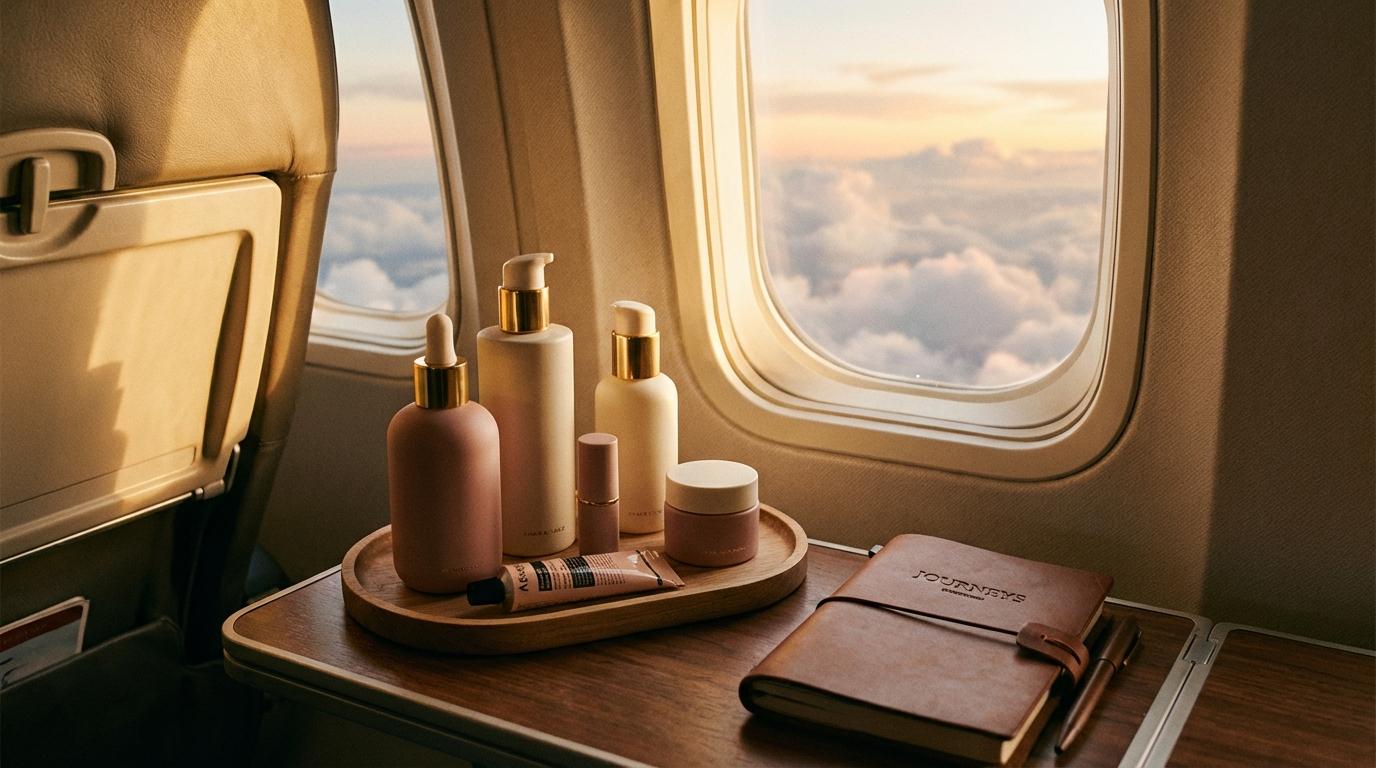
The cabin crew just closed the doors, and your skin already knows what is about to happen! Something about flying turns even the most hydrated, happy skin into a flaky, tight disaster by the time you land. It is not your imagination, and it is not just travel stress (though that definitely does not help). Airplane cabins are genuinely hostile environments for skin, and understanding exactly why helps you fight back effectively.
I spent years wondering why I always looked absolutely wrecked after flights, even short ones. Puffy eyes, dry patches, that weird combination of oily T-zone and desert cheeks. Turns out the answer involves physics, engineering decisions made by people who definitely were not thinking about skincare, and some basic biology about how skin actually works.
The Humidity Situation Is Wild
Ground level air typically sits around 40 to 70 percent humidity, depending on where you live. Airplane cabins? They hover around 10 to 20 percent humidity. That is drier than most deserts. The Sahara averages around 25 percent humidity, so you are literally breathing dryer air at cruising altitude than you would walking through desert sand dunes.
Why so dry? Aircraft cabins pull in air from outside the plane at high altitudes where the air contains almost zero moisture. The air gets heated and pressurized, but adding humidity would create massive problems (think condensation, corrosion, mold growing in the walls). So airlines prioritize the plane not rusting over your skin comfort. Fair, I guess, but it does not make your face feel any better.
Your skin loses moisture through evaporation constantly, even when you are just sitting there. In normal humidity, this happens at a manageable rate. In airplane-level dryness, the process accelerates dramatically. Water molecules basically flee your skin into the parched cabin air, leaving you dehydrated regardless of how much water you drink (though drinking water still matters, more on that later).
Recirculated Air Makes Everything Worse
That air you are breathing is not just dry, it is also recycled. Modern aircraft use HEPA filters that catch most bacteria and viruses (good news), but the air still circulates through the cabin multiple times per flight. Every time it passes through the ventilation system, it gets a little drier.
The constant airflow also creates an almost wind-like effect across your skin, speeding up moisture loss even more. You know how windy days make your lips chap faster? Same principle, just less obvious because you are not outside. The directed air vents most people point at their faces to cool down? Those are moisture-stripping cannons aimed directly at your skin.
On top of all this, the reduced oxygen levels at cabin pressure mean your skin is not getting quite as much oxygen as usual. Blood circulation slows slightly, which contributes to that dull, tired look many people notice after flying. Your skin cells are just not operating at full capacity up there.
Pressure Changes Do Strange Things
Airplane cabins are pressurized to simulate roughly 6,000 to 8,000 feet altitude, even when you are cruising at 35,000 feet. This reduced pressure affects your body in ways you might not expect. Gases in your body expand slightly (which is why your ears pop and your stomach might feel weird), and this includes tiny pockets of air in your skin.
The pressure changes can cause facial puffiness, especially around the eyes. Fluid retention shifts around your body when you are sitting still for hours at reduced pressure, and some of it settles in your face. Combined with the dehydration happening at the surface, you get that strange puffy-but-dry combination that photographs terribly and feels even worse.
Rapid pressure changes during takeoff and landing can temporarily affect how products absorb into your skin too. Some people notice their moisturizer or serum feels different on a plane, and pressure fluctuations might partially explain this. Your skin barrier behaves slightly differently under these conditions.
What Actually Helps During Flights
Knowing why airplane skin happens gives you actual strategies to combat it, beyond just hoping for the best and dealing with the aftermath later.
Skip makeup for the flight whenever possible. Foundation and powder just trap bacteria against dehydrating skin, creating a recipe for mid-flight clogged pores. If you must wear something, keep it minimal and focus on skincare layers underneath. A tinted moisturizer or light BB cream causes less drama than full coverage.
Hydrating mists sound like a good idea but actually make things worse without follow-up. Spraying water on your face in extremely dry air just gives the environment more moisture to pull away, leaving you drier than before. If you use a mist, immediately follow it with a moisturizer or facial oil to seal that hydration in. Otherwise, skip the mist entirely.
Sheet masks get weird looks from your seatmates but genuinely help during long flights. The physical barrier of the mask prevents evaporation while the serum soaks into your skin over 15 to 20 minutes. Pick a deeply hydrating formula with hyaluronic acid or centella and just own the moment. People will be jealous of your landing skin.
Heavy moisturizer is your best friend at altitude. Even if you normally use lightweight formulas, flying is the time to go thick and occlusive. Look for ingredients like squalane, shea butter, or ceramides that create a protective seal on your skin. Apply liberally after cleansing or masking, and do not be shy about reapplying during long flights. Your travel skincare routine should lean richer than your everyday approach.
The Water Drinking Debate
Everyone says to drink tons of water on flights, and they are not wrong exactly, but the relationship between hydration and skin is more complicated than “drink water, get hydrated skin.”
Your body prioritizes hydration for vital organs before bothering with skin, so drinking water helps your overall function but does not directly plump up your face. Still, being systemically dehydrated makes everything worse, so staying on top of water intake matters. Aim for at least 8 ounces per hour of flight time, more if you are drinking alcohol or caffeine (which both have diuretic effects).
Alcohol deserves its own warning here. That free glass of wine might seem like a nice travel treat, but alcohol dehydrates you internally while the cabin air dehydrates you externally. Double whammy. If you do drink on planes, match each alcoholic beverage with at least one full glass of water. Your morning-after skin will show gratitude.
Caffeine is slightly less problematic but still contributes to dehydration. A coffee at the start of a long flight is fine; pounding espressos throughout creates problems. Balance is the goal, not total restriction (flying is stressful enough).
Before You Board
Pre-flight skincare sets you up for success or failure. Do not board with a bare face, even if you plan to cleanse and do a full routine once seated. Start with well-moisturized skin protected by an occlusive layer, so the dehydration process has to work through that barrier first.
If you typically use active ingredients like retinol or acids, skip them the night before flying. These can make skin more sensitive and prone to moisture loss, which is the last thing you need when heading into desert-dry conditions. Stick to gentle, hydrating products in the 24 hours before your flight.
Consider applying a light layer of facial oil before heading to the airport. Oil creates an occlusive barrier that slows down transepidermal water loss, buying your skin some time in the hostile cabin environment. Even people with oily skin can benefit from this approach on planes, since the goal is protection rather than moisturizing.
Post-Flight Recovery Mode
Landing does not mean the damage is done. Your skin needs recovery time to bounce back from the in-flight assault, and how you treat it in the hours after landing matters.
First priority: gentle cleansing. Get all the flight grime, recycled air residue, and heavy products off your face. Use a mild cleanser that will not strip already compromised skin. Now is not the time for foaming cleansers or exfoliating washes.
Follow with serious hydration layers. Think toner, essence, serum, moisturizer, the full routine. If your skin looks particularly sad, consider a hydrating mask that night. Sheet masks with centella, aloe, or hyaluronic acid help calm irritation while replenishing moisture. Glycerin-based products work especially well for pulling moisture back into thirsty skin.
Skip actives for at least 24 hours post-flight. Your barrier has been stressed and needs time to recover before you throw retinol or strong acids at it. Stick to hydrating, soothing ingredients until your skin looks and feels normal again.
Sleep is part of recovery too. Jet lag makes this complicated, but try to get good rest as soon as realistically possible. Your skin repairs itself during sleep, and it has extra work to do after flying.
Long-Haul Survival Strategies
Short flights are annoying for skin but manageable. Long-haul flights (eight hours plus) require more strategic planning.
Bring a full travel skincare kit, not just one moisturizer. Include cleanser, hydrating toner, serum, moisturizer, facial oil, and lip balm at minimum. Some people add eye cream and hand cream to the lineup. Everything should be under 100ml for security, obviously.
Time your skincare during the flight. Cleanse and apply a hydrating treatment about 2 hours into the flight, once the initial cabin drying has happened. Reapply moisturizer or oil every few hours. Do another cleanse and hydration round about 2 hours before landing to give products time to absorb before you arrive.
Stay away from the direct air vents. Pointing that nozzle at your face for comfort just accelerates moisture loss. Use a neck pillow or blanket position to stay comfortable without the direct airflow assault.
Move around when possible. Circulation helps everything, including skin function. Getting up to walk the aisle every couple hours helps reduce puffiness and keeps blood flowing to your skin. Plus it reduces the risk of blood clots, so win-win.
Frequent Flyer Reality Check
If you fly regularly for work or just love traveling, accepting some baseline skin impact is realistic. You cannot completely prevent the effects of repeatedly exposing your skin to extreme dryness, even with perfect in-flight care.
What you can do is prioritize barrier health in your regular routine. Use products with ceramides, fatty acids, and other barrier-supporting ingredients daily, not just when traveling. A strong, healthy skin barrier holds up better to occasional assaults like air travel.
Consider investing in a good facial humidifier for hotel rooms too. Many travelers focus on in-flight skincare but forget that hotel air conditioning is nearly as dehydrating as the plane. Running a portable humidifier while you sleep helps your skin recover from the flight and protects it from continued dryness.
Your skin adapts to some degree over time, but it never fully gets used to the airplane environment. Consistent care before, during, and after flights becomes part of your routine rather than a special occasion thing. The good news is that with practice, you can step off a long-haul flight looking pretty close to human instead of completely wrecked. And honestly, that is a win.