
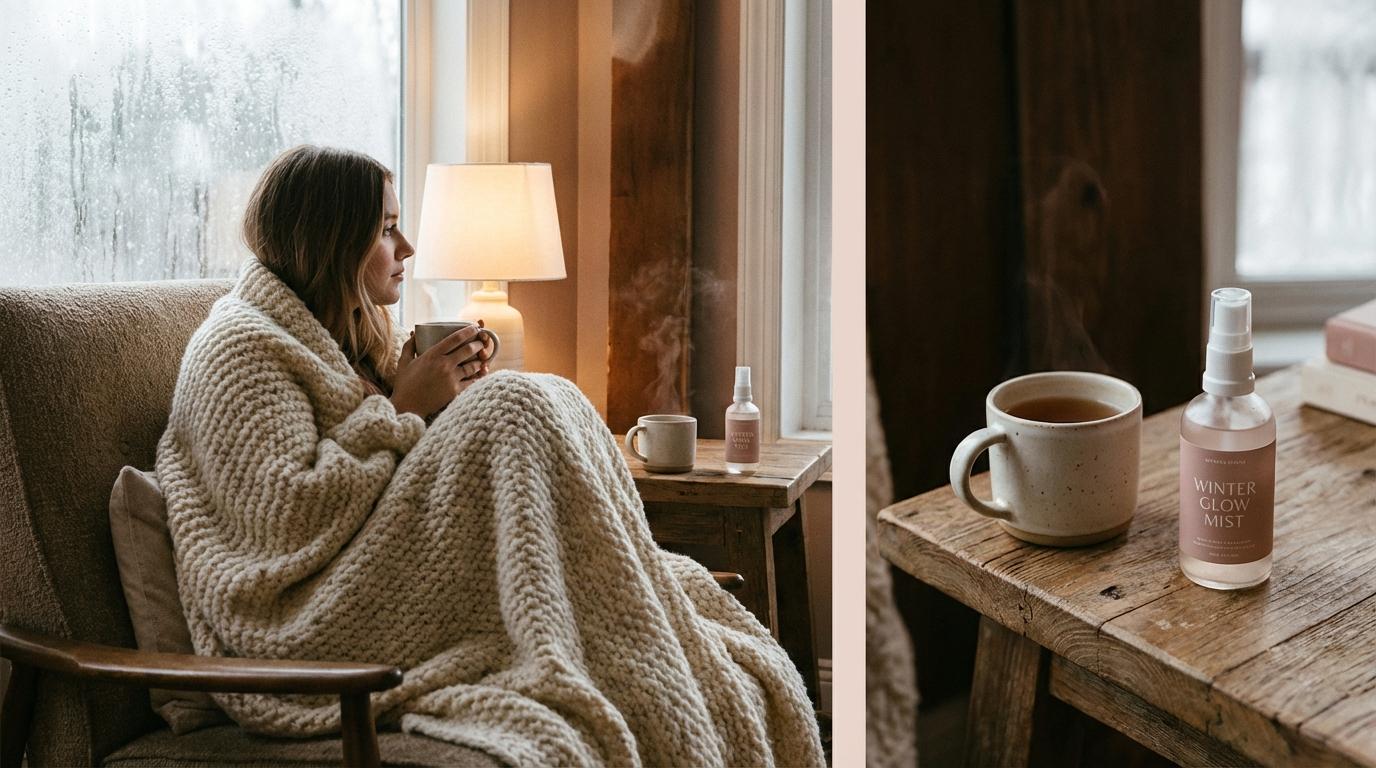
Stop blaming your skincare products when December rolls around and your skin suddenly starts acting like it belongs to someone else. That once-reliable routine? It’s not broken. The problem is the air itself.
Winter changes everything about how your skin behaves. And until you understand exactly what’s happening, you’ll keep throwing money at products that can’t fix the actual issue.
Low Humidity Is Wrecking Your Barrier
Here’s the reality. Cold air holds less moisture than warm air. Way less. That means the humidity levels outside plummet, and your skin notices immediately.
Your skin barrier is basically a brick wall made of skin cells held together by lipids. In summer, there’s enough ambient moisture in the air to keep that wall intact. In winter? The dry air literally pulls water out of your skin through evaporation.
This isn’t dramatic. It’s physics. The American Academy of Dermatology confirms that low humidity is one of the primary triggers for dry, compromised skin during colder months.
When your barrier gets weak, everything else goes wrong. Redness increases. Products sting when they never did before. Breakouts show up even though your skin feels dry. It’s chaos.
Indoor Heating Makes It Worse
You escape the cold. Great. But that heated indoor air is doing just as much damage as the cold outdoor air.
Central heating, radiators, forced air systems. They all have one thing in common: they make indoor humidity drop to levels that would feel at home in a desert. We’re talking 20-30% humidity when your skin actually needs 40-60% to stay comfortable.
Think about it. You spend 8 hours sleeping in a heated room. Another 8 hours working in a heated office. Your skin is getting hammered by dry air for most of your day.
Research published in the International Journal of Cosmetic Science has shown that prolonged exposure to low-humidity environments significantly increases transepidermal water loss (TEWL). Translation: your skin loses moisture faster than it can replace it.
Cold Wind Does a Number on Your Capillaries
That rosy glow after being outside in the cold? It’s not cute. It’s your blood vessels freaking out.
When you step into freezing temperatures, the tiny blood vessels in your face constrict to preserve core body heat. Then you go inside, they dilate rapidly. This constant constriction-dilation cycle stresses your capillaries over time.
For some people, especially those with fair skin or rosacea tendencies, this repeated stress can lead to permanently dilated capillaries. Those little red lines that don’t go away? Often winter damage that accumulated over years.
Wind adds another layer. It strips away the thin layer of moisture on your skin’s surface even faster than still cold air. Walking into a cold wind is essentially giving your face a forced exfoliation it didn’t ask for.
The National Library of Medicine has documented how environmental factors including wind and temperature extremes contribute to skin sensitivity and vascular changes.
Your Summer Routine Won’t Cut It
If you’re still using your July routine in January, that’s the first thing that needs to change.
Summer skin needs lightweight hydration and oil control. Winter skin needs barrier repair and moisture retention. Different problems require different solutions.
Here’s what actually needs to happen:
Switch your cleanser. That foaming gel that felt refreshing in August? It’s stripping what little oil your skin is producing. Move to a cream or oil-based cleanser that doesn’t leave your face feeling tight.
Add occlusives. Hyaluronic acid alone won’t save you in winter. HA pulls moisture from the air. When the air is dry, it can actually pull moisture from your skin instead. You need to seal everything in with something heavier. Squalane, ceramides, or even a thin layer of petroleum jelly at night.
Reduce actives. That retinol you tolerate fine in summer might destroy you in winter. Your barrier is already compromised. Piling on exfoliating acids or strong retinoids is adding insult to injury. Cut the frequency in half, or take a break entirely until your barrier recovers.
If you’re dealing with a lot of damage already, the two-week skin reset routine can help you get back to baseline before building up again.
Seasonal Routine Switching Done Right
The transition matters as much as the destination. Don’t wait until your skin is already cracked and flaking to switch things up.
Start adjusting your routine in late fall, before the heating comes on full blast. By the time real winter hits, your skin should already be adapted to richer products.
Same goes for spring. Don’t keep slathering on heavy creams when the humidity starts rising. Transition back to lighter products gradually as the weather warms.
A general timeline that works for most people:
- October: Start adding a heavier moisturizer at night. Keep your regular one for morning.
- November: Switch to cream cleanser full time. Add an occlusive layer.
- December-February: Full winter routine. Minimal actives, maximum hydration.
- March: Start reintroducing lighter products. Resume actives at reduced frequency.
- April: Transition complete. Back to your regular routine.
This isn’t set in stone. Pay attention to your actual environment. If you live somewhere that stays humid through winter, you might not need as dramatic a shift. If you’re in the frozen north with indoor heating running constantly, you might need to go even heavier.
Building Winter Skin Habits That Stick
The real goal isn’t just surviving this winter. It’s building habits that protect your skin every winter going forward.
Get a humidifier. Not optional. Running one in your bedroom while you sleep makes a measurable difference. Aim for 40-50% humidity. Your skin, your sinuses, and honestly your houseplants will thank you.
Protect before you go out. Apply a rich moisturizer at least 20 minutes before heading into the cold. This gives it time to absorb and form a protective layer. Wear a scarf over your lower face when it’s windy.
Drink more water. Yes, this actually matters. Hydration from the inside supports hydration on the outside. When it’s cold, you don’t feel as thirsty, so you drink less. Set reminders if you have to.
Don’t take hot showers. I know. Cold outside, hot shower feels amazing. But hot water strips your natural oils faster than anything. Keep it lukewarm, especially for your face. And definitely don’t let the water beat directly on your face.
Layer products correctly. Thinnest to thickest. Water-based serums first, then oils, then occlusives. Each layer should trap the one below it.
If you survived extreme heat last summer, you know how weather affects routines. The approach is similar to what works during heat waves, just in reverse. Instead of controlling oil and preventing meltdown, you’re retaining moisture and protecting your barrier.
Signs You Need to Adjust Your Approach
Your skin will tell you when things aren’t working. Listen to it.
Stinging with normal products: Your barrier is compromised. Strip back to basics. Gentle cleanser, rich moisturizer, nothing else until the stinging stops.
Flaking but also oily: Your skin is overcompensating for dryness by producing more oil. Focus on hydration, not oil control.
Makeup sits weird: Dry patches make everything cake up. You need more prep with hydrating products, not different makeup.
Sudden sensitivity or redness: Could be barrier damage, could be early rosacea trigger. Cut all actives immediately and see if it calms down.
The Bottom Line
Winter isn’t a mystery. It’s a predictable environmental assault on your skin. Low humidity, indoor heating, cold wind, and temperature fluctuations all work together to destroy your barrier and mess with your complexion.
The fix isn’t complicated. Switch to gentler cleansing, heavier moisturizing, and protective measures. Time the transition properly so you’re not playing catch-up after the damage is done. Build habits that carry you through every winter without drama.
Your skin can handle seasons. But only if you give it the right support at the right time. Stop fighting winter with summer products and wondering why nothing works.