
Everyone says chin acne is purely hormonal, and there’s nothing you can do about it. That’s only half true, and the other half is where you actually have control.
If you’ve been dealing with chin breakouts that seem to vanish for a few weeks only to return with a vengeance, you know the cycle I’m talking about. It’s maddening. You think you’ve finally cracked the code, and then bam. New bumps, same spot, same frustration.
Let’s break down why this happens and what actually works to stop it.
Why Your Chin Keeps Breaking Out
Your chin is basically hormone central. It has more androgen receptors than most of your face, which means when your hormones fluctuate, your chin feels it first. This is why breakouts often pop up right before your period or during stressful times.
But here’s what most people miss: hormones set the stage, but they’re rarely the whole show.
Other factors that keep the cycle going:
- Touching your chin constantly (you probably don’t even notice you’re doing it)
- Phone bacteria transferring to your jawline
- Toothpaste residue irritating the skin around your mouth
- Pillowcases that haven’t been washed in weeks
- Heavy lip balms or glosses migrating to your chin
The hormonal component gets all the attention. The behavioral stuff? That’s what actually keeps the cycle spinning.
The Touching Habit Nobody Wants to Admit
I’m calling this out because it’s a bigger deal than anyone acknowledges.
Track yourself for one day. Just one. Count how many times your hand goes to your chin. Resting it on your hand during Zoom calls. Picking at a bump you felt. Rubbing the area when you’re thinking.
You’ll be horrified.
Your hands carry bacteria, oils, and debris. Every touch introduces new contaminants to pores that are already struggling. And if you’re picking at existing spots, you’re spreading bacteria and creating inflammation that leads to more breakouts.
This isn’t about willpower. It’s about awareness. Once you see how often you do it, you can start catching yourself.
Some tactics that work:
- Keep your hands busy (fidget toys exist for a reason)
- Apply a spot treatment that reminds you not to touch
- Put a sticky note on your laptop that says “hands off”
- Ask someone to call you out when they see you touching your face
It sounds silly. It works. If you’re tempted to pop a stubborn spot, at least do it properly instead of messing with it all day.
The Hormonal Component: What You Can Actually Do
Yes, hormones matter. No, you’re not powerless.
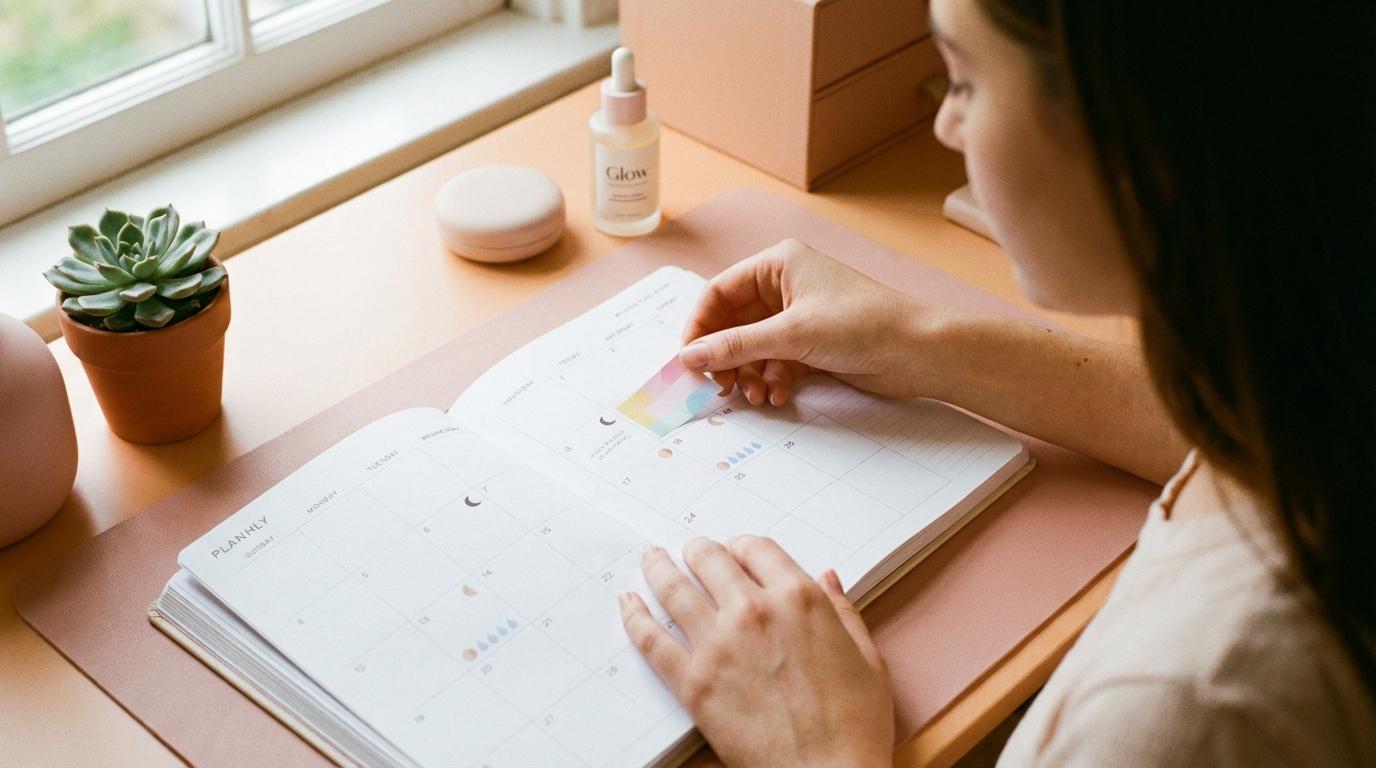
First, figure out if there’s a pattern. Track your breakouts against your cycle for 2-3 months. If acne consistently shows up at the same point in your cycle, you’ve confirmed the hormonal connection. If it’s random, look elsewhere.
For cycle-related chin acne, options include:
Over-the-counter approaches:
- Start treating your chin preemptively a week before your usual breakout window
- Use a retinoid consistently (this takes 3 months minimum to show results)
- Consider niacinamide for inflammation control
Prescription routes:
- Spironolactone (an androgen blocker) is commonly prescribed for hormonal acne
- Certain birth control formulations can help regulate hormonal fluctuations
- Topical retinoids at prescription strength
A dermatologist can test your hormone levels and recommend the right approach. But here’s the thing: if you’re not addressing the behavioral factors too, prescription treatments will only get you halfway there.
Your Targeted Treatment Plan
Generic acne advice doesn’t cut it for chin breakouts. You need a specific strategy.
Morning:
- Gentle cleanser (nothing harsh, your chin doesn’t need extra irritation)
- Niacinamide serum to manage oil and calm inflammation
- Lightweight moisturizer
- SPF (non-negotiable, especially if using any actives)
Evening:
- Double cleanse if wearing makeup or sunscreen
- Alternate between: retinoid (2-3x weekly) and azelaic acid (other nights)
- Moisturizer
- Spot treatment on active breakouts
Weekly:
- Change your pillowcase (minimum once a week, ideally twice)
- Clean your phone screen
- Wash any scarves, masks, or things that touch your chin
Active Ingredients That Target Chin Acne
Not all acne ingredients work the same on hormonal breakouts. Here’s what research actually supports:
Retinoids: The gold standard. They regulate cell turnover, prevent clogged pores, and reduce inflammation over time. According to the American Academy of Dermatology, retinoids are first-line treatment for acne. Start with adapalene (available OTC as Differin) if you’ve never used one before.
Benzoyl peroxide: Kills acne bacteria on contact. Use a lower concentration (2.5-5%) on your chin since the skin there can be more reactive than your forehead or nose.
Salicylic acid: Gets into pores and dissolves the gunk inside. Good for maintenance, not as effective for deep hormonal cysts.
Azelaic acid: Reduces inflammation, kills bacteria, and helps with post-acne marks. Underrated for hormonal acne.
Niacinamide: Controls oil production and strengthens your skin barrier. Won’t stop a breakout in progress but helps prevent new ones.
The Journal of Dermatological Treatment notes that combination therapy (using multiple ingredients strategically) outperforms single-ingredient approaches for persistent acne.
What About Your Diet and Lifestyle?
You’ve probably heard that chocolate causes acne or that cutting dairy will clear your skin overnight.
Reality check: drinking more water won’t fix hormonal acne. Neither will any single dietary change, in most cases.
That said, some research from the Journal of the Academy of Nutrition and Dietetics suggests high-glycemic diets (lots of sugar and refined carbs) may worsen acne for some people. Dairy has also been linked to breakouts in certain studies, though the evidence isn’t conclusive.
If you want to experiment with diet changes, pick one thing and stick with it for 4-6 weeks. Track your skin. Don’t overhaul everything at once or you won’t know what actually helped.
More impactful than diet adjustments:
- Managing stress (easier said than done, but cortisol spikes trigger breakouts)
- Getting enough sleep (skin repair happens overnight)
- Consistent skincare routine (jumping between products disrupts your skin barrier)
When to See a Dermatologist
Not everything can be fixed with over-the-counter products and better habits.
See a derm if:
- Your chin acne leaves scarring
- You get deep, painful cysts that last for weeks
- Nothing has worked after 3 months of consistent effort
- Your breakouts are affecting your mental health
- You suspect an underlying hormonal condition like PCOS
A dermatologist can prescribe treatments you can’t access otherwise: oral antibiotics, hormonal therapies, isotretinoin, or professional-grade topicals.
Breaking the Cycle for Good
The chin breakout cycle feels unbeatable because most people only address one piece of it.
They get a prescription for hormonal acne but keep resting their chin on their hands during every meeting. They buy all the right products but don’t give them enough time to work. They focus on their period week but ignore the stress breakouts that hit randomly.
Breaking the cycle means tackling all the angles simultaneously:
- Understand your hormonal pattern and treat preemptively
- Eliminate the behavioral triggers (touching, dirty pillowcases, phone bacteria)
- Use proven ingredients consistently for at least 3 months
- Don’t pick. Just don’t.
- Get professional help if over-the-counter options aren’t cutting it
Your chin doesn’t hate you. It’s just more hormonally sensitive than the rest of your face, and it needs a smarter approach.
Stop the cycle. Start with what you can control. The rest will follow.