
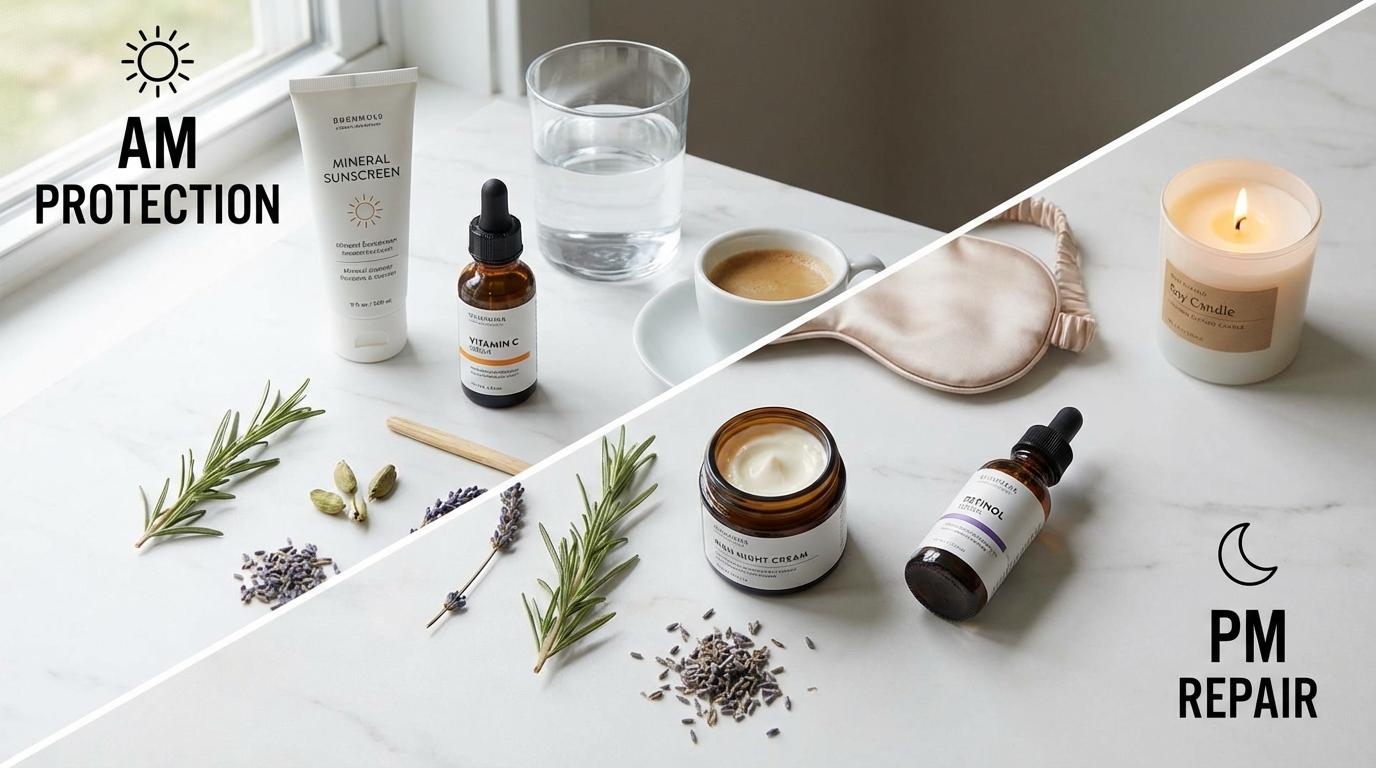
I spent an embarrassing amount of time in college using the exact same products morning and night. Nobody told me that my skin has different jobs depending on the time of day. Once I figured this out, my routine got simpler AND more effective. Plus I stopped wasting money on products I was using wrong.
Here is the deal: daytime skincare protects. Nighttime skincare repairs. When you understand this, everything else makes way more sense.
What Your Skin Does During the Day
During daylight hours, your skin is in defense mode. It is dealing with UV rays, pollution, temperature changes, and whatever else you encounter. Your skin barrier works overtime to keep harmful stuff out and moisture in.
This is why morning routines should focus on:
- Antioxidants: Vitamin C serums neutralize free radicals from UV and pollution. Apply these in the morning so they can actually protect you when you need it.
- Moisturizer: A lightweight formula keeps skin hydrated without feeling heavy under sunscreen and makeup.
- Sunscreen: Non-negotiable. SPF 30 minimum, every single day. This is your most important morning product. Period.
What to skip in the morning? Heavy creams, oils, and most treatment products. You want lightweight layers that protect and play well with whatever comes next.
What Your Skin Does at Night
Sleep is when your skin switches from defense to repair. Blood flow to your face increases. Cell turnover speeds up. Your body produces more collagen and elastin while you rest. This is not marketing fluff. Research on circadian rhythms and skin confirms that cellular repair peaks during sleep.
This means nighttime is when treatment products actually work best:
- Retinol: Speeds cell turnover and helps with everything from acne to fine lines. It also makes skin more sensitive to sun, so nighttime application is essential.
- Acids (AHAs, BHAs): Exfoliating ingredients work better when you are not immediately exposing fresh skin to UV rays.
- Heavier moisturizers and oils: Your skin can actually absorb these while you sleep. No need to worry about makeup or sunscreen layering.
- Treatment serums: Niacinamide, peptides, and other active ingredients have hours to penetrate without interference.
Your nighttime routine can be longer than your morning one. You have time, your skin has time, and there is no rush to get out the door.
Ingredients That Need Sunlight Avoidance
Some ingredients become less effective or even problematic when exposed to sunlight. Knowing which ones need darkness helps you use products correctly and get your money’s worth.
Retinol and retinoids: UV light degrades these ingredients quickly. More importantly, they increase photosensitivity, meaning your skin burns more easily. Always nighttime only, always follow with sunscreen the next morning.
Vitamin C (L-ascorbic acid): This one is tricky. While vitamin C is great for daytime protection, the ingredient itself is unstable and breaks down in light. If your vitamin C serum has turned orange or brown, it is oxidized and less effective. Store it in a dark place and apply in the morning under sunscreen. The Skin Cancer Foundation discusses how vitamin C boosts sunscreen effectiveness.
AHAs (glycolic acid, lactic acid): These remove dead skin cells, leaving fresh skin underneath. That fresh skin is more vulnerable to UV damage. Use at night and be extra diligent about sunscreen for a few days after.
Benzoyl peroxide: Can bleach fabric (goodbye, pillowcases) and increases sun sensitivity. Many people use it at night for these practical reasons alone.
A Budget-Friendly Way to Split Your Routine
You do not need separate products for AM and PM. That gets expensive fast. Here is how I keep costs down while still having different routines:
Cleanser: Same one, morning and night. Unless you wear heavy makeup, you do not need a separate makeup remover. A gentle cleanser handles most situations.
Moisturizer: You can use the same one, or use a lighter version in the morning. If budget is tight, one good moisturizer works for both.
Treatment products: This is where you invest. Pick ONE treatment product to use at night based on your main concern. Retinol for aging or texture. Salicylic acid for acne. Niacinamide for general improvement. You do not need all of them.
Sunscreen: Morning only. This is not optional, but at least it is only one product to buy.
A simple routine looks like this:
Morning: Cleanse, moisturize, sunscreen. Three products.
Night: Cleanse, treatment (if using), moisturize. Three products, with one being different.
That is it. You can absolutely build from here, but this foundation works. For more ideas on keeping routines affordable, we have budget guides here.
Sleep and Skin Recovery
The products matter, but so does actual sleep. Chronic sleep deprivation affects your skin in measurable ways. Studies show that poor sleepers have more signs of skin aging and slower recovery from environmental stressors.
Some practical things that help:
- Silk or satin pillowcases: Less friction means less creasing and tugging on your face overnight. You can find affordable options at most home stores.
- Sleep on your back: Side sleeping presses your face into the pillow for hours. This contributes to sleep lines over time.
- Keep your room cool: Your body temperature drops during sleep. A cooler room supports this natural process and helps you sleep deeper.
- Stay hydrated before bed: Not so much that you wake up multiple times, but enough that your skin has moisture to work with during repair.
No skincare product can replace actual rest. If you are choosing between an expensive serum and getting an extra hour of sleep, choose sleep every time.
Putting It Together
Morning routines protect. Night routines repair. Some ingredients work better in darkness. Sleep matters more than products.
You do not need a complicated or expensive setup to make this work. You need to understand what your skin is doing at different times and support that process. Everything else is just bonus.
Start simple. Add products slowly. Pay attention to what actually helps. Your skin will show you what it needs if you give it time to adjust.