
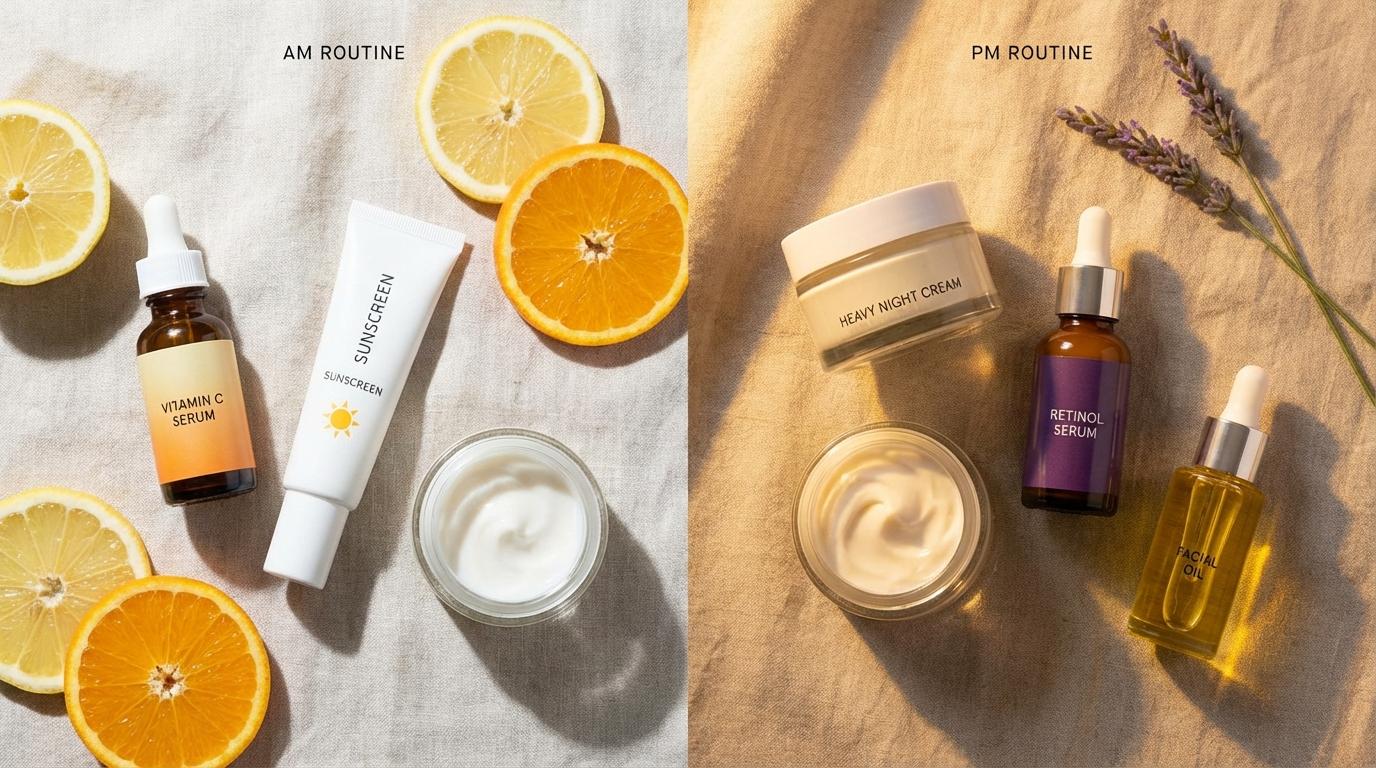
Your skin has two jobs. During the day, it defends. At night, it rebuilds. Treating both shifts the same way is like wearing pajamas to a job interview. Technically clothing, but missing the point entirely.
I used to layer on the same products morning and night because nobody told me otherwise. My skin looked fine but never great. Then I actually learned what skin does at different times of day, and everything clicked.
What Your Skin Does While You Sleep
Night is when your skin goes into repair mode. Cell turnover peaks between 11pm and 4am. Blood flow to your skin increases. Your body produces more collagen and elastin during sleep than at any other time.
This is why night is the time for active ingredients. Your skin is already primed to regenerate, so giving it tools to work with makes sense. Retinoids, exfoliating acids, peptides, and heavier moisturizers all belong here.
There’s also no UV exposure to worry about. Many active ingredients, especially retinol and certain acids, make your skin more sensitive to sunlight. Using them at night sidesteps this problem entirely.
According to research from the American Academy of Dermatology, nighttime is optimal for treatments because your skin’s barrier is more permeable and receptive to active ingredients.
What Your Skin Faces During the Day
Morning is defense mode. Your skin spends the entire day fighting off UV rays, pollution, free radicals, and environmental stressors. It needs protection, not treatment.
This is where antioxidants shine. Vitamin C, vitamin E, niacinamide, and green tea extract all neutralize free radicals before they can damage your skin. Layer these under your sunscreen for maximum protection.
Speaking of sunscreen, this is non-negotiable for your morning routine. It doesn’t matter how good your nighttime products are if you’re undoing that work by skipping SPF. Dr. Shereene Idriss, a board-certified dermatologist, has repeatedly emphasized that sunscreen is the most effective anti-aging product you can use. Different formulations work better for different skin types, so finding a sunscreen that won’t break you out is essential.
Morning products should also be lightweight. Heavy creams and oils can pill under sunscreen or makeup, and they’re not necessary when your skin isn’t in repair mode.
The Antioxidant AM, Actives PM Rule
Here’s the simplest way to think about it: antioxidants in the morning, actives at night.
Morning antioxidants to consider:
- Vitamin C serum (protects against UV damage and brightens)
- Niacinamide (strengthens barrier, controls oil)
- Vitamin E (boosts sunscreen effectiveness)
- Ferulic acid (stabilizes vitamin C)
Nighttime actives to consider:
- Retinol or retinoids (cell turnover, anti-aging)
- AHAs like glycolic acid (exfoliation, texture)
- BHAs like salicylic acid (pore clearing)
- Peptides (collagen support)
You don’t need all of these. Pick one or two from each category based on your skin concerns. Overloading your routine defeats the purpose.
Why Sunscreen Timing Actually Matters
Sunscreen goes on last in your morning skincare routine, before makeup. The Skin Cancer Foundation recommends applying it 15 to 30 minutes before sun exposure to allow it to fully bind to your skin.
But here’s what most people miss: sunscreen is ONLY for morning. Using it at night is pointless. There’s no UV to protect against, and it can clog pores or interfere with your nighttime actives.
If you’re using photosensitizing ingredients like retinol at night, you need sunscreen the next morning without exception. These ingredients make your skin more vulnerable to sun damage for up to 24 hours after application.
Heavy Products Belong at Night
Thick creams, facial oils, and occlusive products like Vaseline or Aquaphor work best at night for a few reasons.
First, they have time to absorb properly. You’re not layering makeup over them or rushing out the door. Your skin gets hours of uninterrupted contact with these products.
Second, heavy products seal in everything underneath them. At night, that means locking in your serums and treatments. During the day, it means potentially trapping pollution and grime against your skin.
Third, your skin loses more water at night. The transepidermal water loss is higher while you sleep, so using a heavier moisturizer helps prevent dehydration.
Dermatologists often recommend the “slug life” technique, where you apply a thin layer of petroleum jelly as the last step of your nighttime routine. This trend works because it creates an occlusive barrier that prevents moisture loss overnight. Understanding proper skincare layering ensures each product works effectively.
What a Basic Morning Routine Looks Like
Keep it simple. Three to four steps maximum.
Step 1: Gentle cleanser or just water. Your skin isn’t dirty from sleeping, so a full cleanse isn’t always necessary.
Step 2: Antioxidant serum. Vitamin C is the gold standard, but niacinamide works great too.
Step 3: Lightweight moisturizer. Gel formulas absorb quickly and play well with sunscreen.
Step 4: Sunscreen. SPF 30 minimum, applied generously.
That’s it. If you want to add more, eye cream goes before moisturizer. But don’t overcomplicate this.
What a Basic Night Routine Looks Like
Night is when you can get more ambitious. Four to five steps is reasonable.
Step 1: Oil cleanser or micellar water. This removes sunscreen and makeup.
Step 2: Water-based cleanser. This cleans your actual skin. Yes, double cleansing matters at night.
Step 3: Active treatment. This is where retinol, acids, or whatever else you’re using goes.
Step 4: Moisturizer. Go heavier than your morning one.
Step 5: Occlusive (optional). A thin layer of oil or petroleum jelly seals everything in.
Don’t use multiple actives in the same night routine. Alternating nights is smarter and gentler on your skin.
Common Mistakes People Make
Using retinol in the morning. It degrades in sunlight and makes your skin photosensitive. Total waste of product and money.
Skipping moisturizer in the morning because their skin is oily. Dehydrated skin overproduces oil to compensate. Moisturizer actually helps control this.
Using the same heavy cream day and night. Your skin doesn’t need that level of moisture during the day, and it can interfere with your SPF.
Applying sunscreen at night. I’ve seen this more than you’d think. There’s no point.
Layering too many actives at once. Your skin can only absorb so much. More products doesn’t mean better results.
Making This Work for Your Schedule
Morning routines should be fast. If yours takes more than five minutes, it’s too complicated. You want products that absorb quickly and layer well.
Night routines can take longer because you’re not rushing. This is the time to use slower-absorbing products and do any treatments that need wait times.
If you’re exhausted at night, the bare minimum is removing sunscreen and makeup, then moisturizing. You can skip actives occasionally. But skipping cleansing will cause breakouts.
The key is consistency over perfection. A simple routine you actually do beats an elaborate routine you abandon after a week.
Your skin knows what time it is. Give it what it needs when it needs it, and you’ll see better results with less effort.