
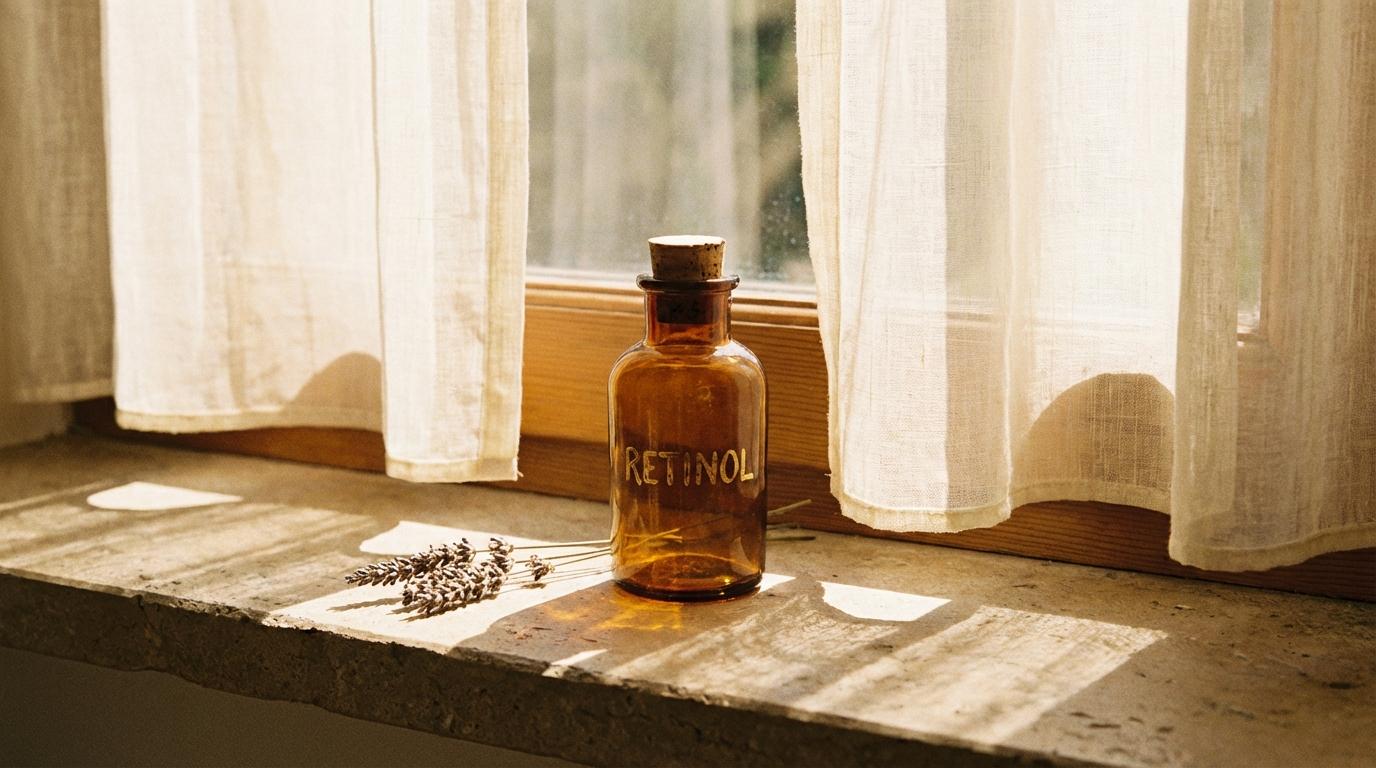
Have you ever wondered why that retinol serum you splurged on stopped working after a few weeks? The answer might be sitting on your bathroom counter in plain sight, literally. Clear packaging lets light destroy your retinol faster than you can use it up.
Light Literally Breaks Down Retinol
Retinol is one of the most unstable ingredients in skincare. UV light and even visible blue-violet light trigger photo-oxidation, breaking the molecule apart. Once degraded, retinol can’t do its job. Worse, the breakdown products can actually irritate your skin without providing any benefits.
A comparative study tested identical retinol formulas in different packaging types, all stored in the same conditions. After 8 weeks, the results were stark: airless pumps in opaque containers retained 94% of the retinol. Amber glass droppers held onto 87%. Clear plastic bottles? Only 61% remained. That’s nearly 40% of your product becoming useless before you finish the bottle.
And that’s under controlled storage conditions. The same airless pump stored on a sunny windowsill dropped to just 53% retention. Even good packaging can’t save product from bad storage habits.
What Happens When Retinol Degrades
Fresh retinol typically looks pale yellow or nearly colorless. As it oxidizes, it shifts toward deeper yellow, then orange, then brown. If your serum has changed color noticeably since you bought it, oxidation has already started.
Smell matters too. Retinol products should smell relatively neutral, maybe slightly oily. A rancid or sour smell signals that the formula has broken down significantly. Same with texture changes. If your serum has separated, gotten grainy, or thinned out dramatically, it’s compromised.
Using degraded retinol isn’t just ineffective. The oxidation byproducts can cause more irritation than fresh retinol while delivering none of the anti-aging or acne-fighting benefits you’re after. You’re essentially paying for irritation with zero upside.
The Packaging That Actually Protects Actives
Brands that understand stability invest in proper packaging. Here’s what to look for:
Airless pumps are the gold standard. Unlike regular pumps or dropper bottles, airless systems use an internal platform that rises as you dispense product. No air flows back into the container, which prevents oxidation between uses. The sealed chamber keeps your retinol stable from first pump to last.
Opaque or dark-tinted materials block UV rays. Amber glass, cobalt blue bottles, and solid-colored plastics all work. Black or silver tubes offer similar protection. The key is that light can’t reach the formula inside.
Aluminum tubes with tight caps work great, especially for travel sizes. The metal completely blocks light, and the flexible tube design minimizes air contact. You’ll find prescription tretinoin packaged this way for good reason.
What doesn’t work: clear glass, transparent plastic, wide-mouth jars. Jars are particularly bad because you expose the whole surface of the product to air and light every time you open them. Fancy packaging doesn’t always mean functional packaging, and a beautiful clear bottle might actually be sabotaging your results.
How To Store Retinol Products Properly
Even with good packaging, where you keep your retinol matters. Heat accelerates chemical degradation significantly. For every 10 degrees Celsius above room temperature, breakdown rates can roughly double.
Skip the bathroom. Temperature swings from hot showers, plus humidity, create terrible storage conditions. A bedroom drawer or closet works much better. Some people refrigerate their retinol, which extends shelf life but isn’t strictly necessary if you’ll use the product within a few months.
Keep products away from windows. Even indirect sunlight adds up over time. That aesthetically pleasing shelf in your sunny bathroom? Worst possible spot for light-sensitive actives.
If your retinol came in less-than-ideal packaging, consider transferring it to an opaque container or storing the original bottle inside a drawer or lightproof box. Not perfect, but better than leaving it exposed.
Why Some Brands Still Use Clear Bottles
Clear packaging sells. People want to see what they’re buying. A serum looks elegant and high-tech in a glass dropper bottle. Marketing teams push for visual appeal, sometimes at the expense of formula stability.
Some brands claim their formulas are stabilized enough to handle light exposure. Encapsulated retinol and certain delivery systems do offer some protection. But even stabilized versions benefit from opaque packaging. Why risk it when dark containers cost about the same to manufacture?
Budget constraints play a role too. Airless pump systems cost more than simple dropper bottles. Cheaper products often cut corners on packaging to hit price points. You might save money upfront but lose effectiveness over time.
What To Do Before You Buy
Check the packaging before adding retinol products to your cart. If it’s in clear glass or plastic with a dropper, think carefully about whether you’ll use it fast enough. Small bottles you’ll finish in 4-6 weeks might be fine. Larger sizes sitting around for months will degrade significantly.
Look at where the brand stores and ships products. Reputable companies keep inventory climate-controlled. Products sitting in hot warehouses or delivery trucks for extended periods may arrive already compromised. Buying from well-established retailers with fast turnover helps.
If you already own retinol in poor packaging, prioritize using it quickly. Don’t save it for special occasions. Every day it sits exposed to light is another day of degradation. Use it consistently rather than letting it waste away in storage.
The Bottom Line On Packaging
Good packaging isn’t just marketing. For retinol, it directly impacts whether you get results or waste money on inactive product. Opaque containers and airless pumps protect your investment. Clear bottles with dropper tops might look nice on your shelf, but they’re quietly destroying what you paid for.
Check your current products. If they’ve changed color, smell off, or come in questionable packaging that’s been sitting around, it might be time to replace them with properly packaged alternatives. Your skin deserves retinol that actually works.