
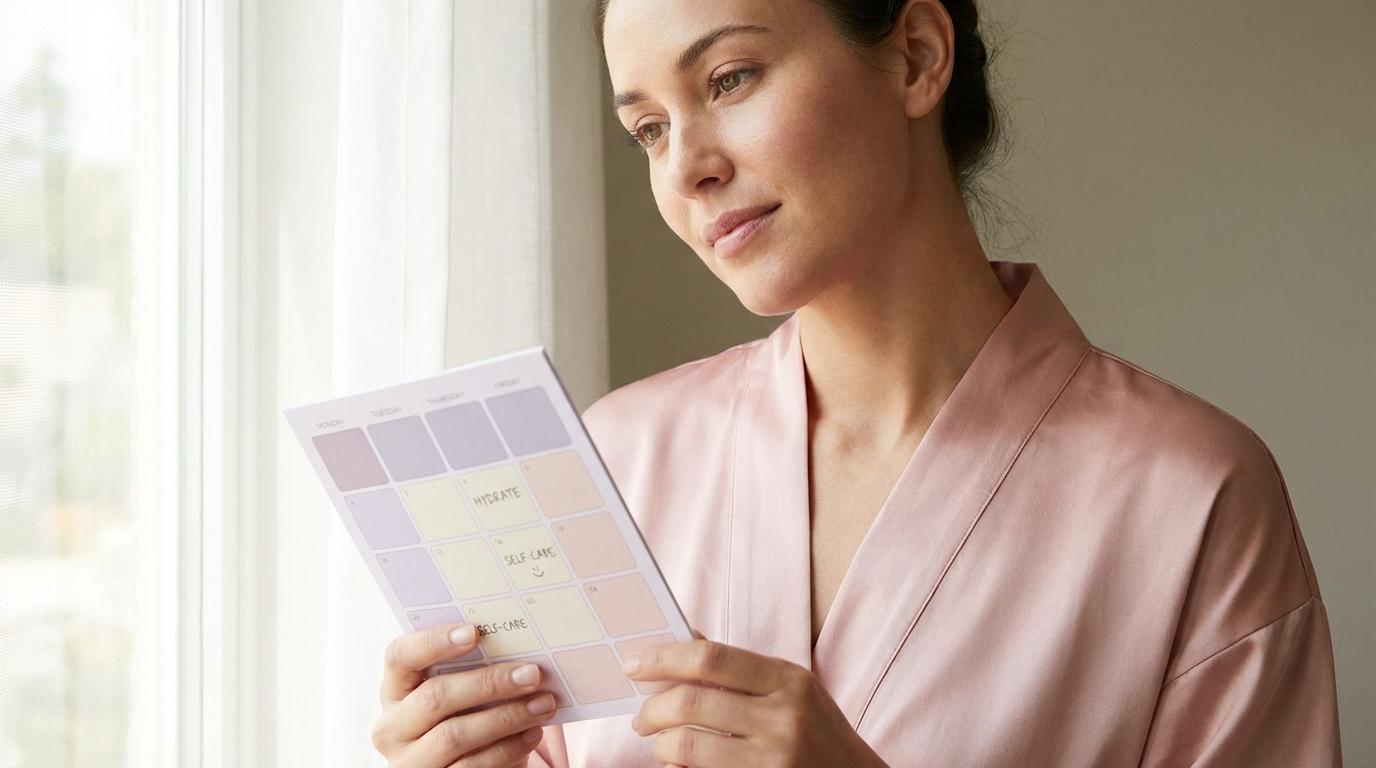
Every month, a carefully orchestrated cascade of hormones triggers changes throughout your body, and your skin is no exception. If you’ve ever noticed your face looking clear and radiant one week, then suddenly breaking out the next, you’re not imagining things. Your menstrual cycle creates a predictable pattern of skin changes, and once you understand the biology behind it, you can actually work with your hormones instead of against them.
Let me break down exactly what’s happening beneath the surface during each phase of your cycle, why certain weeks are worse for breakouts, and how you can adjust your skincare routine to match what your skin actually needs at any given time.
The Four Phases and What They Mean for Your Skin
Your menstrual cycle is typically around 28 days, though anywhere from 21 to 35 days is considered normal. Throughout this time, two key hormones, estrogen and progesterone, rise and fall in a specific pattern. Each phase creates different conditions in your skin.
The Menstrual Phase (Days 1-5)
Day one of your cycle is the first day of your period. At this point, both estrogen and progesterone have dropped to their lowest levels. According to research published in the Journal of Clinical Medicine, this hormonal dip causes several things to happen simultaneously: your skin barrier weakens, blood circulation slows, and your complexion can look duller than usual.
Many people notice their skin feels more sensitive and reactive during their period. This isn’t your imagination. The drop in estrogen reduces your skin’s ability to retain moisture and defend against irritants. You might find products that usually work fine suddenly cause stinging or redness.
The Follicular Phase (Days 6-14)
After your period ends, estrogen starts climbing steadily. This is often when your skin looks its best. Estrogen stimulates collagen production, increases hyaluronic acid in your skin (which helps it hold onto water), and keeps oil production relatively balanced. Your skin barrier is stronger, inflammation decreases, and that healthy glow people talk about? This is when it shows up.
If you’ve ever noticed your skin looking particularly good around days 10-14 of your cycle, estrogen deserves the credit. It’s doing a lot of heavy lifting for skin health during this window.
Ovulation (Around Day 14)
Estrogen peaks right before ovulation, and you might also experience a brief surge in testosterone. Some people notice slightly increased oiliness around this time, but for many, skin still looks clear and hydrated. This is generally a good skin week.
The Luteal Phase (Days 15-28)
This is where things get interesting, and by interesting, I mean potentially frustrating. After ovulation, progesterone rises significantly while estrogen starts to decline. Progesterone has a completely different effect on your skin than estrogen does.
Progesterone stimulates your sebaceous glands to produce more oil. At the same time, it causes your pore linings to swell slightly, which means the excess oil has a harder time reaching the surface. Oil + narrower pores = a recipe for clogged pores and breakouts.
When Breakouts Are Most Likely
If you track your skin alongside your cycle, you’ll probably notice breakouts clustering in a specific window. Research from the Cleveland Clinic indicates that over 60 percent of people who experience acne notice it worsening about 7 to 10 days before their period begins. This corresponds to the late luteal phase, roughly days 22-28 of a typical cycle.
The timing makes sense when you look at the hormone patterns. By this point:
- Progesterone has been elevated for about a week, meaning oil production has been running high
- Estrogen has dropped, reducing its anti-inflammatory and barrier-supporting effects
- The ratio between androgens (like testosterone) and estrogen has shifted, allowing androgens to have a stronger influence on sebum production
A study on perimenstrual acne flares found that 91 percent of participants who experienced hormonal breakouts noticed them starting within the week before their period began. The good news? About 77 percent reported their acne clearing up within a week after their period ended.
Hormonal breakouts also tend to show up in specific locations. You’ve probably heard about the chin and jawline being hormonal breakout zones, and there’s truth to this. These areas have more hormone receptors than your forehead or cheeks, making them more responsive to the hormonal shifts happening during your luteal phase.
Skin Sensitivity Throughout Your Cycle
Breakouts aren’t the only change you might notice. Your skin’s sensitivity fluctuates throughout the month too.
During your period and the days leading up to it, your skin barrier is at its weakest. This is when you’re most likely to experience:
- Increased dryness, even if you have oily skin elsewhere
- Redness or flushing that seems to appear without cause
- Products causing irritation that they normally don’t
- Increased itchiness or discomfort
Research has shown that skin pH changes throughout the menstrual cycle, and these shifts may contribute to increased itchiness during certain phases. The luteal phase, in particular, shows higher subjective reports of skin dryness and itchiness compared to other times in the cycle.
Your skin’s response to active ingredients like retinoids, acids, and vitamin C may also vary depending on where you are in your cycle. During the follicular phase when your barrier is stronger, your skin can typically handle more potent treatments. During your period and the premenstrual week, you might find those same products feel harsher than usual.
Adjusting Your Routine to Your Cycle
Now for the practical part. Once you understand the pattern, you can adapt your skincare to match what your skin needs at each phase.
During Your Period (Days 1-5):
Focus on gentle, hydrating care. This is not the time to introduce new actives or push through irritation hoping your skin will adjust. Consider:
- Using a richer moisturizer than usual, even if you normally prefer lighter textures
- Skipping or reducing the frequency of retinoids and strong acids
- Adding a hydrating serum with hyaluronic acid or glycerin
- Being extra consistent with sunscreen, since barrier-compromised skin is more vulnerable to UV damage
During the Follicular Phase (Days 6-14):
This is your window to push a little harder if you want to. Your skin is more resilient and can handle:
- Exfoliating treatments (chemical or physical)
- Trying new products you’ve been curious about
- Higher percentages of active ingredients
- More frequent use of retinoids
If you’re going to do an at-home peel or start a new active, the follicular phase is the safest time to do it.
During the Luteal Phase (Days 15-28):
Prevention is key here. Since you know oil production is increasing and breakouts are more likely, get ahead of it:
- Add a salicylic acid cleanser or treatment to help keep pores clear
- Use a lightweight, non-comedogenic moisturizer
- Consider a clay mask once or twice during this phase to absorb excess oil
- Don’t pick at emerging breakouts (inflammation is already higher, and picking will make it worse)
Niacinamide is particularly useful during this phase. It helps regulate sebum production and has anti-inflammatory properties, addressing two of the main issues that show up in the luteal phase.
What If Your Skin Changes Don’t Follow This Pattern?
It’s worth noting that not everyone experiences skin changes that align perfectly with their cycle. Factors like hormonal birth control, stress, diet, and individual hormone levels all influence how dramatically your skin responds to cyclical changes.
If you’re on hormonal birth control, your hormone fluctuations are different from a natural cycle. Many people find their skin is more consistent (for better or worse) because the pill or other hormonal methods keep hormone levels more stable throughout the month.
If your skin changes seem completely random or you’re experiencing severe acne that doesn’t respond to topical treatments, it’s worth talking to a dermatologist. Sometimes underlying conditions like polycystic ovary syndrome (PCOS) can cause hormonal patterns that don’t fit the typical cycle, and treating the root cause makes a bigger difference than any skincare routine adjustment.
Tracking Your Skin Alongside Your Cycle
One of the most useful things you can do is start paying attention to patterns in your own skin. Everyone’s hormonal response is slightly different, and your breakout timing might be a few days earlier or later than the averages suggest.
Try noting in a period tracking app (or just a simple note on your phone) what your skin looks like at different points in your cycle. After two or three months, you’ll likely see patterns emerge. Maybe your breakouts consistently start on day 20. Maybe your skin sensitivity peaks during your period rather than before it. This information lets you plan ahead.
If you know breakouts tend to show up on day 22, you can start using salicylic acid on day 19. If your skin gets super dry during your period, you can have a richer moisturizer ready to go. Working with your cycle instead of being surprised by it every month takes some of the frustration out of managing hormonal skin changes.
The connection between your hormones and your skin is real, well-documented, and, most importantly, manageable. You don’t have to accept bad skin weeks as inevitable. Understanding the biology gives you the tools to adapt, and that makes a real difference in how your skin looks and feels throughout the month.