
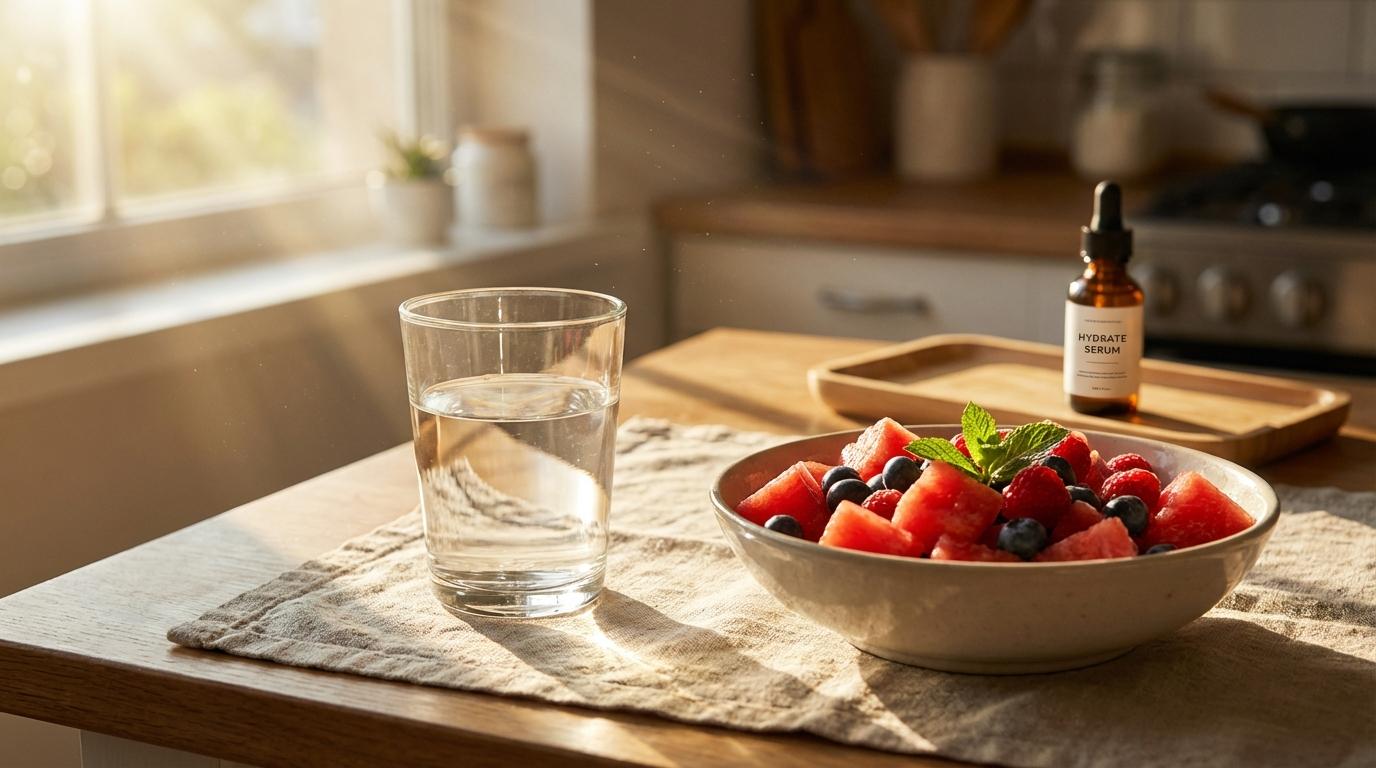
Everyone knows you need to drink a gallon of water a day for clear skin and optimal health. Except that’s not actually true, and the science behind this claim is basically nonexistent.
I used to lug around one of those massive water bottles with the time markers on the side (you know the ones that shame you at 2pm for being behind schedule). I was peeing every 45 minutes, my bag weighed a thousand pounds, and my skin looked exactly the same as before. Turns out I was following advice that nobody can actually trace back to a legitimate source.
Where Did This Gallon Rule Even Come From?
The “8 glasses a day” rule (which somehow morphed into a full gallon in wellness culture) has murky origins at best. The closest thing researchers can find is a 1945 recommendation from the U.S. Food and Nutrition Board that suggested 2.5 liters of water daily. But here’s the part everyone conveniently forgot: that same recommendation said most of this water comes from food.
Yeah. Food. The stuff you’re already eating.
The National Academy of Medicine currently suggests about 11.5 cups for women and 15.5 cups for men daily. But (and this is crucial) about 20% of that comes from the food you eat. So you’re not actually supposed to be chugging a gallon of pure water on top of your meals.
Your Food Is Already Hydrating You
This was genuinely mind-blowing to me when I learned it. Most fruits and vegetables are 80-98% water. Like, cucumbers are 96% water. That’s basically crunchy water with extra steps.
Here’s a quick breakdown of water content in foods you probably already eat:
- Cucumbers and lettuce: 96% water
- Celery: 95% water
- Tomatoes: 95% water
- Watermelon: 92% water
- Strawberries: 91% water
- Grapefruit: 91% water
- Cantaloupe: 90% water
- Peaches: 88% water
- Broccoli: 90% water
A study from the University of Aberdeen found that eating watermelon or cucumbers after a workout was actually twice as effective at rehydrating compared to plain water. The combination of water plus natural electrolytes and fiber seems to help your body absorb and retain fluids better.
So that salad you had for lunch? That counted toward your hydration. The orange you snacked on? Also counts. You’re probably getting way more water than you realize just from existing and eating normal food.
Coffee and Tea Count Too (Yes, Really)
I cannot tell you how many times I’ve heard people say coffee doesn’t count because it’s a diuretic. Here’s the thing: while caffeine does have mild diuretic effects, controlled studies show that for regular coffee drinkers, coffee hydrates about as well as water.
Your morning latte isn’t dehydrating you. Your afternoon tea isn’t either. Unless you’re drinking exclusively espresso shots and nothing else (in which case we should talk about other things), your caffeinated beverages are contributing to your daily fluid intake.
This doesn’t mean you should replace all water with coffee (your sleep would suffer, for one, and if you’re already dealing with late nights affecting your skin, adding more caffeine won’t help). But it does mean you can stop feeling guilty about your coffee habit from a hydration standpoint.
What Your Body Actually Needs
Here’s the frustrating truth: there’s no universal number that works for everyone. Your hydration needs depend on:
- Your body size and muscle mass (muscle holds more water than fat)
- How much you sweat and exercise
- The climate you live in
- Whether you’re pregnant or breastfeeding
- Your age (hydration needs actually increase as you get older because kidney function changes)
- What medications you’re taking
- What you’re eating (more water-rich foods = less drinking needed)
Someone doing hot yoga in Arizona has completely different needs than someone working a desk job in Seattle. Telling both of them to drink a gallon is ridiculous.
How to Know If You’re Actually Dehydrated
Instead of obsessing over ounces, pay attention to what your body is telling you. Novel concept, I know.
The easiest indicator is your urine color. If it’s pale yellow (think light lemonade), you’re good. If it’s dark yellow or amber, drink some water. If it’s completely clear and colorless, you might actually be overhydrating.
Other signs of actual dehydration include:
- Genuine thirst (not just boredom or habit)
- Headaches
- Fatigue and low energy
- Dizziness
- Dry mouth and lips
- Skin that doesn’t bounce back quickly when you pinch it
If you’re experiencing severe symptoms like confusion, rapid heartbeat, or haven’t peed in many hours, that’s when you should be concerned. But occasional thirst? That’s just your body’s normal signaling system working exactly as intended.
The Overhydration Problem Nobody Talks About
While dehydration gets all the attention, drinking too much water is a real thing that can actually be dangerous. It’s called hyponatremia, and it happens when you dilute the sodium in your blood by consuming too much water too quickly.
Symptoms include nausea, headaches, confusion, muscle cramps, and swelling in your hands and feet. In severe cases (we’re talking extreme overhydration, usually during endurance sports), it can cause seizures or worse. The general guidance is to never exceed 48 ounces in a single hour.
This is why I side-eye those gallon-a-day challenges where people try to drink it all before noon. Your kidneys can only process so much at once. Spacing out your water intake throughout the day is way more effective than chugging massive amounts.
What About Skin Hydration?
I know why you’re really here. Does water intake affect your skin?
The honest answer is: kind of, but probably not as dramatically as Instagram wants you to believe. Severe dehydration will absolutely show up in your skin (it can look dull, feel tight, and fine lines become more visible). But once you’re adequately hydrated, drinking more water doesn’t magically create better skin.
Your skin’s moisture levels are more influenced by your skincare routine, the humidity in your environment (looking at you, winter central heating), and your skin barrier health than by exactly how many ounces you’re drinking.
If you’re drinking reasonably, eating fruits and vegetables, and still dealing with dry or dull skin, the solution is probably topical hydration (hyaluronic acid, glycerin, a good moisturizer) rather than forcing more water down.
A More Realistic Approach
Instead of tracking every ounce or carrying around a gallon jug like it’s your emotional support water, try this:
- Drink when you’re thirsty (revolutionary, I know)
- Keep water accessible so it’s easy to sip throughout the day
- Eat water-rich foods (fruits, vegetables, soups)
- Check your urine color occasionally as a general guide
- Drink a bit more when you’re exercising, in hot weather, or recovering from alcohol
- Don’t stress about hitting an arbitrary number
Your body is actually really good at regulating fluid balance. Thirst exists for a reason. Unless you have a medical condition that affects your thirst signals, you can trust your body to tell you when it needs water.
The Real Takeaway
You don’t need to be constantly sipping water to be healthy or have good skin. You don’t need to hit a gallon. You don’t need an app to remind you to drink every 30 minutes. You don’t need to feel guilty for only drinking when you’re actually thirsty.
The whole gallon-a-day thing is less science and more wellness culture run amok. Adequate hydration matters, absolutely. But adequate is probably a lot less than you’ve been told, and you’re likely already getting there through normal eating and drinking patterns.
So maybe put down the massive water bottle and pick up a cucumber instead. Same result, way less running to the bathroom.
For more information on daily water intake recommendations, check out these resources from Mayo Clinic and Harvard’s Nutrition Source.